Key Findings
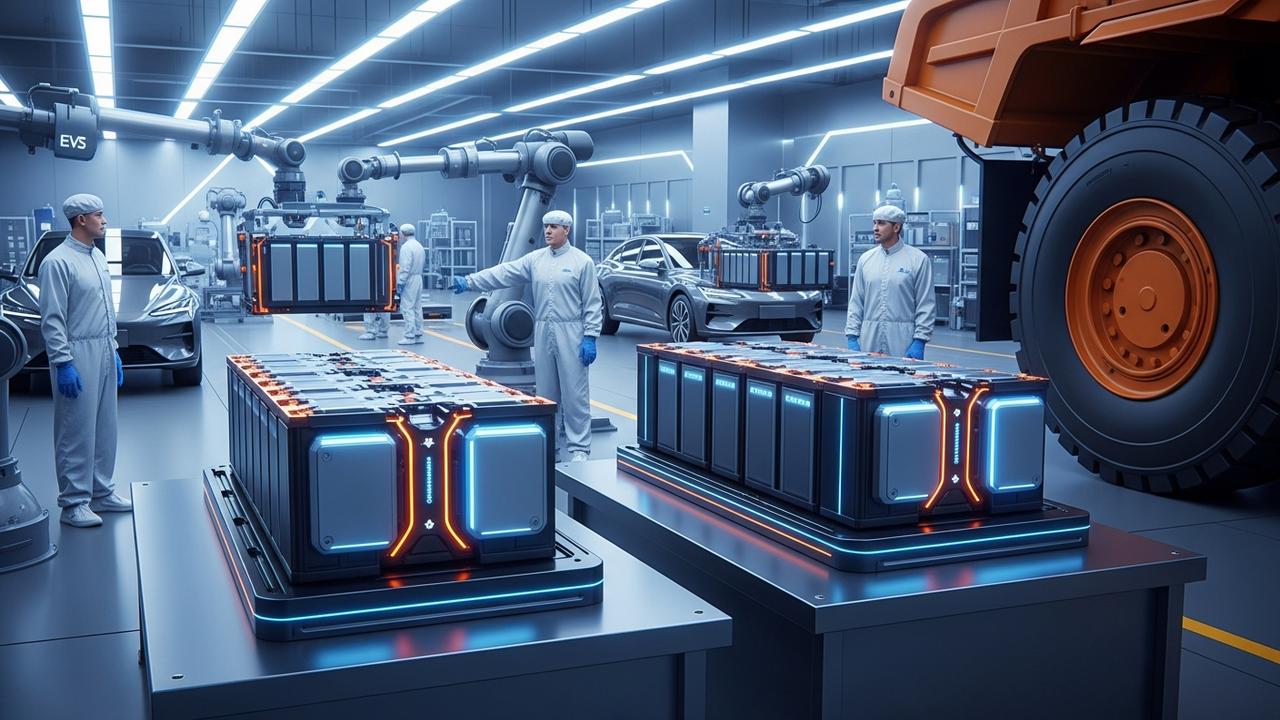
CATL’s Naxtra sodium-ion battery technology is rapidly accelerating its commercial deployment, with plans to power the Changan Nevo A06 electric vehicle (EV) by mid-2026 and the delivery of a sodium-ion battery-powered mining truck in China in August 2026. This represents a significant breakthrough, demonstrating the practical application of sodium-ion batteries beyond traditional stationary storage into high-power and high-durability mobility sectors.
Technical & Clinical Details
CATL’s Naxtra sodium-ion batteries achieve performance comparable to lithium-ion counterparts through the following technical features:
- Energy Density: Claiming 175 Wh/kg, which is close to the latest generation of Lithium Iron Phosphate (LFP) batteries. This density is crucial for achieving the necessary range and operational hours for EVs and heavy machinery.
- Fast Charging Capability: Supporting a 5C charging rate, enabling rapid recharging times. This is vital for enhancing convenience for EV users and improving the operational efficiency of commercial vehicles.
- Cycle Life: Boasting a cycle life exceeding 10,000 charge-discharge cycles, significantly outperforming the typical cycle life of many lithium-ion batteries (several thousand cycles). This ensures extended battery longevity and reduced replacement frequency.
- Applications:
- Electric Vehicles (EVs): In partnership with Changan Automobile, the Changan Nevo A06 EV, equipped with a 45 kWh Naxtra battery, is slated for market launch. This marks one of the first concrete examples of sodium-ion batteries entering the passenger vehicle segment.
- Mining Trucks: A mining truck powered by sodium-ion batteries, a collaborative effort by Hina Battery and Tonly Heavy Industry, was delivered in China. This demonstrates the suitability of sodium-ion batteries for high-load, long-life applications in heavy industry.
Background & Context
While lithium-ion batteries dominate the EV market, they face challenges such as unstable lithium supply, escalating prices, and geopolitical risks. Sodium-ion batteries, using abundant sodium as their primary raw material, can significantly reduce reliance on scarce metals like lithium and cobalt, positioning them as a promising sustainable battery technology for the next generation. The adoption of this technology by major players like CATL for practical applications in EVs and heavy machinery is crucial for establishing its status as a viable alternative or complement to lithium-ion batteries.
Strategic Significance & Outlook
The commercialization of CATL’s Naxtra sodium-ion batteries in the mobility sector is expected to have a profound impact on the entire battery industry. It holds the potential to reduce EV costs, diversify supply chains, and enhance energy security. The emergence of high-performance, long-life sodium-ion batteries will further intensify competition in the EV market and may contribute to stabilizing lithium-ion battery prices. Anticipated trends include other automotive and heavy machinery manufacturers exploring sodium-ion battery adoption, leading to greater diversification of battery technologies. This will enable more consumers to access affordable and clean mobility solutions.
Source: https://en.wikipedia.org/wiki/Sodium-ion_battery
Get our weekly technology intelligence — free
Receive an infographic that lets you judge at a glance whether each field’s analysis report is worth reading.
Subscribe Free — Weekly Tech Intelligence
By subscribing, you’ll receive Troy-Technical’s weekly technology intelligence newsletter.
- Your email and selected fields are used only to deliver the newsletter.
- We never share your information with third parties.
- You can unsubscribe anytime via the link in each email.
See our Privacy Policy for details.
Takes about a minute · Unsubscribe anytime