Key Findings
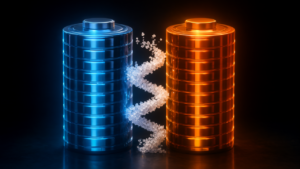
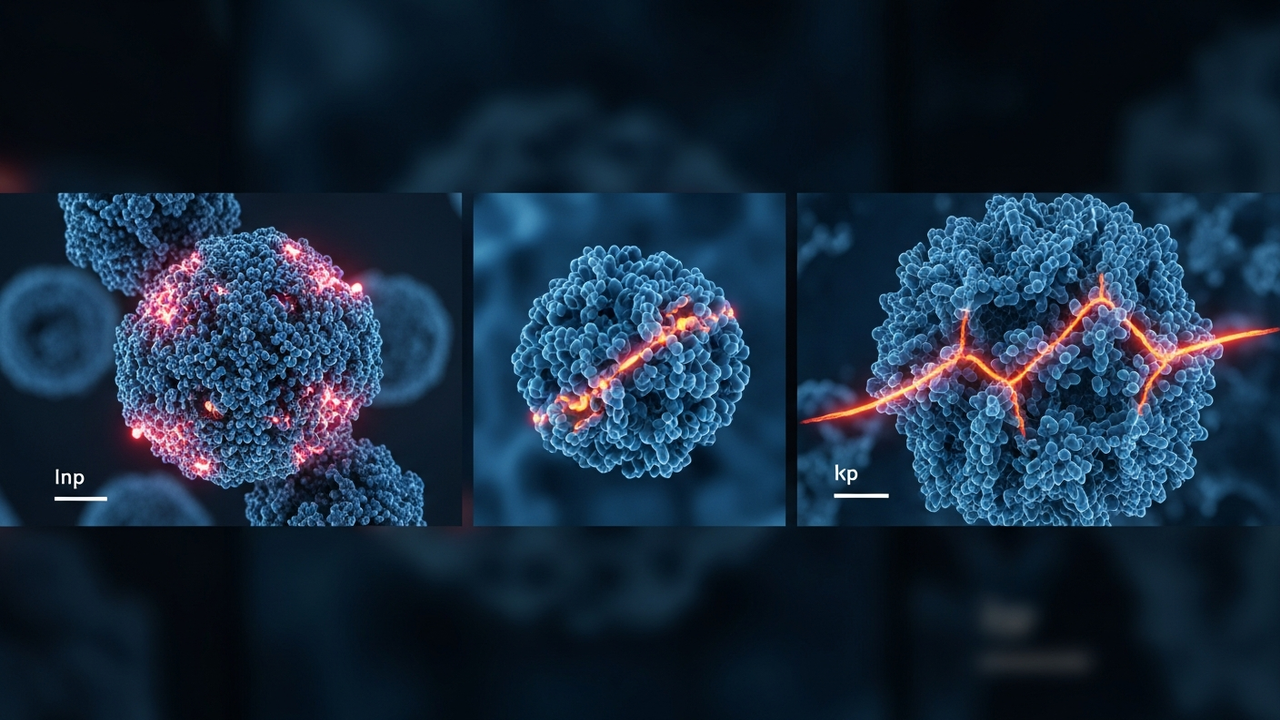
A pioneering study published in ‘eScience Energy’ has unveiled a novel technique to suppress internal cracking in cathode materials, one of the primary degradation mechanisms in sodium-ion batteries (SIBs). Researchers discovered that precisely tailoring the thickness of layered oxide particles along a specific crystallographic direction significantly reduces the mechanical stress generated during charge-discharge cycles. This innovative approach resulted in a remarkable 96.7% capacity retention after 300 cycles for a specific sodium-ion cathode, signifying a substantial improvement in battery lifespan and durability.
Technical & Clinical Details
The core of this research lies in engineering the microstructure of cathode materials. The specific technical approach and findings are as follows:
- Layered Oxide Cathodes: The study focused on layered oxide cathode materials, commonly used in SIBs. These materials are prone to volumetric changes during repeated sodium ion intercalation/de-intercalation, leading to the formation of microcracks. These cracks degrade the electrochemical activity of the electrode, promote undesirable reactions with the electrolyte, and ultimately cause capacity fading and reduced battery life.
- Directional Control of Particle Thickness: The researchers found that optimizing the thickness of these layered oxide particles along a single crystallographic direction (e.g., perpendicular to the sodium ion diffusion pathway) effectively mitigates mechanical stress concentrations. This ‘aspect ratio control’ allows for more uniform distribution of volumetric changes during cycling, thereby suppressing crack formation.
- Superior Cycling Performance: Sodium-ion batteries equipped with these optimized cathodes maintained an exceptionally high capacity retention of 96.7% after 300 cycles. This represents a significant improvement over conventional designs and is a major step toward practical application. High capacity retention indicates the battery’s ability to sustain stable performance over an extended period.
- Integrated Design Approach: This research demonstrates the critical importance of controlling the physical and mechanical structure of electrode materials, not just their chemical composition, in designing high-performance batteries.
Background & Context
Sodium-ion batteries are garnering significant attention as a next-generation technology for large-scale energy storage and cost-effective electric vehicles due to the abundance and low cost of sodium compared to lithium. However, their primary commercialization barriers have been lower energy density and, crucially, shorter cycle life compared to lithium-ion batteries. Structural degradation of electrode materials during cycling is one of the biggest challenges to achieving long-life SIBs. This study presents a new pathway to directly address this structural degradation mechanism, potentially accelerating the practical deployment of SIBs.
Strategic Significance & Outlook
These research findings open a potential pathway to dramatically improve the durability and reliability of sodium-ion batteries. This integrated approach, which combines chemical composition with mechanical structure design for cathode materials, will enable the development of longer-lasting and more stable SIBs, contributing to:
- Grid-Scale Storage: Facilitating renewable energy integration by enabling stable, long-duration operation.
- Electric Vehicles (EVs): Extending battery life, reducing replacement costs, and lowering the total cost of ownership for consumers.
- Cost-Effective Energy Storage: Reducing overall system costs through cheaper materials and extended lifespan, accelerating widespread adoption across various applications.
Further research and demonstration are anticipated to investigate how this microstructure engineering technique can be integrated into large-scale manufacturing processes. This innovation marks a crucial step for sodium-ion batteries to become a major player in building a sustainable energy future.
Source: https://bioengineer.org/finer-grains-help-sodium-ion-batteries-resist-hidden-cracking/
Get our weekly technology intelligence — free
Receive an infographic that lets you judge at a glance whether each field’s analysis report is worth reading.
Subscribe Free — Weekly Tech Intelligence
By subscribing, you’ll receive Troy-Technical’s weekly technology intelligence newsletter.
- Your email and selected fields are used only to deliver the newsletter.
- We never share your information with third parties.
- You can unsubscribe anytime via the link in each email.
See our Privacy Policy for details.
Takes about a minute · Unsubscribe anytime