Key Findings
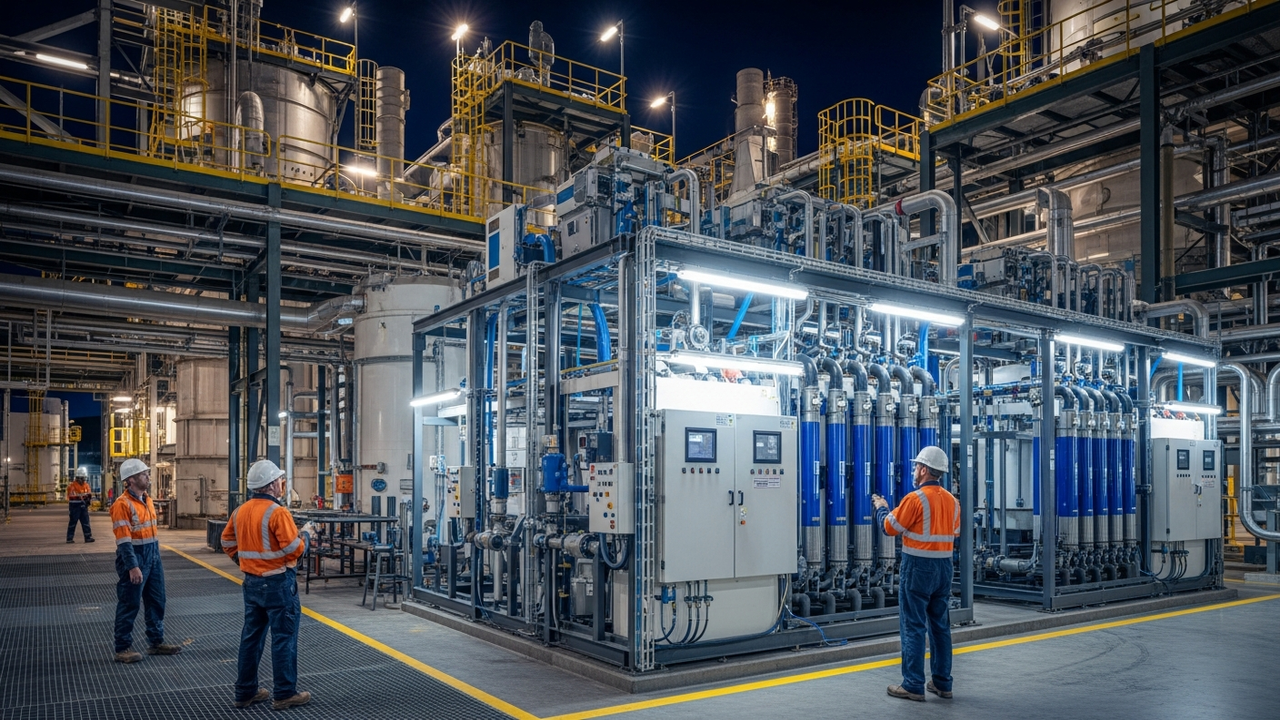
Australian Vanadium Limited (AVL) and Alcoa of Australia Limited have initiated a preliminary study to jointly evaluate the potential deployment of a large-scale vanadium flow battery (VFB) system at Alcoa’s alumina refinery facilities in Western Australia. The study aims to thoroughly assess the technical and economic feasibility of a VFB system with a power output of 50-80MW and a substantial storage capacity of 400-640MWh. This collaborative project underscores the growing interest in Long Duration Energy Storage (LDES) solutions for energy-intensive industrial sectors.
Technical & Clinical Details
Vanadium flow batteries (VFBs) are particularly promising as LDES for large-scale industrial applications due to the following characteristics:
- Independent Scaling of Power and Energy: VFBs can independently size their power capacity (determined by the battery stack size) and energy capacity (determined by the volume of electrolyte). This flexibility makes them highly suitable for applications requiring extended discharge durations; the planned capacity of 400-640MWh is significant.
- Long Lifespan and High Safety: VFBs are expected to have a long operational life of 20+ years with minimal electrolyte degradation. Furthermore, their aqueous electrolyte is non-flammable, ensuring high safety for deployment in large industrial facilities.
- Deep Depth of Discharge: VFBs can operate at a deep depth of discharge (DoD) with less performance degradation compared to lithium-ion batteries, allowing for maximum utilization of stored energy.
- Stable Raw Material Supply: Australia is rich in vanadium resources, and AVL is actively developing these. This enhances the supply chain stability for VFB manufacturing.
Such a system is expected to play a crucial role in integrating renewable energy and ensuring a stable power supply for power-intensive industries like alumina refining.
Background & Context
Industrial processes like alumina refining require continuous, high-volume, and stable electricity supply 24/7. Concurrently, global decarbonization pressures compel these industries to reduce their reliance on fossil fuels and increase renewable energy usage. LDES technologies such as VFBs are ideal solutions for storing intermittent renewable energy (solar, wind, etc.) and meeting the continuous power demands of refineries. AVL has also proposed the 50MW/500MWh Kalgoorlie Vanadium Battery Energy Storage System for improving grid reliability in Western Australia, highlighting the increasing regional importance of VFBs.
Strategic Significance & Outlook
The joint study by AVL and Alcoa will serve as an important case study demonstrating how LDES technologies can support the clean energy transition in the industrial sector. If the preliminary study yields positive results, the deployment of a large-scale VFB system could contribute to reducing carbon emissions and optimizing energy costs at Alcoa’s refinery. The success of this project could serve as a model for accelerating the adoption of LDES technologies in other power-intensive industries, and significantly contribute to Australia’s expansion of its value chain from vanadium production to VFB manufacturing and large-scale energy storage solutions. This initiative will bolster both Australia’s energy transition strategy and its industrial competitiveness.
Get our weekly technology intelligence — free
Receive an infographic that lets you judge at a glance whether each field’s analysis report is worth reading.
Subscribe Free — Weekly Tech Intelligence
By subscribing, you’ll receive Troy-Technical’s weekly technology intelligence newsletter.
- Your email and selected fields are used only to deliver the newsletter.
- We never share your information with third parties.
- You can unsubscribe anytime via the link in each email.
See our Privacy Policy for details.
Takes about a minute · Unsubscribe anytime