Key Findings
Quantagram, a specialized quantum computing blog, has published a detailed explanatory article on the “Surface Code,” one of the most promising methods for achieving fault-tolerant quantum computing. The article explains, in accessible language for experts, how the surface code detects and corrects errors in qubits, thereby enabling large-scale and reliable quantum computations. It particularly emphasizes that a fast and highly accurate classical decoding process is indispensable for the surface code to function correctly.
Technical Details
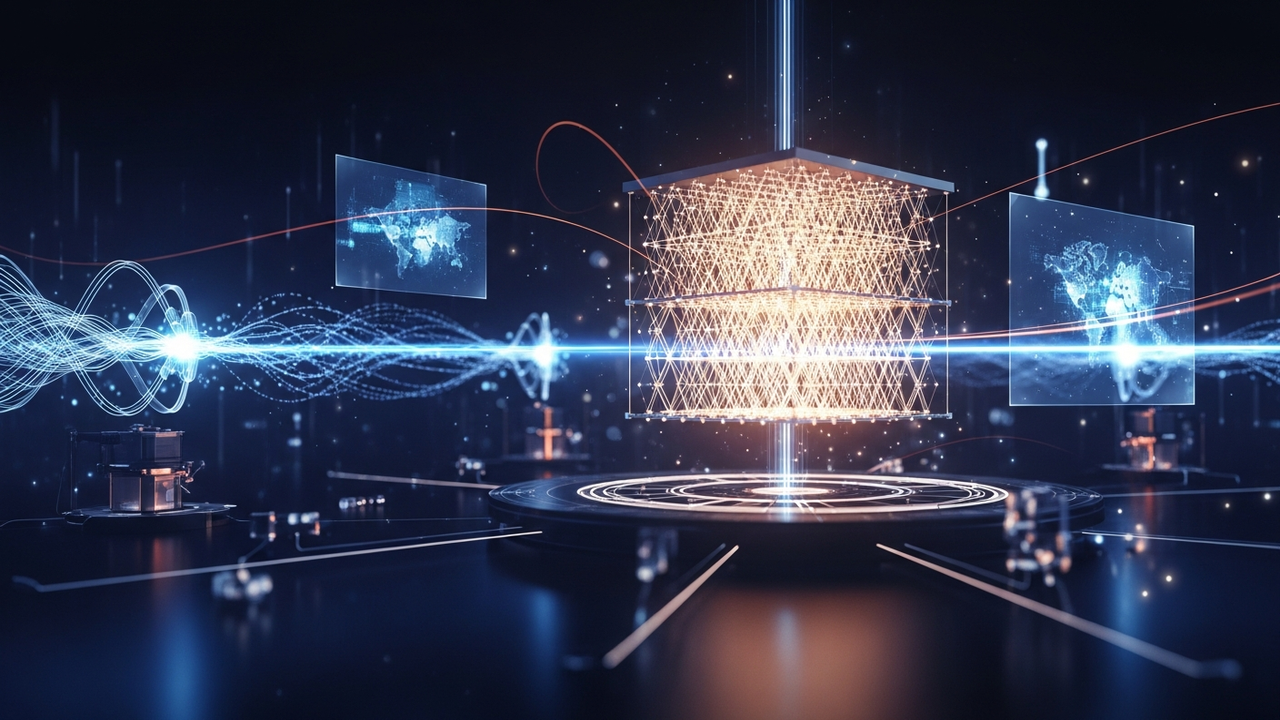
The surface code is a type of quantum error correction code that arranges physical qubits in a 2D lattice, where each physical qubit entangles with its neighbors to protect a logical qubit. When an error occurs, the surface code performs “syndrome measurements” to identify the type (bit-flip or phase-flip) and location of the error. This measurement data is classical information, which is then decoded by a classical computer to infer where errors occurred and apply corrective operations.
In this process, the speed and accuracy of decoding are paramount. Given the limited coherence time of qubits (the time they can maintain their quantum state), the shorter the time taken from error detection to decoding and correction, the more errors can be prevented, thereby enhancing the overall reliability of the computation. Quantagram’s article highlights that the efficiency and accuracy of classical decoding algorithms represent one of the biggest bottlenecks for the practical implementation of surface code-based fault-tolerant quantum computers.
Background and Industry Context
Current quantum computers are known as “NISQ (Noisy Intermediate-Scale Quantum)” devices, characterized by high noise and error rates. To build truly useful large-scale quantum computers, error correction is essential. The surface code is actively being researched and developed by many leading quantum computing companies and research institutions due to its scalability and relatively high error tolerance. Companies such as Google and IBM, for instance, are also considering the surface code as the foundation for their future fault-tolerant architectures. Therefore, understanding the surface code and advancing its decoding technology are common challenges across the industry.
Strategic Significance and Outlook
Quantagram’s explanation of the surface code serves as a valuable resource for researchers and engineers seeking to grasp the fundamentals of this complex field. Further acceleration and optimization of classical decoding algorithms are key to implementing the surface code in practical quantum computers. Breakthroughs in this area will significantly hasten the realization of fault-tolerant quantum computers, ultimately contributing to a future where quantum computing can solve complex problems currently intractable in science, medicine, finance, and various other fields. The progress in this technology is an indispensable element for quantum computing to revolutionize diverse sectors.
Source: #
Get our weekly technology intelligence — free
Receive an infographic that lets you judge at a glance whether each field’s analysis report is worth reading.
Subscribe Free — Weekly Tech Intelligence
By subscribing, you’ll receive Troy-Technical’s weekly technology intelligence newsletter.
- Your email and selected fields are used only to deliver the newsletter.
- We never share your information with third parties.
- You can unsubscribe anytime via the link in each email.
See our Privacy Policy for details.
Takes about a minute · Unsubscribe anytime