Key Findings
In an interview with The Medicine Maker, Stefan Braam, CTO of Cellistic, provided profound insights into the challenges and opportunities for iPSC (induced pluripotent stem cell)-based cell therapies transitioning from R&D to commercial-scale supply for large patient populations. He highlighted Japan’s conditional early approval system, which has enabled the provisional market entry of iPSC-derived products for heart disease and Parkinson’s disease, as a significant advancement. Concurrently, he emphasized that several ongoing pivotal trials in the U.S. are increasing the commercial viability of iPSC cell therapies. However, he stressed that overcoming manufacturing scalability, consistent quality, and cost-efficiency challenges is paramount for their widespread realization.
Technical / Clinical Details
- Regulatory Approvals and Clinical Progress in Japan: Japan has implemented a conditional early approval system for regenerative medicine products, facilitating rapid market entry. This has led to the provisional approval of iPSC-derived cardiomyocyte therapies for severe heart failure and iPSC-derived neural progenitor cell therapies for Parkinson’s disease, now available to limited patient populations. These pioneering examples demonstrate the clinical feasibility of iPSC-based cell therapies.
- Pivotal Trials in the U.S.: In the United States, pivotal clinical trials for iPSC-derived cell therapies are underway for a wide range of diseases, including Type 1 diabetes, autoimmune disorders, and seizure-related conditions. The success of these trials is crucial for securing full FDA (U.S. Food and Drug Administration) approval, signifying entry into the world’s largest pharmaceutical market.
- Manufacturing Challenges: The primary bottlenecks in commercial-scale iPSC-derived cell therapy manufacturing are extensive:
- Scalability: Expanding from small-scale laboratory production to mass production targeting millions of patients.
- Reproducibility and Quality Control: Manufacturing consistent, high-quality cell products that meet stringent GMP (Good Manufacturing Practice) requirements across different batches.
- Cost-Efficiency: Reducing manufacturing costs, particularly in differentiation and large-scale culture, to make therapies economically accessible.
- Cell Differentiation Protocols: Developing and standardizing efficient and high-purity differentiation methods for desired cell types.
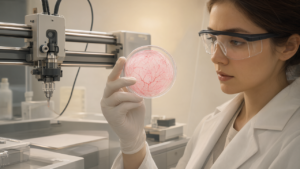
- Bioreactor Expansion: Implementing automated culture systems using large-volume bioreactors.
Background & Context
Since its discovery in 2006, iPSC technology has held the promise of profoundly transforming regenerative medicine. Its pluripotency and indefinite proliferative capacity enable not only personalized autologous therapies but also the realization of ‘allogeneic’ (off-the-shelf) cell therapies universally applicable. However, as the field progresses from basic research to clinical application and eventual commercialization, significant challenges, especially in manufacturing, have emerged. Braam’s remarks clearly define the industry’s focus during this maturation phase, underscoring that technical and engineering solutions are as crucial as scientific discoveries. Japan’s pioneering role in establishing rapid approval systems serves as a significant international benchmark.
Strategic Significance & Outlook
The commercial success of iPSC cell therapies hinges not only on groundbreaking discoveries in R&D but also on manufacturing scalability, consistency, quality control, and ultimate cost-efficiency. Moving forward, companies like Cellistic will be observed for how they address these manufacturing bottlenecks through automated bioreactor systems, improved differentiation protocols, and AI-powered quality control systems. Post-marketing data from Japanese approved products will provide valuable evidence of long-term efficacy and safety, serving as a critical reference for other global regulatory bodies and developers. Solving these manufacturing challenges is essential for iPSC cell therapies to become a truly mainstream medical option, which, if achieved, will offer transformative treatments to many patients suffering from debilitating diseases.
Get our weekly technology intelligence — free
Receive an infographic that lets you judge at a glance whether each field’s analysis report is worth reading.
Subscribe Free — Weekly Tech Intelligence
By subscribing, you’ll receive Troy-Technical’s weekly technology intelligence newsletter.
- Your email and selected fields are used only to deliver the newsletter.
- We never share your information with third parties.
- You can unsubscribe anytime via the link in each email.
See our Privacy Policy for details.
Takes about a minute · Unsubscribe anytime