Key Findings
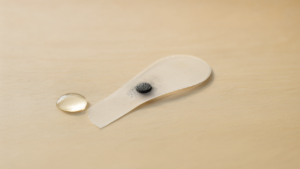
A recent study published in ACS Publications introduces a Smart Wearable Optical Sensor (SWOS) platform. This innovative system leverages copper chloride/fluorescein immobilized on transparent chitin nanopaper (ChNP) as sensing materials, enabling the simultaneous, real-time, and continuous monitoring of two critical physiological parameters: sweat volume and pH.
Technical / Clinical Details
The SWOS platform consists of a multiplex sweat sensor seal and an IoT-enabled readout module. The sensor seal is based on transparent chitin nanopaper (ChNP), a bio-derived, sustainable material that offers high skin compatibility and low environmental impact. On the ChNP surface, copper chloride, which changes color in response to sweat volume, and fluorescein, which alters its fluorescence properties with pH changes, are immobilized. This configuration allows for the simultaneous capture of distinct physicochemical information—sweat excretion rate (volume) and pH value—as visual color changes and fluorescence signal variations. The IoT-enabled readout module converts these optical changes into digital data, which is then transmitted wirelessly and in real-time to a smartphone or cloud platform. Experiments with athlete subjects successfully demonstrated accurate tracking of sweat volume changes and pH dynamics during exercise, significantly enhancing the efficiency of sweat analysis. Since sweat pH and excretion rate can indicate dehydration, exercise intensity, electrolyte balance, and even certain metabolic conditions, their simultaneous and continuous monitoring provides crucial information for personalized health management.
Background & Context
As the demand for wearable health monitoring grows, sweat analysis technology for non-invasive acquisition of physiological information has garnered significant attention. However, the development of integrated sensors capable of simultaneously, accurately, and in real-time monitoring multiple biomarkers has been a major challenge. Traditional electrochemical sensors, often using metal electrodes, faced issues with biocompatibility, environmental impact, and a lack of visual feedback. This SWOS platform overcomes these challenges by combining bio-derived nanopaper with optical detection, offering a more environmentally friendly and intuitive monitoring solution.
Strategic Significance & Outlook
The development of this smart wearable optical sensor marks a significant advancement in the future of personalized health monitoring. It is expected to find diverse applications, including optimizing athlete performance, preventing heatstroke in high-temperature environments (e.g., construction workers), and early detection of diseases involving fluid balance disturbances. In the future, it is anticipated that more optical biosensors (e.g., for glucose, lactate, cortisol) will be integrated into this platform, enabling a more comprehensive ‘visualization’ and real-time analysis of overall health status. The use of sustainable materials and IoT connectivity will enhance this technology’s competitiveness in the smart healthcare market, providing a foundation for delivering more personalized and actionable health insights to users.
Get our weekly technology intelligence — free
Receive an infographic that lets you judge at a glance whether each field’s analysis report is worth reading.
Subscribe Free — Weekly Tech Intelligence
By subscribing, you’ll receive Troy-Technical’s weekly technology intelligence newsletter.
- Your email and selected fields are used only to deliver the newsletter.
- We never share your information with third parties.
- You can unsubscribe anytime via the link in each email.
See our Privacy Policy for details.
Takes about a minute · Unsubscribe anytime