Key Findings
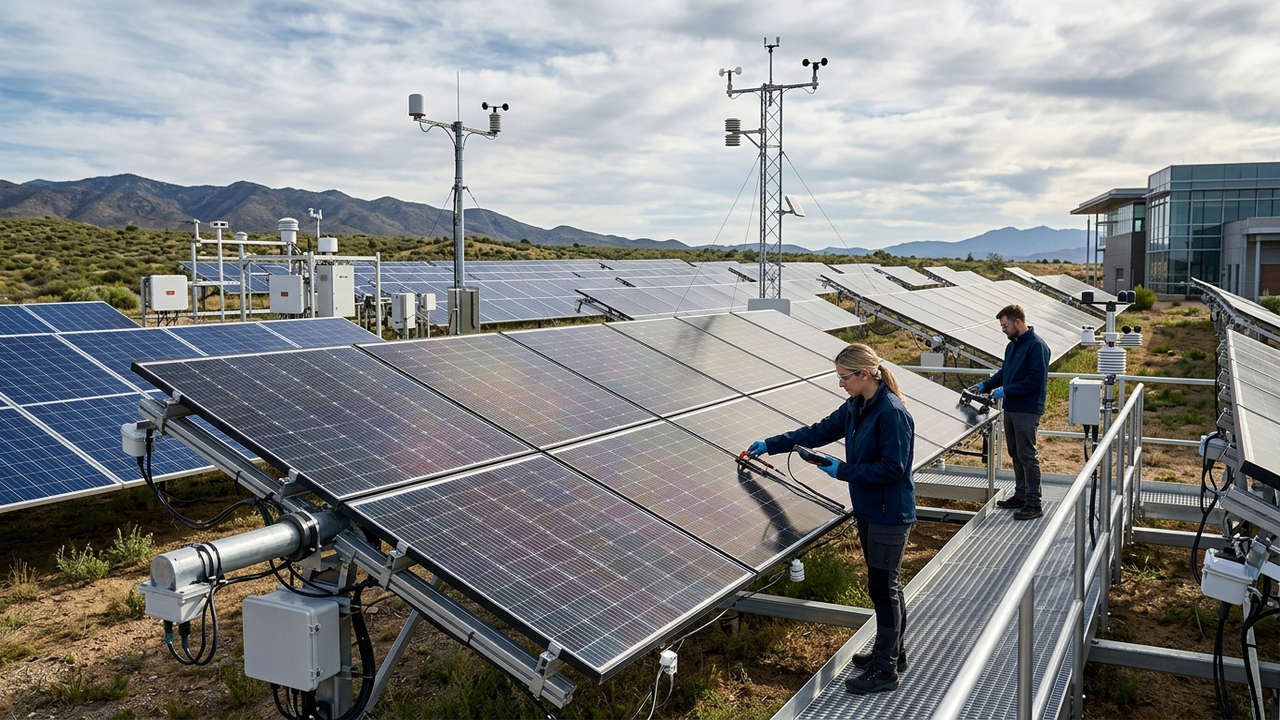
A collaborative study by researchers from Southwest Petroleum University and Tongwei Solar has meticulously analyzed the impact of real-world solar spectrum variations on the performance of 2-terminal (2T) perovskite/silicon tandem solar cells. The research quantitatively demonstrated that fluctuations in outdoor spectral conditions can exacerbate current mismatch between the upper perovskite layer and the lower silicon layer of the tandem cell, potentially leading to an annual energy yield reduction of up to 3.25% compared to single-junction silicon. Despite this, the inherent higher conversion efficiency of these tandem cells maintained a significant advantage, delivering 8.74% to 11.16% more energy per unit land area across all climate zones investigated, thus confirming their superior overall performance.
Technical Details
In 2-terminal tandem solar cells, where the top and bottom cells are connected in series, the overall efficiency is compromised if a ‘current mismatch’ occurs—meaning the currents generated by both cells do not align. Solar spectra vary significantly with time of day, season, and weather conditions (e.g., cloud cover), which in turn alters the amount of light absorbed by each sub-cell, making current matching challenging. This study utilized simulations and empirical data to evaluate how specific spectral variations under different climatic conditions intensify this current mismatch. The findings underscore that achieving current matching that is less sensitive to spectral fluctuations is critical for maintaining high, stable annual energy yields in optimized tandem designs. This work provides crucial insights for future device engineering.
Background and Industry Context
Perovskite/silicon tandem solar cells represent a next-generation technology poised to surpass the theoretical efficiency limits of conventional single-junction silicon solar cells, attracting substantial attention from the photovoltaic industry. While laboratory efficiencies exceeding 35% have been reported, evaluating and optimizing performance under real-world outdoor conditions is an indispensable step towards commercialization. Understanding the effects of spectral variation and developing corresponding design strategies are vital for enhancing the reliability and economic viability of tandem solar cells. This research contributes a deep understanding of practical performance characteristics, offering invaluable insights for future device design and deployment strategies.
Future Outlook
The results of this study highlight the critical importance of optimizing current matching in perovskite/silicon tandem solar cell designs under diverse solar spectral conditions. Future tandem solar cells are expected to integrate dynamic spectral tracking technologies or robust materials and device architectures that are less sensitive to spectral fluctuations, thereby minimizing annual energy yield losses. Furthermore, the adoption of 4-terminal (4T) designs, which allow for independent optimization of each cell, is also considered a promising solution to this challenge. Overall, tandem technology is highly likely to provide superior real-world performance compared to single-junction silicon, contributing significantly to advancements in solar energy efficiency and broader adoption, driving the clean energy transition forward. This will ensure that solar power continues to be a leading force in sustainable development.
Get our weekly technology intelligence — free
Receive an infographic that lets you judge at a glance whether each field’s analysis report is worth reading.
Subscribe Free — Weekly Tech Intelligence
By subscribing, you’ll receive Troy-Technical’s weekly technology intelligence newsletter.
- Your email and selected fields are used only to deliver the newsletter.
- We never share your information with third parties.
- You can unsubscribe anytime via the link in each email.
See our Privacy Policy for details.
Takes about a minute · Unsubscribe anytime