Background
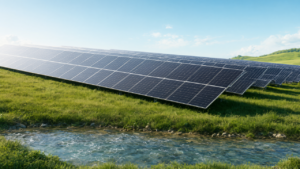
Perovskite solar cells are widely recognized as a promising next-generation energy technology, boasting high power conversion efficiency and the potential for low-cost manufacturing. Despite these advantages, their widespread commercialization has been hindered by inadequate long-term stability and durability. A critical issue lies at the interfaces between different layers within the cell, which often serve as initiation points for corrosion and degradation, significantly shortening device lifespan. Specifically, acidic molecules commonly employed in conventional interfacial layers are prone to reacting with moisture, accelerating internal device degradation. Environmental factors such as oxygen and heat further exacerbate these issues, compromising reliability for practical deployment. This novel research from Kaunas University of Technology in Lithuania addresses this challenge directly, offering a fundamental, material-level solution to enhance stability.
Key Findings
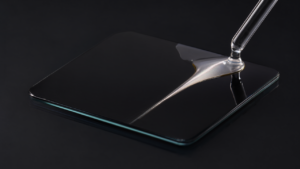
Researchers at Kaunas University of Technology have developed a groundbreaking technology that dramatically enhances the long-term durability of perovskite solar cells. Their innovation involves fundamentally transforming the chemical composition of a critical thin interfacial layer from traditional acidic molecules to robust ionic salts. This strategic modification successfully mitigates inter-layer corrosion, allowing cells to maintain high efficiency and stability over extended periods.
The core of their technical solution involves:
- Chemical Redesign for Enhanced Interfacial Stability: By introducing durable ionic salts instead of acidic molecules, the chemical stability at the interface was dramatically improved, creating a more resilient barrier against degradation.
- Effective Corrosion Mitigation: The incorporation of these ionic salts actively suppresses corrosive reactions between interfaces. This significantly enhances the device’s intrinsic resistance to external environmental stressors, particularly moisture and heat, which are primary degradation culprits.
- Demonstrated Long-Term Stability: Experimental validation confirmed that perovskite solar cells equipped with this novel interfacial layer maintain high efficiency even under harsh operational conditions for prolonged durations. While specific quantitative data on stability duration or precise efficiency degradation rates were not detailed, the research strongly indicates a significant breakthrough in device longevity.
This breakthrough holds the potential to fundamentally resolve one of the primary barriers to the commercialization of perovskite solar cells: insufficient stability. By offering a material-level solution, this technology is expected to significantly accelerate the practical application of more affordable and lightweight perovskite panels. It particularly stands to boost applications in Building Integrated Photovoltaics (BIPV), enabling their installation in previously challenging locations such as windows and facades, thereby expanding the potential for solar power deployment and opening new avenues for renewable energy adoption. Furthermore, this research suggests broader implications for enhancing stability in other thin-film solar cell technologies.
Get our weekly technology intelligence — free
Receive an infographic that lets you judge at a glance whether each field’s analysis report is worth reading.
Subscribe Free — Weekly Tech Intelligence
By subscribing, you’ll receive Troy-Technical’s weekly technology intelligence newsletter.
- Your email and selected fields are used only to deliver the newsletter.
- We never share your information with third parties.
- You can unsubscribe anytime via the link in each email.
See our Privacy Policy for details.
Takes about a minute · Unsubscribe anytime