Background and Industry Context
Perovskite solar cells have garnered immense interest as a next-generation photovoltaic technology, celebrated for their impressive power conversion efficiencies and potential for low-cost manufacturing. Despite this promise, their lack of long-term stability, particularly in outdoor environments, has remained a primary bottleneck for widespread commercialization. Enhancing durability is crucial for enabling diverse applications, from building-integrated photovoltaics (BIPV) and flexible/wearable electronics to transparent solar solutions, all of which demand robust performance across various form factors and operating conditions. This latest report from Lithuania offers a practical and significant solution to this critical stability challenge, propelling the commercial maturity of perovskite technology.
Key Breakthrough
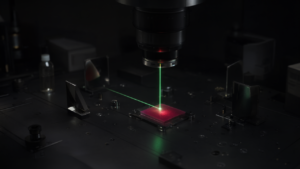
Researchers at Kaunas University of Technology in Lithuania have achieved a significant breakthrough, dramatically enhancing the durability and longevity of perovskite solar cells. Their novel method effectively curbs a major cause of performance degradation, directly addressing a critical barrier to the widespread commercial application of this promising technology. This innovation marks a pivotal step toward making perovskite solar cells more reliable and robust for real-world deployment. The research team has already filed for patent protection and is actively initiating commercialization efforts, signaling the near-term potential for substantial market impact.
Technical Innovation
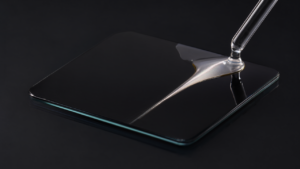
Performance degradation in perovskite solar cells is primarily attributed to the inherent instability of the materials when exposed to environmental factors such as moisture, heat, and ultraviolet (UV) light. The Lithuanian researchers developed a sophisticated new approach involving the precise incorporation of specific additives and the engineering of enhanced protective layers. This strategy effectively passivates defect sites within the perovskite material, simultaneously strengthening barrier layers to prevent the ingress of water and oxygen. This dual-pronged approach dramatically improves long-term stability, extending device lifetime and significantly boosting reliability under practical operating conditions. By achieving this significant durability improvement, the technology now enables perovskite solar cells to be integrated into applications demanding flexibility and resilience—areas where conventional silicon solar cells have faced significant deployment challenges.
Outlook and Commercial Significance
This breakthrough in durability from Kaunas University of Technology holds immense potential to accelerate the market entry of perovskite solar cells. The filing of a patent application and ongoing commercialization efforts strongly suggest that these research findings are on the cusp of being translated into practical, marketable applications. The realization of cheaper, thinner, and inherently more flexible perovskite panels would significantly facilitate their integration into innovative applications such as building facades, windows, textiles, and automotive roofs—domains where conventional solar panels have historically faced deployment difficulties. This innovation is poised to create entirely new markets for solar energy, fostering a unique convergence of urban aesthetics and energy production, thereby contributing profoundly to the global transition towards sustainable, clean energy.
Source: https://www.thecooldown.com/green-tech/scientists-curb-performance-loss-perovskite-solar-cells/
Get our weekly technology intelligence — free
Receive an infographic that lets you judge at a glance whether each field’s analysis report is worth reading.
Subscribe Free — Weekly Tech Intelligence
By subscribing, you’ll receive Troy-Technical’s weekly technology intelligence newsletter.
- Your email and selected fields are used only to deliver the newsletter.
- We never share your information with third parties.
- You can unsubscribe anytime via the link in each email.
See our Privacy Policy for details.
Takes about a minute · Unsubscribe anytime