Background & Context
The global race for solid-state battery development is intensifying, with major Chinese battery manufacturers like BYD and CATL targeting pilot production around 2027. Other Chinese automakers such as SAIC, Changan, and Chery similarly aim for commercial launches in 2027, though initial production volumes are expected to be low. This reflects the complexity, cost, and time required to establish reliability for solid-state battery manufacturing processes. With most manufacturers projecting mass-market adoption of solid-state batteries only after 2030, BYD’s 2027 launch places it among the earlier adopters in the industry.
Key Developments
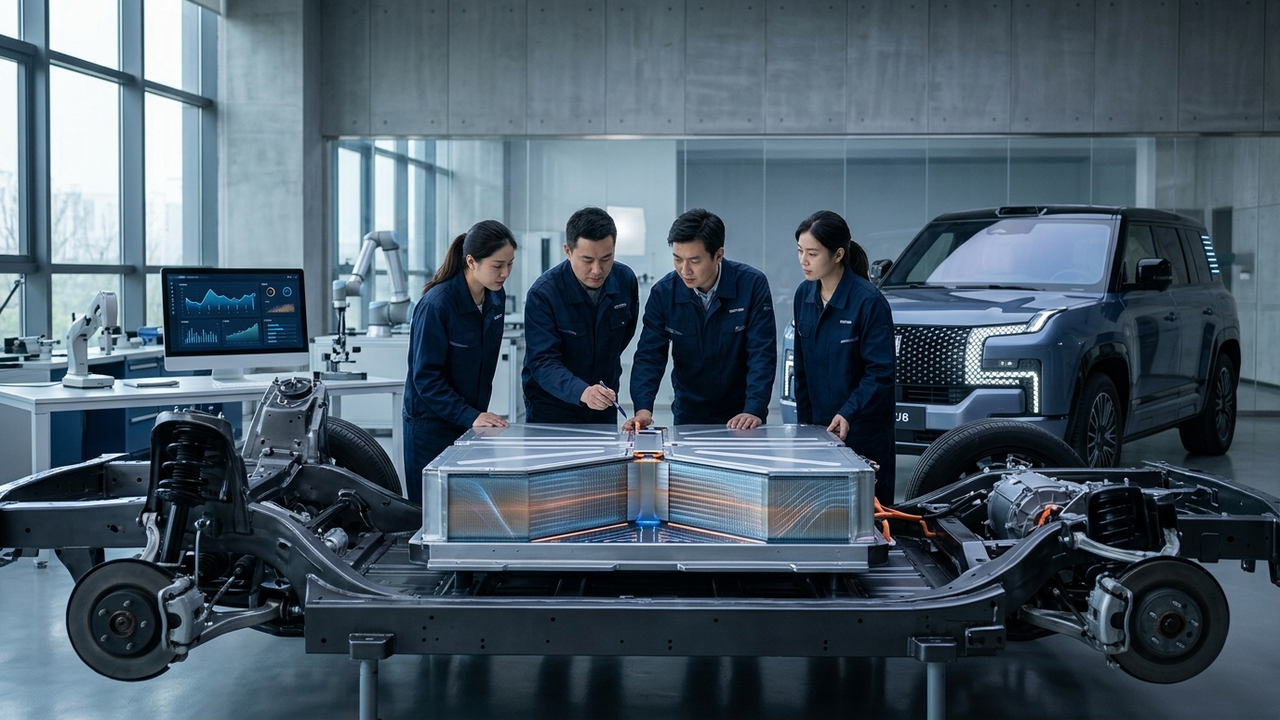
Chinese automotive giant BYD has announced plans to commence limited production of solid-state batteries for electric vehicles (EVs) in 2027. Initial projections estimate approximately 1,000 units in the first year, primarily intended for BYD’s luxury EV brands, Yangwang and Denza. This move signals BYD’s ambition to be an early adopter of next-generation battery technology and marks a significant milestone toward the initial practical application of solid-state batteries.
Technical Details and Challenges
The solid-state batteries BYD plans to introduce are expected to offer higher energy density, superior safety, and extended lifespan compared to conventional liquid-electrolyte lithium-ion batteries. While initial production will be limited, it represents a crucial step for the company to validate this innovative technology in real-world vehicles and accumulate data and experience for eventual mass production. Deployment in premium models is a common strategy for introducing high-cost, cutting-edge battery technologies, as performance validation in high-value EVs can pave the way for broader adoption. BYD has also secured six new patents for dual-electrolyte cathode architectures, emphasizing its focus on technological advancement.
Strategic Significance & Outlook
BYD’s commencement of limited production in 2027 represents clear progress toward the practical application of solid-state battery technology. Data gathered from initial deployments in premium models will be invaluable for future technological improvements and cost reductions, potentially leading to broader integration across BYD’s EV lineup. For researchers, real-world vehicle data will aid in validating new materials and designs. For engineers, resolving challenges in limited production will inform pathways to full-scale manufacturing. For investors, BYD’s early leadership in adopting next-generation battery technology stands out as a critical component of its long-term growth strategy.
Source: https://www.intelligentliving.co/byd-solid-state-battery-production-2027/
Get our weekly technology intelligence — free
Receive an infographic that lets you judge at a glance whether each field’s analysis report is worth reading.
Subscribe Free — Weekly Tech Intelligence
By subscribing, you’ll receive Troy-Technical’s weekly technology intelligence newsletter.
- Your email and selected fields are used only to deliver the newsletter.
- We never share your information with third parties.
- You can unsubscribe anytime via the link in each email.
See our Privacy Policy for details.
Takes about a minute · Unsubscribe anytime