Key Findings
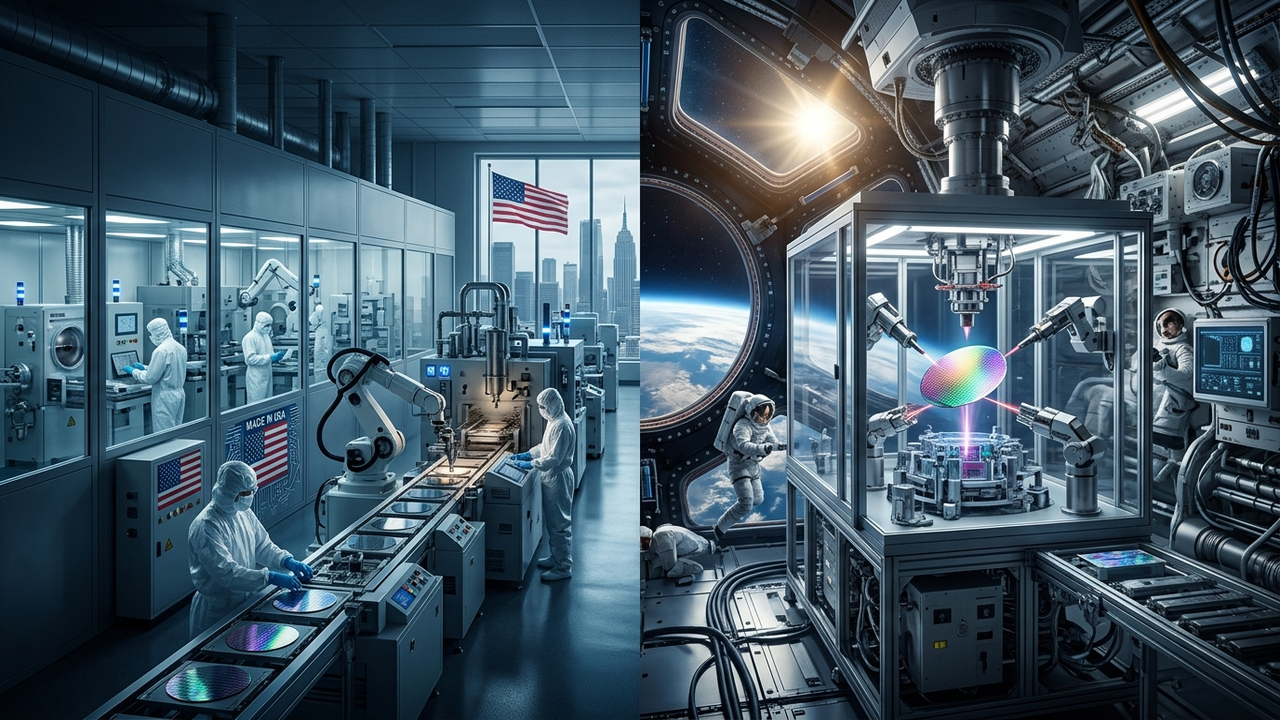
A strategic recommendation has been put forth for the United States to simultaneously pursue both domestic and space-based semiconductor manufacturing capabilities to address geopolitical risks and supply chain vulnerabilities. This dual approach highlights that microgravity environments offer a unique frontier for producing ultra-high-performance semiconductors with fewer defects, capabilities unattainable on Earth, thereby securing a new technological advantage for the U.S.
Technical and Policy Details
Semiconductor manufacturing in microgravity is expected to dramatically reduce impurity incorporation and defect formation during crystal growth, as it eliminates gravity-induced convection, sedimentation, and stress effects. Consequently, space-manufactured semiconductors could exhibit superior performance, smaller dimensions, and greater uniformity compared to existing terrestrial products. This opens avenues for developing ultra-efficient power semiconductors, sensors functioning in extreme environments, and specialized semiconductors crucial for quantum computing. The article suggests that the U.S. CHIPS and Science Act, which heavily supports domestic semiconductor manufacturing, should extend its grants and tax incentives to space-based production. This extension would strengthen incentives for private companies to invest in orbital semiconductor factories and R&D, accelerating the commercialization of in-space manufacturing.
Background and Industry Context
Semiconductors are foundational strategic assets, indispensable across all sectors of the modern economy, defense, and advanced technology. However, the global semiconductor supply chain is highly concentrated in a few regions, making it vulnerable to geopolitical tensions and natural disasters. While the U.S. aims to mitigate this vulnerability by bolstering domestic manufacturing, achieving next-generation technological leadership also requires new manufacturing approaches that transcend Earth’s limitations. Space-based semiconductor production not only diversifies the supply chain but also promises to create entirely new industries and technological competitiveness by yielding semiconductors with capabilities previously thought impossible.
Future Outlook
While space-based semiconductor manufacturing is still in its nascent stages, its potential is immense. Applying the CHIPS and Science Act to space could significantly accelerate investment and technological development in this field. In the short term, microgravity materials science research and prototype manufacturing are expected to intensify, with orbital semiconductor manufacturing facilities becoming a tangible prospect in the long run. This strategy would secure long-term U.S. technological leadership, strengthen defense capabilities, and profoundly impact global markets through innovative products. However, space manufacturing also entails challenges such as high costs, logistical complexities, and space debris, necessitating continuous efforts to overcome these hurdles.
Get our weekly technology intelligence — free
Receive an infographic that lets you judge at a glance whether each field’s analysis report is worth reading.
Subscribe Free — Weekly Tech Intelligence
By subscribing, you’ll receive Troy-Technical’s weekly technology intelligence newsletter.
- Your email and selected fields are used only to deliver the newsletter.
- We never share your information with third parties.
- You can unsubscribe anytime via the link in each email.
See our Privacy Policy for details.
Takes about a minute · Unsubscribe anytime