Key Findings
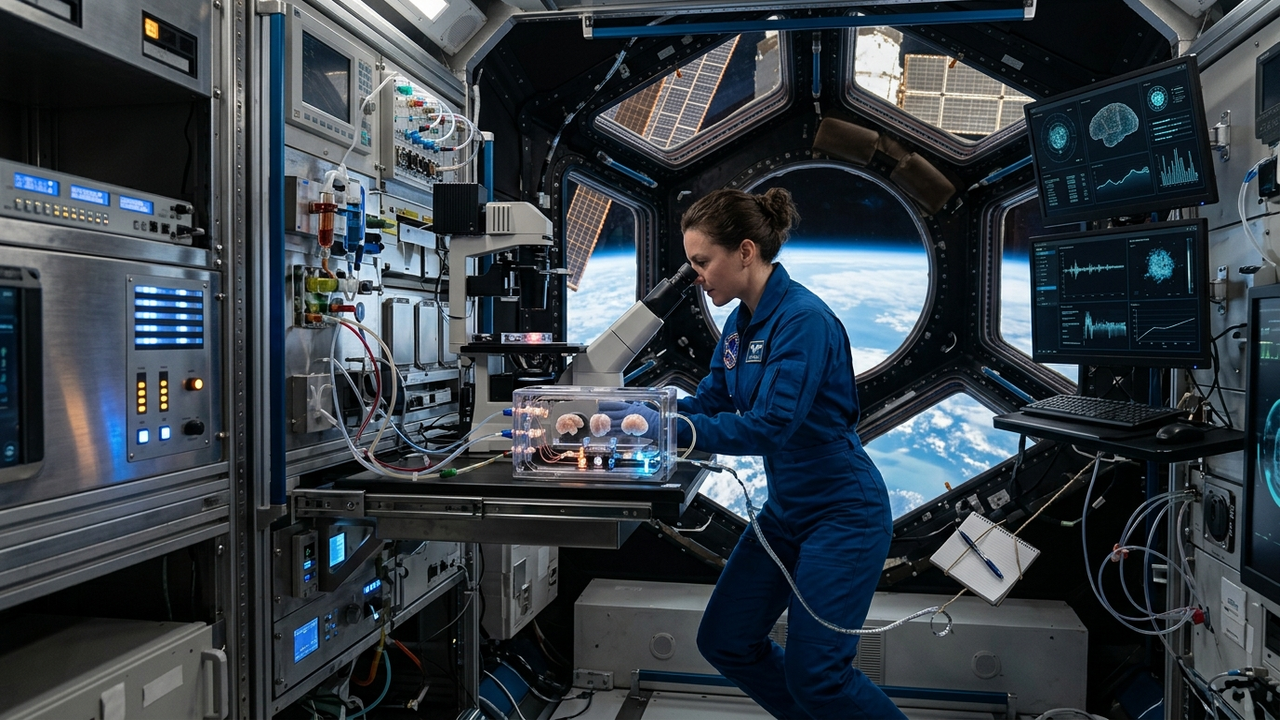
Brain organoid research conducted on the International Space Station (ISS) is making substantial progress towards developing revolutionary treatments for neurological disorders. The microgravity environment provides a unique platform for researchers to generate brain organoids rapidly and efficiently, to elucidate disease mechanisms difficult to replicate on Earth, and to accelerate the evaluation of new drug candidates. Particularly, the demonstration that Parkinson’s and multiple sclerosis neural organoids exhibited changes in gene networks in space, leading to a clinical trial for the antiretroviral drug lamivudine, strongly emphasizes the direct clinical significance of this research.
Technical and Clinical Details
Brain organoids are three-dimensional brain tissue models derived from stem cells, serving as powerful tools for studying human brain development, function, and disease. The microgravity environment on the ISS offers the advantage of promoting more uniform and denser tissue structures, free from gravitational forces during organoid growth. This accelerates organoid generation, which can take weeks to months in terrestrial cultures, enabling high-throughput drug screening. Previous ISS experiments confirmed specific gene expression changes in Parkinson’s disease model organoids and demyelination-related changes in multiple sclerosis model organoids. These findings provided new insights into disease pathophysiology and subsequently indicated the potential of the antiretroviral drug lamivudine as an effective therapeutic candidate. Based on ISS data, lamivudine is advancing to clinical trial stages for expanded indications in specific neurodegenerative diseases.
Background and Industry Context
Neurodegenerative diseases, such as Alzheimer’s, Parkinson’s, and multiple sclerosis, represent a severe group of disorders with limited effective treatments. Fully replicating the complex mechanisms of these diseases using terrestrial models (2D cell cultures or animal models) is challenging, creating a bottleneck in drug discovery. The microgravity environment of the ISS is expected to provide more physiologically relevant disease models, as cells grow without gravitational stress. This research presents new opportunities for pharmaceutical and biotechnology companies to increase the speed and success rate of novel drug development. The ISS National Lab actively promotes partnerships with private companies to support the commercialization of space-based life science research.
Future Outlook
Brain organoid research on the ISS holds the potential to revolutionize the diagnosis and treatment of neurodegenerative diseases. Future steps involve establishing more diverse neurological disease models, developing complex organoids combining multiple cell types, and validating long-term effects after return to Earth. Furthermore, if the lamivudine clinical trial succeeds, it will be a groundbreaking example of microgravity research directly contributing to the drug approval process. In the long term, automated drug screening platforms in orbit could be established, potentially complementing and accelerating terrestrial drug discovery efforts. Advancements in this field are expected to broaden the boundaries of neuroscience, pharmaceuticals, and space life sciences, making significant contributions to human health and well-being.
Source: https://issnationallab.org/press-releases/brain-organoid-studies-on-the-iss/
Get our weekly technology intelligence — free
Receive an infographic that lets you judge at a glance whether each field’s analysis report is worth reading.
Subscribe Free — Weekly Tech Intelligence
By subscribing, you’ll receive Troy-Technical’s weekly technology intelligence newsletter.
- Your email and selected fields are used only to deliver the newsletter.
- We never share your information with third parties.
- You can unsubscribe anytime via the link in each email.
See our Privacy Policy for details.
Takes about a minute · Unsubscribe anytime