Key Findings
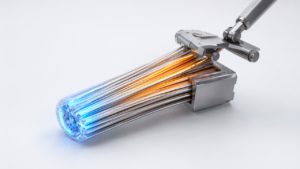
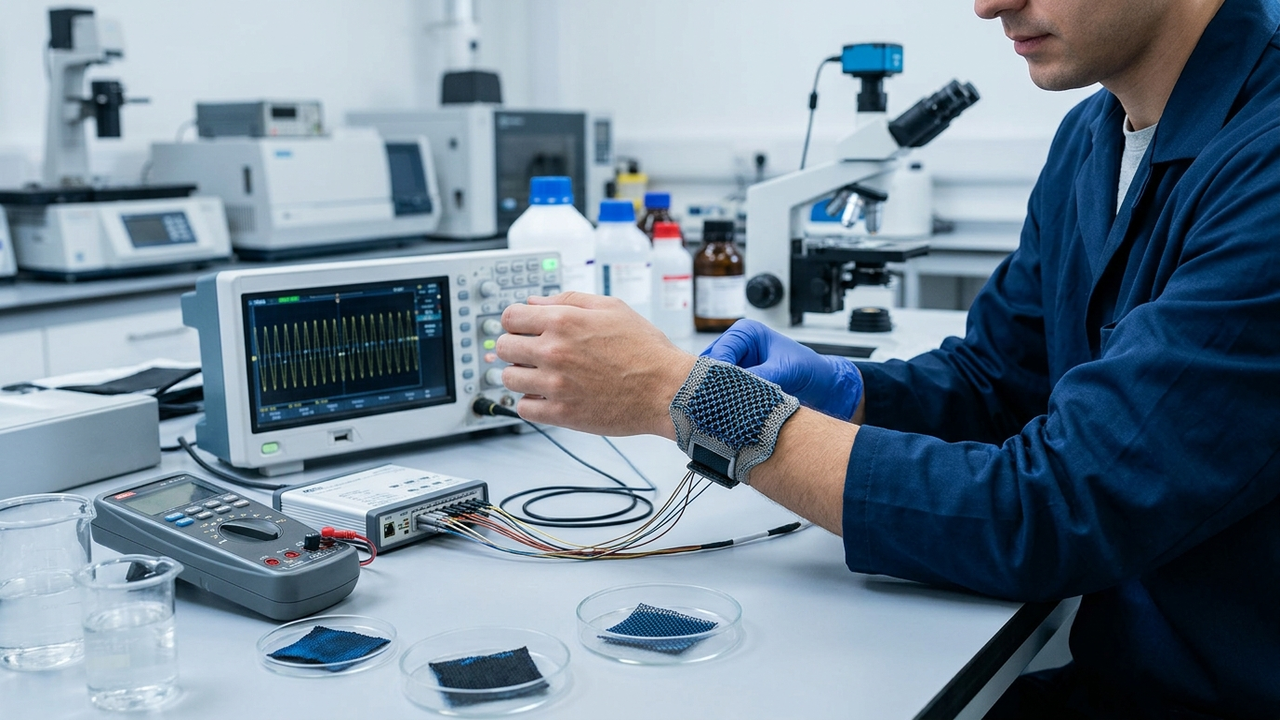
A recent study has led to the development of a dual-mode flexible sensing unit that integrates both thermoelectric and piezoelectric functionalities, achieved by coating PEDOT/PSS (poly(3,4-ethylenedioxythiophene)-poly(styrenesulfonate)) onto the polyvinylidene fluoride (PVDF) spacer filaments of a 3D spacer fabric. This innovative material architecture demonstrates the capability for multi-modal sensing in self-powered wearable applications.
Technical / Clinical Details
The developed 3D flexible sensor leverages its unique structural and material composition to exhibit excellent thermoelectric conversion efficiency and piezoelectric responsiveness. The PEDOT/PSS coating complements the inherent piezoelectric properties of PVDF while simultaneously enabling the conversion of thermal energy into electrical energy. This integrated approach allows the single device to detect both temperature gradients (thermoelectric effect) and mechanical strains (piezoelectric effect) with high sensitivity. Specifically, its ability to capture subtle mechanical changes from body movements and temperature differences makes it highly applicable for diverse bio-signal acquisition in health monitoring and sports science.
Background & Context
The field of wearable electronics constantly seeks more multifunctional and energy-efficient sensors. Traditional wearable sensors often measure only a single physical parameter, requiring multiple devices or complex circuitry for integrated functionalities. Power supply also remains a significant challenge. The dual-mode sensor developed in this research addresses these issues by harnessing both thermal and kinetic energy from the environment, thereby reducing reliance on external batteries and contributing to the realization of truly self-powered devices. This self-sustainability significantly enhances the practicality and user experience of wearable technologies.
Strategic Significance & Outlook
This technology holds substantial promise for future smart textiles, advanced health monitoring devices, soft robotics, and human-machine interaction systems. Its flexible nature facilitates integration into skin-worn patches or embedded textile sensors. Future research will likely focus on further improving the sensor’s sensitivity, stability, and biocompatibility, pushing towards practical implementation in diverse environments. This advancement paves the way for a more comfortable, sustainable, and intelligent future for wearable technology, offering robust sensing capabilities without the constant need for recharging.
Get our weekly technology intelligence — free
Receive an infographic that lets you judge at a glance whether each field’s analysis report is worth reading.
Subscribe Free — Weekly Tech Intelligence
By subscribing, you’ll receive Troy-Technical’s weekly technology intelligence newsletter.
- Your email and selected fields are used only to deliver the newsletter.
- We never share your information with third parties.
- You can unsubscribe anytime via the link in each email.
See our Privacy Policy for details.
Takes about a minute · Unsubscribe anytime