Key Findings
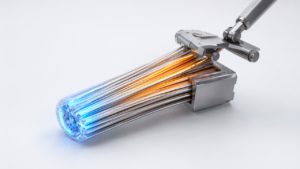
Building upon research from NASA and MIT, AI agents have successfully developed a groundbreaking method to effectively reduce friction on aircraft wing models, circumventing the need for traditionally costly computer simulations. This advancement is set to accelerate the development of morphing aircraft wings that utilize shape memory alloys (SMAs) and piezoelectric actuators to form adaptive wings capable of changing shape in real-time for drag reduction. Furthermore, the potential introduction of ultra-lightweight ‘mechanical metamaterials’ for wing structures has been suggested, promising a revolution in aerospace material design and efficiency.
Technical / Clinical Details
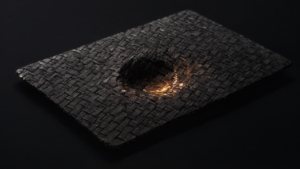
The AI agents employed a data-driven approach, rather than relying on physics-based simulations, to streamline the trial-and-error process. Specifically, they learned from limited experimental data and low-fidelity simulations to explore optimal combinations of wing shapes and material properties, thereby achieving drag reduction. This enabled the discovery of effective design solutions without requiring extensive computational resources for high-fidelity computational fluid dynamics (CFD) simulations. The realization of adaptive wings necessitates smart materials capable of changing shape in response to external conditions (e.g., speed, altitude). Shape memory alloys possess the ability to return to a pre-programmed shape with temperature changes, while piezoelectric actuators can induce subtle deformations via electrical signals. Integrating these materials into wing structures allows for dynamically maintaining optimal aerodynamic profiles to minimize drag. Mechanical metamaterials, on the other hand, are engineered materials designed to possess unique mechanical properties not found in conventional materials, such as negative Poisson’s ratio or ultra-lightweight high strength, contributing to wing weight reduction and improved structural efficiency.
Background & Context
The aviation industry faces pressing challenges to improve fuel efficiency and reduce environmental impact. Aircraft drag significantly affects fuel consumption, and conventional fixed-wing designs cannot adapt to varying flight conditions. Morphing aircraft wings have the potential to significantly reduce drag and improve fuel efficiency by adjusting their shape optimally during flight. However, their design and manufacturing have been exceptionally complex and costly. The introduction of AI plays a crucial role in managing this complexity and reducing development costs and time. By reducing reliance on expensive simulations, smaller companies and startups can also more easily participate in the development of smart material-enabled aerospace technologies.
Strategic Significance & Outlook
This AI-driven friction reduction technology, integrated with smart material-enabled morphing aircraft wings, has the potential to revolutionize future aircraft design. The improvements in fuel efficiency will directly translate into reduced operational costs for airlines and a significant decrease in carbon emissions. Furthermore, the technology can be applied to the design of unmanned aerial vehicles (UAVs) and spacecraft, leading to systems with higher performance and greater autonomy. Future research will focus on validating material durability, reliability, and scalability for mass production. The evolution of AI-driven design optimization and smart materials promises to accelerate the development of adaptive structures not only in aerospace engineering but also in diverse fields such as robotics, automotive, and civil engineering, marking a new era of responsive engineering solutions.
Get our weekly technology intelligence — free
Receive an infographic that lets you judge at a glance whether each field’s analysis report is worth reading.
Subscribe Free — Weekly Tech Intelligence
By subscribing, you’ll receive Troy-Technical’s weekly technology intelligence newsletter.
- Your email and selected fields are used only to deliver the newsletter.
- We never share your information with third parties.
- You can unsubscribe anytime via the link in each email.
See our Privacy Policy for details.
Takes about a minute · Unsubscribe anytime