Key Findings
A fully printable, origami-inspired thermoelectric generator has been developed, demonstrating its capability to convert waste heat into electrical energy with high power density, offering a significant breakthrough in energy recovery from low-grade heat sources. Concurrently, a Japanese research team has made strides in flexible, washable, and highly efficient organic thermoelectric compounds, designed to be directly printed onto fabric. Further augmenting the field, NexTherm has announced a photonic system achieving 18% efficiency in waste heat conversion.
Technical / Clinical Details
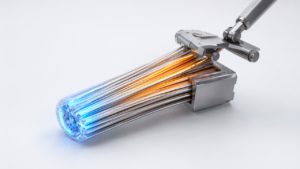
The origami-inspired thermoelectric generator leverages the structural advantages of paper folding to achieve a high surface area-to-volume ratio and flexibility. This design enhances thermal contact efficiency and allows for effective heat harvesting and conversion into electricity even in confined spaces. The emphasis on high power density suggests its potential for practical energy recovery systems. The innovative research from Japan focuses on organic thermoelectric compounds that combine flexibility, washability, and high efficiency, allowing for direct printing onto textiles. This technology is pivotal for wearable electronics and smart textiles, enabling self-powered devices that can convert body heat or ambient thermal energy into electricity, thereby eliminating the need for traditional batteries in many applications.
In a related development, NexTherm’s photonic system has achieved an impressive 18% efficiency in converting waste heat, a substantial improvement over conventional thermoelectric technologies. This higher efficiency could make large-scale industrial waste heat recovery more economically viable. While each innovation employs distinct mechanisms, they collectively aim to reduce environmental impact and improve energy resource utilization, representing a multi-faceted approach to a global challenge.
Background & Context
The escalating global energy demand, coupled with a growing imperative for sustainability, has made efficient waste heat recovery a critical area of research. Vast amounts of waste heat are generated by industrial processes, vehicles, and electronic devices; however, much of it is low-grade and difficult to harvest efficiently. Thermoelectric generation, which directly converts thermal energy into electrical energy, is a clean technology of considerable interest, but its widespread adoption has been hampered by efficiency and cost limitations. The recent breakthroughs in design and material development, such as the origami concept and novel organic compounds, are poised to overcome these long-standing challenges, significantly advancing the practical application of thermoelectric devices.
Strategic Significance & Outlook
The development of origami-inspired thermoelectric generators and highly efficient organic thermoelectric materials by the Japanese research team holds profound implications for distributed energy generation and wearable power solutions. With the proliferation of IoT devices and sensor networks, the demand for small, self-powered energy sources is rapidly expanding. These technologies are expected to contribute to enhanced energy efficiency in industrial processes, complement renewable energy systems, and enable new categories of smart devices in everyday life, marking a significant step towards a sustainable future. NexTherm’s high-efficiency system also promises scalable solutions for industrial waste heat, further diversifying the approaches to green energy production.
Get our weekly technology intelligence — free
Receive an infographic that lets you judge at a glance whether each field’s analysis report is worth reading.
Subscribe Free — Weekly Tech Intelligence
By subscribing, you’ll receive Troy-Technical’s weekly technology intelligence newsletter.
- Your email and selected fields are used only to deliver the newsletter.
- We never share your information with third parties.
- You can unsubscribe anytime via the link in each email.
See our Privacy Policy for details.
Takes about a minute · Unsubscribe anytime