Key Findings
As of 2026, the 3D printing sector is witnessing a significant expansion in high-performance engineering filaments, ranging from common PETG to advanced Polycarbonate (PC), catering to applications demanding exceptional durability and specific functionalities. Notably, new product introductions like Polymaker PolyLite ABS are further enriching material options, providing enhanced mechanical properties and printability for industrial applications.
Technical / Clinical Details
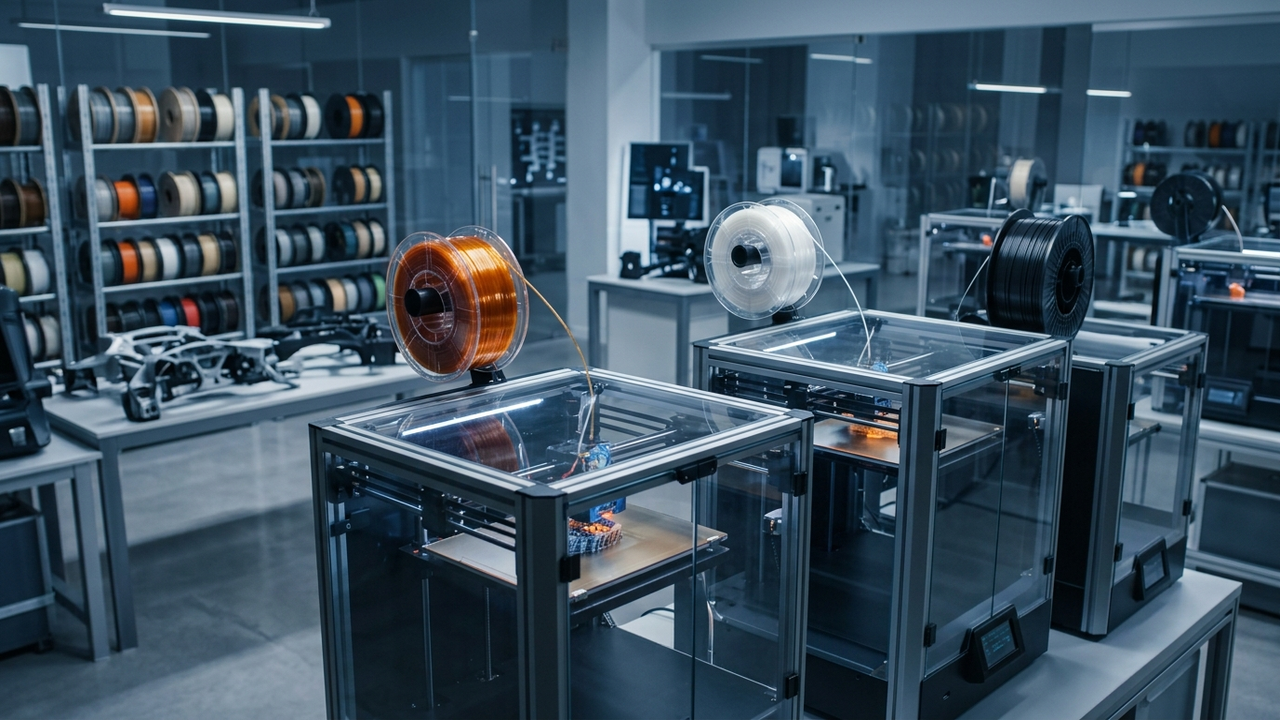
This comprehensive guide meticulously compares and analyzes the characteristics of leading engineering filaments, including PETG, PCTG, ABS, ASA, Nylon, PC, and carbon fiber reinforced composites. For instance, PETG is favored for its ease of printing and excellent toughness, while PCTG offers superior heat and chemical resistance over PETG. ABS provides high strength and thermal stability but is prone to warping, a limitation addressed by ASA which adds excellent UV resistance. Nylon excels in flexibility and wear resistance, and PC boasts the highest impact strength and heat deflection temperatures. Carbon fiber reinforced composites impart additional rigidity and lightweight properties to these polymers. Achieving optimal results with each material necessitates adherence to specific 3D printer hardware requirements, such as heated beds, enclosures, and precise nozzle temperatures.
Background & Context
3D printing has evolved from rapid prototyping to direct manufacturing of end-use parts, necessitating increasingly sophisticated materials. Industries such as aerospace, automotive, medical devices, and industrial machinery require components with complex geometries, lightweight structures, and resilience to harsh environments, often challenging to achieve with traditional manufacturing methods. The diversification of engineering filaments directly addresses these industrial needs, providing more advanced and customized solutions.
Strategic Significance & Outlook
The engineering filament market is poised for continued growth, with ongoing research and development in novel materials and composites set to broaden the scope of 3D printing applications. Material manufacturers are focusing not only on improving fundamental properties like strength, heat, and chemical resistance but also on developing filaments with advanced functionalities such as electrical conductivity, self-healing capabilities, and biocompatibility. These advancements will solidify 3D printing’s position as a transformative manufacturing tool, unlocking new possibilities in design and production across various high-tech sectors.
Source: https://3dprinting.com/filament/engineering-filaments/
Get our weekly technology intelligence — free
Receive an infographic that lets you judge at a glance whether each field’s analysis report is worth reading.
Subscribe Free — Weekly Tech Intelligence
By subscribing, you’ll receive Troy-Technical’s weekly technology intelligence newsletter.
- Your email and selected fields are used only to deliver the newsletter.
- We never share your information with third parties.
- You can unsubscribe anytime via the link in each email.
See our Privacy Policy for details.
Takes about a minute · Unsubscribe anytime