
Key Findings
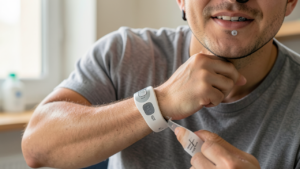
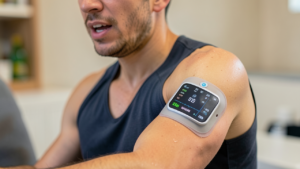
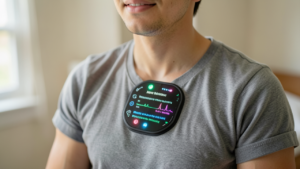
Self-powered multimodal wearable systems are undergoing rapid evolution in the digital health sector, integrating energy harvesting technologies, highly integrated device designs, and the concept of Foundation Model-driven cognition. Recent research has notably reported an innovative 3D integrated physical-chemical sensing electronic skin (e-skin) that features electrodes vertically integrated into the skin, capable of simultaneously capturing contact pressure and sweat glucose concentrations with high precision. This cutting-edge system enables the composite monitoring of multiple physiological parameters, including pulse, voice, and motion states in real-time, thereby allowing for a more comprehensive understanding of an individual’s health status.
Technical / Clinical Details
This 3D integrated e-skin precisely positions and integrates various types of sensors onto a flexible substrate. Its energy harvesting capabilities power the device by utilizing body movements (e.g., triboelectricity) and body heat (e.g., thermoelectric conversion), minimizing the need for external batteries and enabling long-term continuous use. The vertically integrated electrodes maximize contact area with the skin surface, functioning as contact pressure sensors while also acting as electrochemical biosensors to detect glucose in sweat secreted from sweat glands. This multimodal approach allows for the simultaneous and synchronized collection of changes in pulse and vocalizations (voice) associated with the user’s physical activity (motion), as well as changes in sweat biomarkers (glucose). This provides a rich dataset for deeper understanding of complex health interrelationships, such as stress levels, metabolic status, and cardiovascular function.
Background & Context
Traditional wearable devices often measure only a single or a few parameters, and battery life has been a persistent challenge. With the advancement of digital healthcare, there is a growing demand for more comprehensive and sustainable monitoring solutions. Self-powered technology is crucial for enhancing device autonomy and improving user convenience. Furthermore, Foundation Model-driven cognition represents the latest trend in AI for extracting more sophisticated and personalized health insights from the vast amounts of collected multimodal data. This research is a testament to the convergence of cutting-edge materials science, electronics, biosensor technology, and AI, with significant implications for chronic disease management, preventive medicine, and athlete performance monitoring.
Strategic Significance & Outlook
This self-powered multimodal wearable system holds the potential to fundamentally transform personalized health management in the future. Its ability to simultaneously and energy-efficiently monitor multiple biomarkers and physical parameters enables ultra-early disease detection, precise assessment of stress levels, and optimization of personalized lifestyle interventions. Future work will focus on validating its practicality and reliability through large-scale clinical trials and evaluating its effectiveness across various disease groups. Additionally, evolution towards smaller, more discreet form factors and seamless integration with healthcare systems, while ensuring data privacy and security, will be the next major challenges. This technology is expected to form the foundation for elevating personalized preventive healthcare to the next level globally.
Get our weekly technology intelligence — free
Receive an infographic that lets you judge at a glance whether each field’s analysis report is worth reading.
Subscribe Free — Weekly Tech Intelligence
By subscribing, you’ll receive Troy-Technical’s weekly technology intelligence newsletter.
- Your email and selected fields are used only to deliver the newsletter.
- We never share your information with third parties.
- You can unsubscribe anytime via the link in each email.
See our Privacy Policy for details.
Takes about a minute · Unsubscribe anytime




Comments