Key Findings
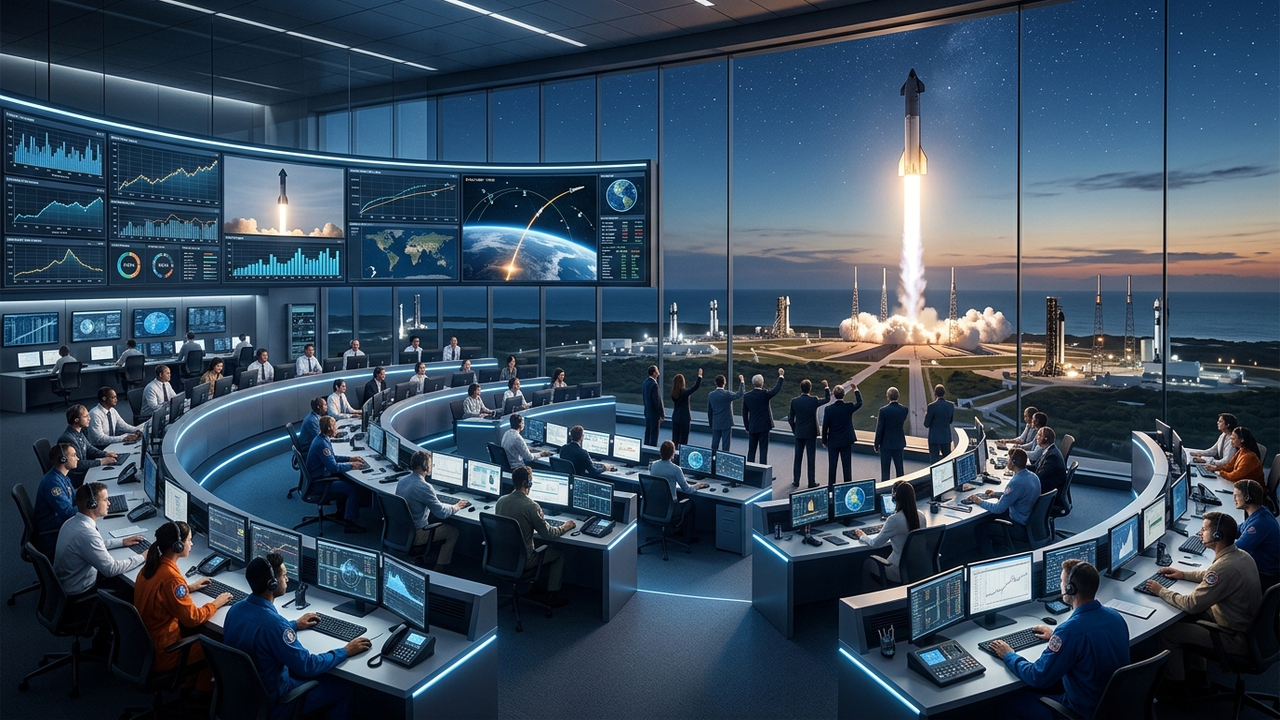
President Donald J. Trump has officially signed a groundbreaking National Space Transportation Policy, setting an ambitious target of enabling over 1,000 space launches and reentries per year by 2030. This policy unequivocally positions the cultivation and enhancement of the U.S. commercial space transportation industry as a top national priority, intending to solidify American leadership in the burgeoning space economy. Key directives include promoting the maximal use of national launch ranges by commercial operators and bolstering the foundational industrial base supporting the entire space transportation sector.
Policy Details and Technical Implications
This comprehensive national policy encompasses a broad spectrum of objectives and instructions designed to revolutionize space access. Firstly, it mandates federal agencies to prioritize the procurement of commercial space transportation services, aiming to reduce costs and improve operational efficiency. Specifically, NASA is directed to proactively leverage existing commercial capabilities for both crewed and uncrewed lunar and Martian missions, thereby stimulating private sector innovation. Secondly, the policy emphasizes modernizing and expanding space transportation infrastructure, encouraging investment in private spaceports, and streamlining licensing and regulatory processes to significantly increase launch frequency and versatility. Achieving over 1,000 annual launches will necessitate advanced reusable rocket technologies, highly automated launch and landing systems, and efficient in-orbit refueling and maintenance capabilities. These requirements will drive breakthroughs across various technical domains, including novel materials, advanced avionics, and AI-powered flight management systems.
Background and Industry Context
The global space industry has witnessed unprecedented growth and transformation, largely driven by the emergence of private companies like SpaceX, which have drastically reduced launch costs and increased launch cadence. The target of 1,000 annual launches represents an order-of-magnitude increase over current rates, signaling a vision to transition space travel from an extraordinary feat to a routine mode of transportation. This policy views space as a new economic frontier, fostering the creation of diverse new industries such as low-Earth orbit manufacturing, microgravity research for high-value materials, and pharmaceutical production. Easier access to space will unlock new opportunities for research and development, commercial exploitation, and national security applications.
Strategic Significance and Outlook
The Trump administration’s policy is expected to act as a powerful catalyst for accelerated investment and innovation across the entire space sector. Companies specializing in reusable launch vehicles and in-orbit servicing are particularly poised for significant growth and new business opportunities. Concurrently, the exponential increase in launch activities and orbital operations will necessitate urgent attention to challenges such as space traffic management, debris mitigation, and ensuring the long-term sustainability of the space environment. This forthcoming ‘Golden Age of Space Transportation’ presents unparalleled challenges and opportunities for materials scientists, engineers, and researchers, further intensifying the wave of innovation in the space domain globally.
Get our weekly technology intelligence — free
Receive an infographic that lets you judge at a glance whether each field’s analysis report is worth reading.
Subscribe Free — Weekly Tech Intelligence
By subscribing, you’ll receive Troy-Technical’s weekly technology intelligence newsletter.
- Your email and selected fields are used only to deliver the newsletter.
- We never share your information with third parties.
- You can unsubscribe anytime via the link in each email.
See our Privacy Policy for details.
Takes about a minute · Unsubscribe anytime






Comments