Key Findings
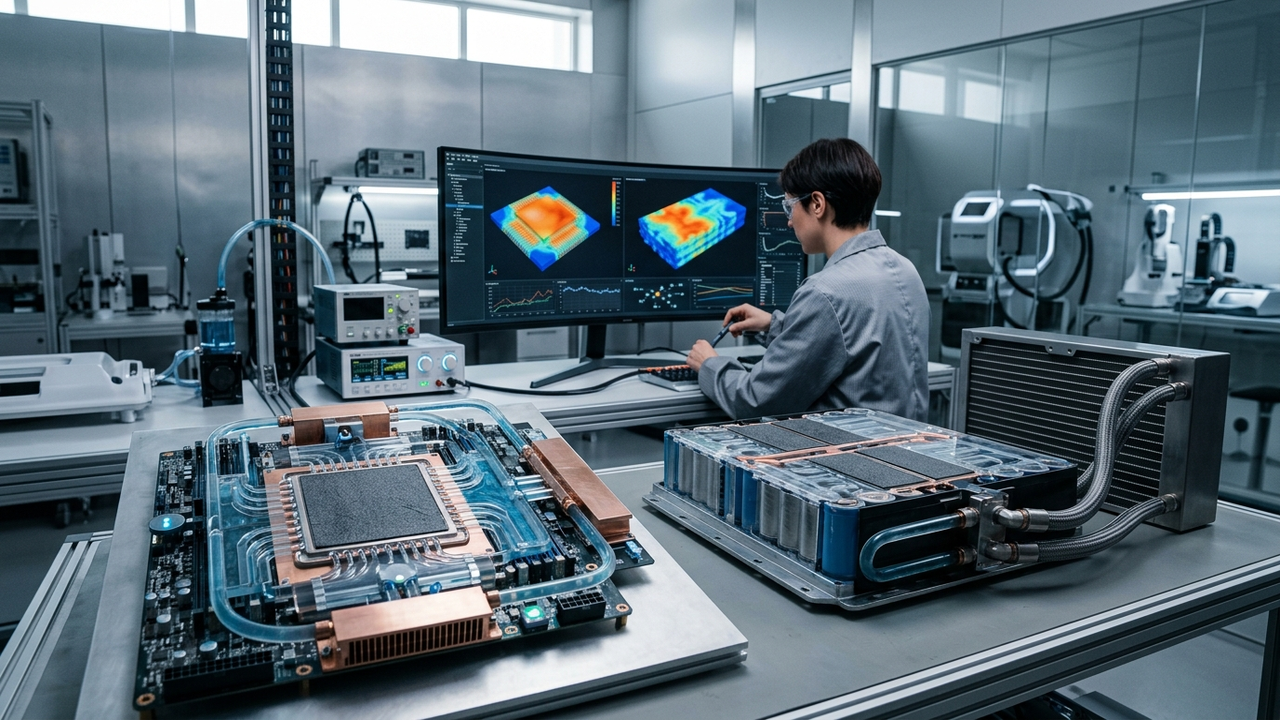
In 2026, the latest advancements in thermal engineering are delivering groundbreaking solutions to the extreme heat management challenges faced by next-generation Artificial Intelligence (AI) chips and Electric Vehicle (EV) batteries. A comprehensive integration of diverse approaches, including liquid cooling, phase-change materials (PCMs), vapor chambers, and AI-driven thermal systems, is expected to dramatically enhance the performance, safety, and lifespan of these high-performance devices.
Technical / Clinical Details
To address the high-density heat generation in AI chips that traditional air cooling cannot manage, liquid cooling provides significantly more efficient heat removal. Microchannel and jet impingement cooling systems, in particular, effectively manage localized hot spots. PCMs, utilizing their high latent heat capacity, absorb and release substantial amounts of heat to stabilize temperature fluctuations, preventing battery overheating and delaying degradation. Nano-enhanced PCMs, incorporating nanoparticles, further boost thermal conductivity to improve performance. Vapor chambers function as passive methods to rapidly transport heat away from sources. Furthermore, AI algorithms predict thermal loads based on sensor data and optimize cooling systems in real-time, maximizing the balance between energy efficiency and cooling performance. Graphene-based thermal interface materials and carbon nanotube heat spreaders, with their superior thermal conductivity, reduce thermal resistance between chips and cooling systems, greatly improving overall thermal management efficiency.
Background & Context
The evolution of AI demands increasingly powerful and complex processors, leading to a dramatic increase in heat generation. Similarly, EV batteries face challenges of thermal runaway risk and performance degradation due to demands for higher capacity and rapid charging. These thermal issues directly impact device reliability, energy efficiency, and ultimately, product competitiveness in the market, making thermal engineering breakthroughs indispensable. Efficient thermal management is becoming a key differentiator, particularly in reducing data center operating costs and enhancing the EV user experience.
Strategic Significance & Outlook
These thermal engineering advancements are poised to enable further performance gains in AI chips and enhance the safety and range of EV batteries, strongly supporting the growth of their respective industries. Miniaturization and weight reduction of liquid cooling systems, improved thermal cycling stability of PCMs, and enhanced precision in AI-driven predictive thermal management will be key areas of future research and development. Ultimately, integrated ‘smart thermal management networks’ are expected to become the foundation for energy-efficient operations across all applications, from data centers to individual mobile devices and the expansive EV infrastructure, ensuring optimal performance and longevity.
Get our weekly technology intelligence — free
Receive an infographic that lets you judge at a glance whether each field’s analysis report is worth reading.
Subscribe Free — Weekly Tech Intelligence
By subscribing, you’ll receive Troy-Technical’s weekly technology intelligence newsletter.
- Your email and selected fields are used only to deliver the newsletter.
- We never share your information with third parties.
- You can unsubscribe anytime via the link in each email.
See our Privacy Policy for details.
Takes about a minute · Unsubscribe anytime








Comments