Key Findings
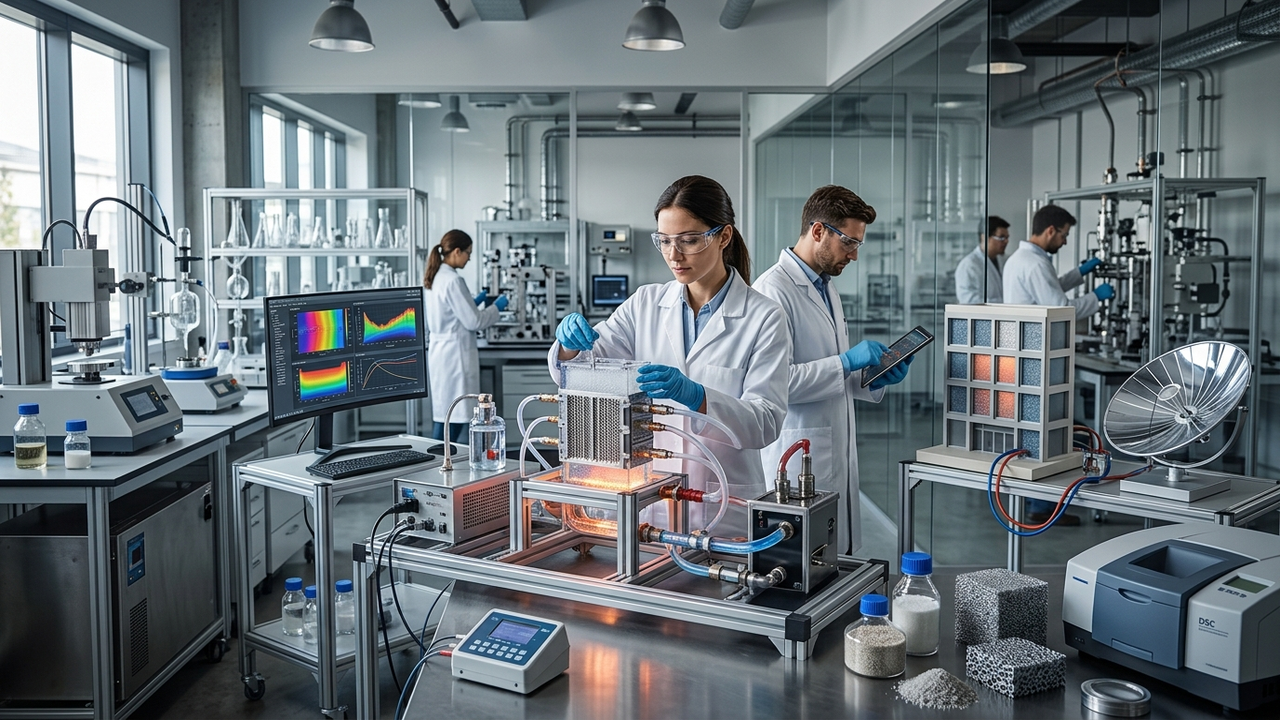
A comprehensive review paper published in the International Journal For Multidisciplinary Research (IJFMR) details methods to enhance the thermal performance of phase-change materials (PCMs) for sustainable energy storage systems. This study meticulously analyzes key technical challenges inherent in PCMs, including low thermal conductivity, material leakage, and supercooling phenomena, providing concrete solutions. It thereby presents a roadmap for accelerating the commercialization of PCMs across a wide range of applications, such as energy conservation in buildings, improved efficiency in solar thermal systems, and effective utilization of industrial waste heat.
Technical / Clinical Details
The paper proposes several strategies to improve the thermal conductivity of PCMs. One approach involves adding high-conductivity nanoparticles like graphene or carbon nanotubes to the PCM, dramatically increasing the material’s overall heat transfer capability. Another detailed technique describes integrating high-surface-area structures such as metal foams or fins into PCMs to boost heat exchange efficiency. To prevent PCM leakage, microencapsulation or the use of form-stable PCMs is effective, simplifying material handling and increasing system design flexibility. For addressing supercooling, the selection of appropriate nucleating agents and composite material design is crucial. These technologies contribute to enhancing system reliability and durability, ensuring long-term performance.
Background & Context
Combating global warming and improving energy efficiency are pressing issues in contemporary society. PCMs, with their ability to store large amounts of thermal energy through latent heat, have been considered essential technology for addressing these challenges. However, the aforementioned technical barriers have hindered their widespread commercial application. This review provides comprehensive insights into the latest research trends and practical approaches to overcome these barriers, thereby supporting the growth of the PCM market. The emphasis on system-level performance evaluation and optimization aligns with industrial needs for practical implementation.
Strategic Significance & Outlook
This review will serve as a valuable guide for accelerating research and development towards the commercialization of PCM technology. In the future, in addition to resolving individual technical challenges, the development of composite PCM systems tailored to various application requirements is expected to advance. Specifically, active temperature regulation in smart buildings, high-efficiency thermal storage in solar water heaters and power generation systems, and systems for effective recovery of industrial waste heat are anticipated to become widespread. Through these advancements, PCMs are poised to establish their position as a fundamental technology indispensable for realizing a sustainable energy society.
Get our weekly technology intelligence — free
Receive an infographic that lets you judge at a glance whether each field’s analysis report is worth reading.
Subscribe Free — Weekly Tech Intelligence
By subscribing, you’ll receive Troy-Technical’s weekly technology intelligence newsletter.
- Your email and selected fields are used only to deliver the newsletter.
- We never share your information with third parties.
- You can unsubscribe anytime via the link in each email.
See our Privacy Policy for details.
Takes about a minute · Unsubscribe anytime








Comments