Key Findings
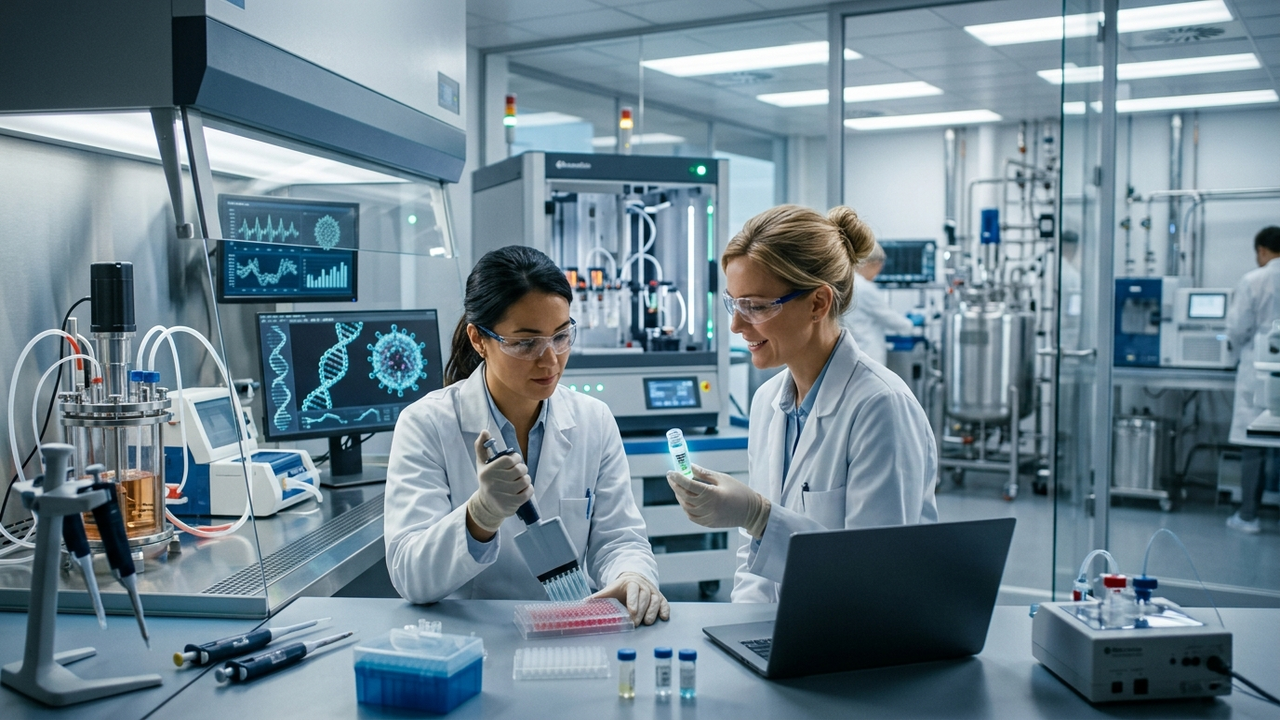
4basebio and Genezen have partnered to integrate 4basebio’s cell-free synthetic DNA platform, hpDNA, into Genezen’s viral vector manufacturing workflow. This collaboration has demonstrated that in adeno-associated virus (AAV) production, it’s possible to achieve comparable titers while reducing the required DNA and transfection reagents by approximately 30% compared to traditional plasmid DNA methods. This represents a groundbreaking advancement for significantly cutting the manufacturing costs of gene therapies and alleviating manufacturing bottlenecks.
Technical & Clinical Details
In gene therapy manufacturing, viral vectors, particularly AAV, are essential tools for efficiently delivering genes to target cells. However, producing these vectors involves complex, time-consuming, and costly processes, including plasmid DNA procurement, bacterial culture, purification, and quality control.
- Innovation of the hpDNA Platform: 4basebio’s hpDNA platform utilizes an enzyme-driven, cell-free manufacturing process. This eliminates the need for bacterial culture typically required for traditional plasmid DNA production, enabling the creation of cleaner and safer linear synthetic DNA free from bacterial backbone sequences and antibiotic resistance genes. This ‘cleanliness’ is crucial for enhancing the quality and safety of the final therapeutic product.
- Manufacturing Efficiency and Cost Reduction: The technology introduced through this partnership maintains AAV crude harvest titers while reducing the necessary amounts of DNA and transfection reagents by about 30%. This is expected to lower raw material costs and improve overall manufacturing process efficiency, leading to substantial cost reductions for gene therapies. This is a critical factor for improving patient access, especially in the gene therapy sector where manufacturing costs remain a significant challenge.
- Overcoming Capacity Constraints: Viral vector CDMOs like Genezen face an urgent need to expand and streamline their manufacturing capabilities to meet the demands of a growing gene therapy pipeline. Cell-free DNA manufacturing helps alleviate the complex infrastructure and time constraints associated with traditional plasmid production, enabling faster and more flexible manufacturing. This contributes to overcoming industry-wide capacity limitations.
Background & Industry Context
While the cell and gene therapy market continues to grow rapidly, the complexity and high cost of its manufacturing processes remain significant bottlenecks preventing widespread patient access. Specifically, the quality, supply, and efficiency of plasmid DNA in viral vector manufacturing have always been a focal point for the industry. This partnership offers an innovative approach to address these challenges, significantly advancing the gene therapy manufacturing ecosystem.
Strategic Significance & Outlook
The collaboration between 4basebio and Genezen clearly demonstrates the profound impact cell-free synthetic DNA technology can have on gene therapy manufacturing. If widely adopted, this technology could make the production of viral vectors like AAV faster, more efficient, and more cost-effective, increasing the likelihood that more gene therapies will advance through clinical development and ultimately reach patients. This is a pivotal development for researchers, engineers, and investors, signaling accelerated sustainable growth and innovation in the gene therapy sector.
Get our weekly technology intelligence — free
Receive an infographic that lets you judge at a glance whether each field’s analysis report is worth reading.
Subscribe Free — Weekly Tech Intelligence
By subscribing, you’ll receive Troy-Technical’s weekly technology intelligence newsletter.
- Your email and selected fields are used only to deliver the newsletter.
- We never share your information with third parties.
- You can unsubscribe anytime via the link in each email.
See our Privacy Policy for details.
Takes about a minute · Unsubscribe anytime





Comments