Key Findings
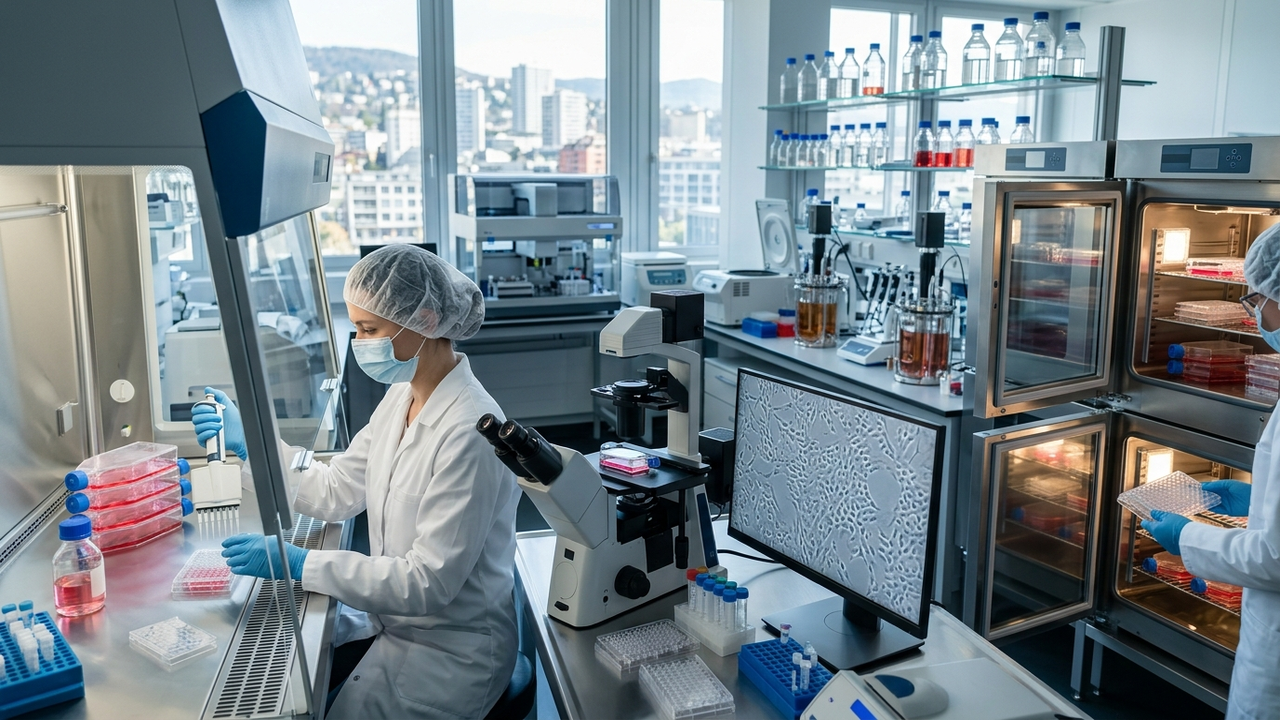
An editorial in Frontiers emphasizes the critical need for adopting animal-free and chemically defined media (CDM) in in vitro cell culture to enhance experimental reliability and reproducibility. Significant research is underway, particularly with human-derived serum alternatives and plant-based blocking agents, aiming to establish more human-relevant, animal-free in vitro models.
Technical & Clinical Details
The choice of media in cell culture directly impacts the quality and reproducibility of experimental results. Traditional fetal bovine serum (FBS)-containing media have presented challenges such as lot-to-lot variability and risks of animal-derived contamination. In contrast, animal-free and chemically defined media offer a more controlled and standardized cell culture environment.
- Advantages and Challenges of Chemically Defined Media: CDM provides minimal lot-to-lot variability because all components have known chemical structures and concentrations, thereby improving experimental reproducibility. However, they may lack undefined factors present in FBS that promote cell growth and survival, posing adaptation challenges for certain cell types, especially in early-stage research.
- Human-Derived Serum Alternatives and Plant-Based Blocking Agents: The article highlights the potential of human-derived serum alternatives (e.g., platelet lysate) and plant-based blocking agents (e.g., specific proteins) to maintain and enhance cellular functional properties in FBS-free environments. These alternatives eliminate risks associated with animal components while providing physiologically relevant culture conditions.
- Improving Human Relevance of In Vitro Models: Using animal-free media enables in vitro models to more accurately mimic the human physiological environment. This enhances the precision of drug discovery, toxicology testing, and disease modeling, contributing to the reduction of animal testing.
Background & Industry Context
The shift towards animal-free media is a pressing issue for the biotechnology and pharmaceutical industries, driven by not only the need for improved scientific reproducibility but also ethical considerations, regulatory requirements (especially GMP standards in pharmaceutical development), and supply chain stability. Many research institutions and companies are focusing on developing cleaner and safer cell culture systems.
Strategic Significance & Outlook
The development and widespread adoption of animal-free and chemically defined media represent a paradigm shift in cell culture technology. As these media become further optimized and broadly applicable across various cell types and applications, the reliability of research outcomes will increase, accelerating regenerative medicine and drug discovery. For researchers, this means more controlled experimental environments; for engineers, standardized protocols; and for investors, new market opportunities.
Source: https://www.frontiersin.org/journals/toxicology/articles/10.3389/ftox.2026.1892833/full
Get our weekly technology intelligence — free
Receive an infographic that lets you judge at a glance whether each field’s analysis report is worth reading.
Subscribe Free — Weekly Tech Intelligence
By subscribing, you’ll receive Troy-Technical’s weekly technology intelligence newsletter.
- Your email and selected fields are used only to deliver the newsletter.
- We never share your information with third parties.
- You can unsubscribe anytime via the link in each email.
See our Privacy Policy for details.
Takes about a minute · Unsubscribe anytime





Comments