Key Findings
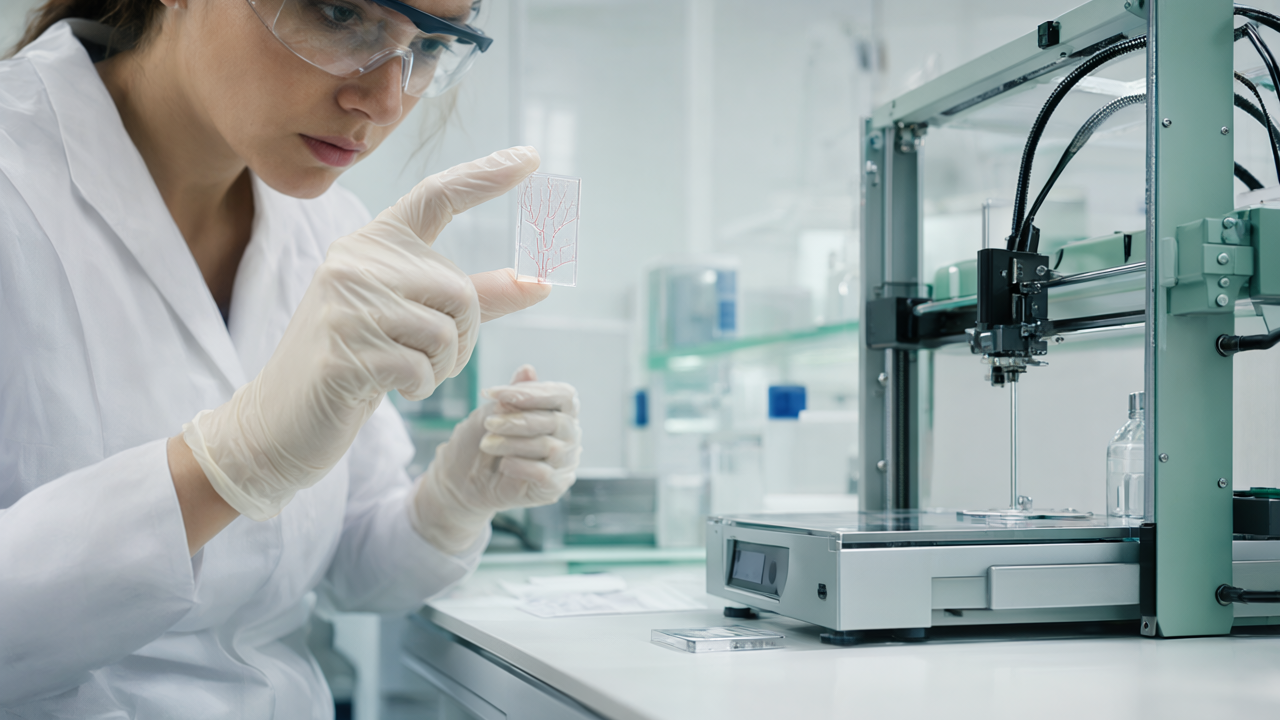
A research team at the Massachusetts Institute of Technology (MIT) has developed a novel 3D-printed microfluidic device capable of gently and non-invasively collecting living cells directly from tissue. This innovative device holds immense potential to advance early cancer detection and personalized medicine by providing high-quality cellular samples.
Technical / Clinical Details
- The microfluidic device operates by creating a localized vacuum seal and applying controlled fluidic shear stress to the target tissue, effectively detaching viable cells without causing significant damage.
- Unlike conventional biopsy methods, such as incisional or needle biopsies, which often inflict physical stress on cells, leading to lower viability and culturability, cells collected by this device exhibit superior survival rates and are more amenable to subsequent cell culture and molecular analysis.
- The adoption of 3D printing technology allows for the design of devices with intricate microstructures that can be customized for specific tissues or cell types, enhancing diagnostic precision and paving the way for more personalized therapeutic approaches.
- Collected cells can be directly cultured to analyze cancer cell proliferation, drug sensitivity, and genetic mutations in detail, providing invaluable information for tailoring optimal treatment strategies for individual patients.
Background & Context
High-quality cellular samples are indispensable for accurate early cancer detection and effective treatment. However, existing biopsy methods are often invasive, burdensome for patients, and limited in the quantity and quality of cells they can yield. The ability to reliably collect viable cells and sustain them in long-term culture has been a major challenge for functional diagnostics and drug screening.
Strategic Significance & Outlook
This MIT microfluidic device has the potential to fundamentally transform cancer screening, diagnosis, and treatment monitoring. Its low-invasiveness and high efficiency in cell collection will alleviate patient burden and enable more frequent biopsies, contributing to ultra-early cancer detection and real-time tracking of disease progression. Furthermore, it will facilitate drug sensitivity testing and identification of therapeutic targets using patient-derived cells, accelerating the realization of precision medicine. The device is poised to become a critical tool in the evolution of healthcare, promising a future with more effective and patient-friendly diagnostic and therapeutic pathways.
Source: https://news.mit.edu/2026/new-cell-collection-device-could-improve-early-cancer-detection-0924
Get our weekly technology intelligence — free
Receive an infographic that lets you judge at a glance whether each field’s analysis report is worth reading.
Subscribe Free — Weekly Tech Intelligence
By subscribing, you’ll receive Troy-Technical’s weekly technology intelligence newsletter.
- Your email and selected fields are used only to deliver the newsletter.
- We never share your information with third parties.
- You can unsubscribe anytime via the link in each email.
See our Privacy Policy for details.
Takes about a minute · Unsubscribe anytime