Key Findings
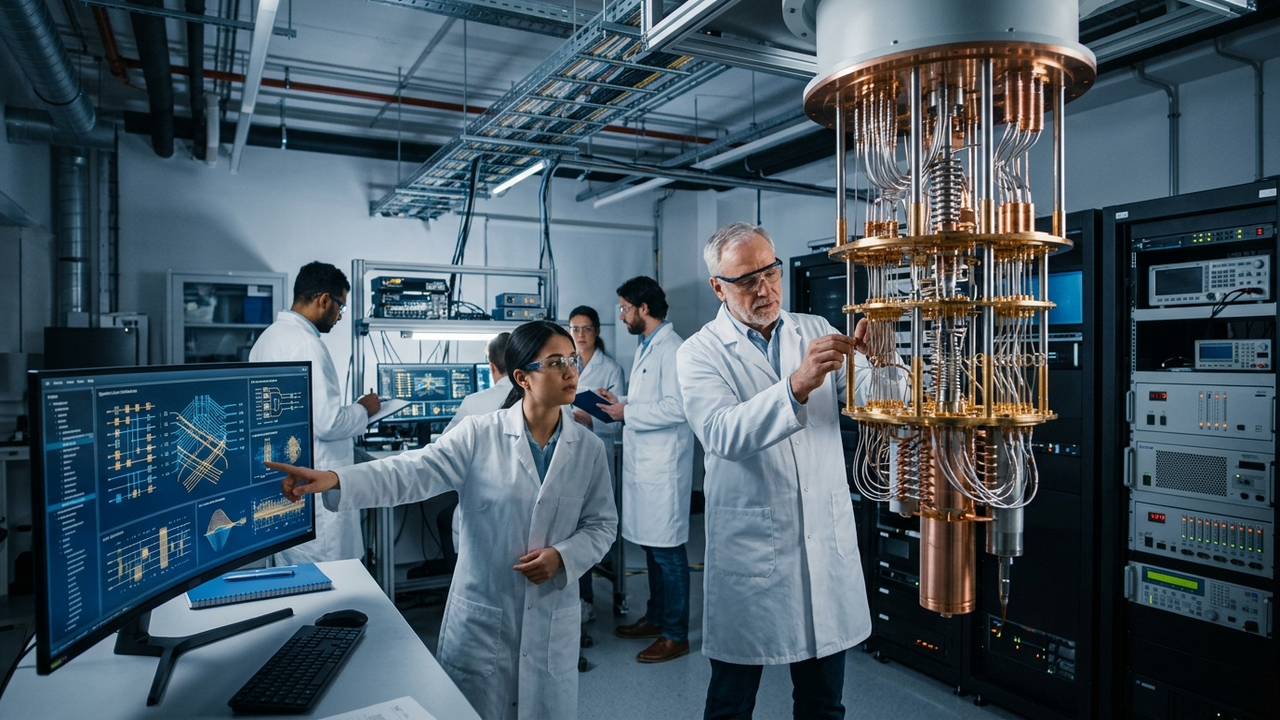
The U.S. National Science Foundation (NSF) has committed a substantial grant of $37.5 million to establish ‘NSF PRACTIQAL’ (Practical Quantum Computer Architecture and Logic), a new center co-led by Yale University and the University of California San Diego (UCSD). This funding is dedicated to overcoming fundamental challenges in qubit error correction to design and build practical, self-correcting quantum computers that are robust and scalable.
Technical / Clinical Details
The PRACTIQAL center will integrate expertise from quantum information scientists, computer architects, engineers, and materials scientists to optimize the interface between quantum hardware and software. Key research areas include the development of advanced quantum error correction codes, the design of fault-tolerant architectures, and the construction of experimental platforms to demonstrate these systems. The current high error rates in qubits represent a major hurdle for quantum computing, and the center’s goal is to enable quantum computers that can automatically detect and correct errors. This capability is crucial for moving beyond current Noisy Intermediate-Scale Quantum (NISQ) devices to enable more complex and reliable computations.
Background & Context
Quantum computing holds immense promise for solving problems beyond the reach of classical supercomputers, with potential applications in drug discovery, materials science, and complex optimization. However, the inherent fragility of qubits and their susceptibility to errors remain the primary obstacle to practical implementation. The NSF’s $37.5 million investment is part of a broader national strategy under the ‘National Quantum Initiative Act’ to strengthen U.S. leadership in quantum information science and accelerate next-generation technological development. Similar significant investments have been made in other leading research institutions, underscoring the national priority placed on achieving fault-tolerant quantum computing.
Strategic Significance & Outlook
The work undertaken by the NSF PRACTIQAL center is vital for accelerating the commercial deployment of quantum computing. The realization of error-resilient quantum computers could dramatically speed up drug development for pharmaceutical companies and enable materials scientists to design novel materials previously thought impossible. Furthermore, it promises transformative impacts across diverse industries, including financial modeling and logistics optimization. The center’s ambitious goal is to lay the groundwork over the next decade for the market introduction of industrial-scale, practical quantum computers.
Get our weekly technology intelligence — free
Receive an infographic that lets you judge at a glance whether each field’s analysis report is worth reading.
Subscribe Free — Weekly Tech Intelligence
By subscribing, you’ll receive Troy-Technical’s weekly technology intelligence newsletter.
- Your email and selected fields are used only to deliver the newsletter.
- We never share your information with third parties.
- You can unsubscribe anytime via the link in each email.
See our Privacy Policy for details.
Takes about a minute · Unsubscribe anytime





Comments