Key Findings
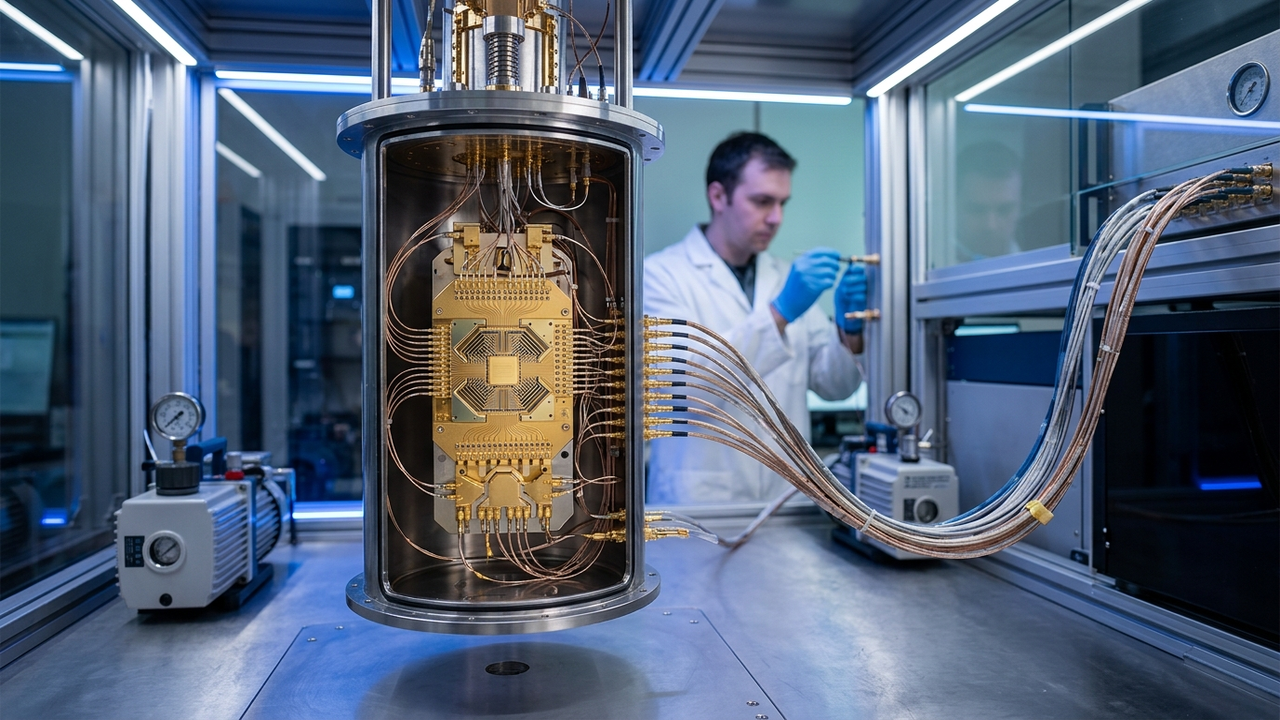
Microsoft announced its groundbreaking Majorana 2 quantum chip at the Build conference on June 2, 2026. This chip reportedly achieves a reliability improvement of approximately 1,000 times over its predecessor, marking a significant stride towards Microsoft’s goal of delivering a scalable quantum computer by 2029.
Technical/Clinical Details
- Majorana Fermions and Topological Qubits: The Majorana 2 chip is based on the concept of topological qubits, which utilize exotic quasiparticles known as Majorana fermions. Quantum information is stored non-locally, distributed across the qubit, providing inherent resistance to external noise and interference. This approach potentially reduces the need for extensive quantum error correction, enhancing the stability of quantum computations.
- Lead-Based Superconductor: The chip employs a lead-based superconductor, leveraging its superconducting properties to ensure qubit stability. The choice of this material is optimized for the physical implementation of topological qubits.
- 1,000x Reliability Enhancement: The claimed 1,000-fold improvement in qubit reliability addresses one of the most critical challenges in practical quantum computing: error rates. This significant reduction could decrease the physical qubit overhead required to construct stable logical qubits.
- 2029 Scalable Quantum Computer Target: Microsoft has laid out an ambitious roadmap, aiming to deliver a scalable and fault-tolerant quantum computer within just three years, building upon the advancements demonstrated by the Majorana 2 chip.
Background & Context
In quantum computing, the stability (coherence time) and error rate reduction of qubits are major bottlenecks. Microsoft has long pursued a topological quantum computing approach based on Majorana fermions. This approach differs from other qubit technologies (such as superconducting or trapped-ion qubits) by aiming for hardware-level error tolerance, viewed as a long-term solution for scalability.
Strategic Significance & Outlook
The announcement of the Majorana 2 chip represents a substantial advancement in Microsoft’s quantum computing strategy. The improved reliability is expected to accelerate the practical application of quantum computing across diverse fields, including drug discovery, materials science, optimization problems, and advanced cryptography. By setting a concrete target year of 2029, Microsoft is positioning itself as a formidable contender in the race to commercialize fault-tolerant quantum computing.
Source: https://onclickinnovations.com/microsoft-majorana-2-quantum-chip-explained-simply/
Get our weekly technology intelligence — free
Receive an infographic that lets you judge at a glance whether each field’s analysis report is worth reading.
Subscribe Free — Weekly Tech Intelligence
By subscribing, you’ll receive Troy-Technical’s weekly technology intelligence newsletter.
- Your email and selected fields are used only to deliver the newsletter.
- We never share your information with third parties.
- You can unsubscribe anytime via the link in each email.
See our Privacy Policy for details.
Takes about a minute · Unsubscribe anytime





Comments