Key Findings
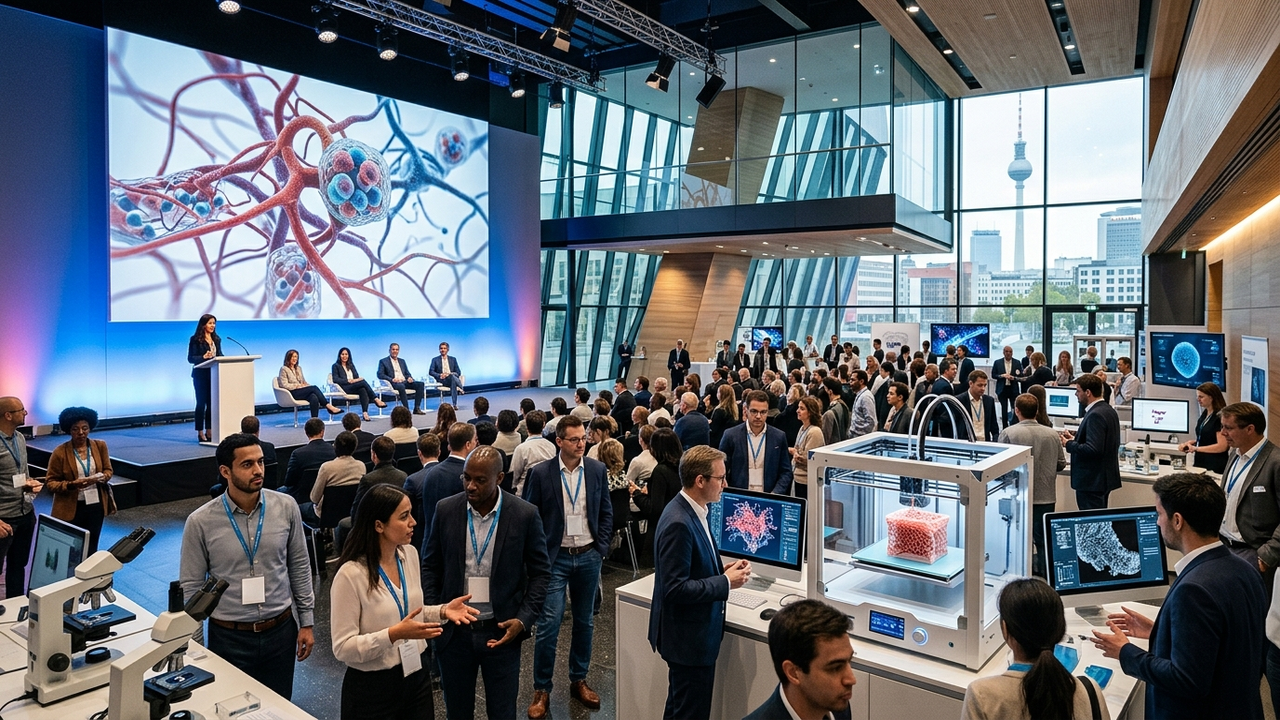
The International Conference on ‘3D Bioprinting & Regenerative Medicine,’ held in Berlin, Germany, from August 27-28, 2026, prominently featured discussions on how 3D bioprinting technology is driving innovation in regenerative medicine. The core theme revolved around the technology’s ability to create customized tissues, organs, and implants, thus fundamentally transforming the future of healthcare. A key highlight was the emphasis on utilizing ‘bio-inks,’ which are meticulously composed of living cells, growth factors, and biocompatible materials, to significantly advance the fields of personalized medicine and organ transplantation.
Technical / Clinical Details
The conference presented detailed insights into how 3D bioprinting precisely mimics biological structures to construct functional tissues and organs. Several key technological advancements were spotlighted: Firstly, numerous studies showcased the optimization of bio-ink compositions to maintain high cell viability and functionality, including combinations of natural polymers like collagen, fibrin, and hyaluronic acid with synthetic polymers. Secondly, presentations demonstrated how various printing techniques, such as inkjet, extrusion, and laser-assisted bioprinting, are being applied to fabricate complex three-dimensional tissue structures with high resolution. Particular attention was given to the integration of microfluidic technologies for constructing functional organs with intricate vascular networks. Clinical applications discussed included organ regeneration (e.g., miniature livers, kidney tissue models), bioprinted skin tissues for accelerating chronic wound healing, customized bone and cartilage implants for patients with osteoarthritis, and the creation of tissue models for personalized drug screening platforms. These technologies promise to enable the development of patient-specific therapies and offer long-term solutions, particularly addressing the current critical shortage of donor organs.
Background & Context
Regenerative medicine aims to restore the function of tissues and organs lost or damaged due to disease or injury, with stem cell research and tissue engineering at its core. 3D bioprinting has emerged as a powerful tool to integrate these disciplines, enabling the fabrication of biomimetic structures. Traditional tissue engineering methods struggled with controlling complex geometries and cell arrangements; however, 3D bioprinting overcomes these challenges through precise, computer-controlled layer-by-layer deposition. This capability allows for the development of tissue models with functions closer to native tissues, enabling in vitro evaluation of drug efficacy and toxicity, thereby contributing to the reduction of animal testing and streamlining new drug development. The global shortage of donor organs remains a pressing medical crisis, and ‘on-demand organ manufacturing’ via 3D bioprinting represents the ultimate goal to address this severe unmet need. This field is rapidly advancing through the convergence of diverse expertise across biotechnology, materials science, mechanical engineering, and medicine.
Strategic Significance & Outlook
The technological advancements highlighted at the ‘3D Bioprinting & Regenerative Medicine’ conference unequivocally demonstrate the field’s rapid progression towards clinical implementation. In the future, the establishment of technologies for bioprinting larger, more complex functional organs will accelerate the elimination of organ transplant waiting lists and the realization of personalized disease treatments. Critical research challenges moving forward include the successful vascularization of tissues and the construction of complex neural networks. Furthermore, the establishment of regulatory standards for long-term function, biocompatibility, and safety of bioprinted tissues within the body is indispensable. This conference served as a vital platform for researchers, engineers, and healthcare professionals to collaborate, overcome technical barriers, and share roadmaps for introducing 3D bioprinting to the forefront of medical practice. The potential of this technology in precision medicine and organ regeneration is immeasurable, promising to reshape future therapeutic landscapes.
Source: https://biotechnology.insightconferences.com/events-list/3d-bioprinting-regenerative-medicine
Get our weekly technology intelligence — free
Receive an infographic that lets you judge at a glance whether each field’s analysis report is worth reading.
Subscribe Free — Weekly Tech Intelligence
By subscribing, you’ll receive Troy-Technical’s weekly technology intelligence newsletter.
- Your email and selected fields are used only to deliver the newsletter.
- We never share your information with third parties.
- You can unsubscribe anytime via the link in each email.
See our Privacy Policy for details.
Takes about a minute · Unsubscribe anytime




Comments