Background and Challenges in LiDAR Production
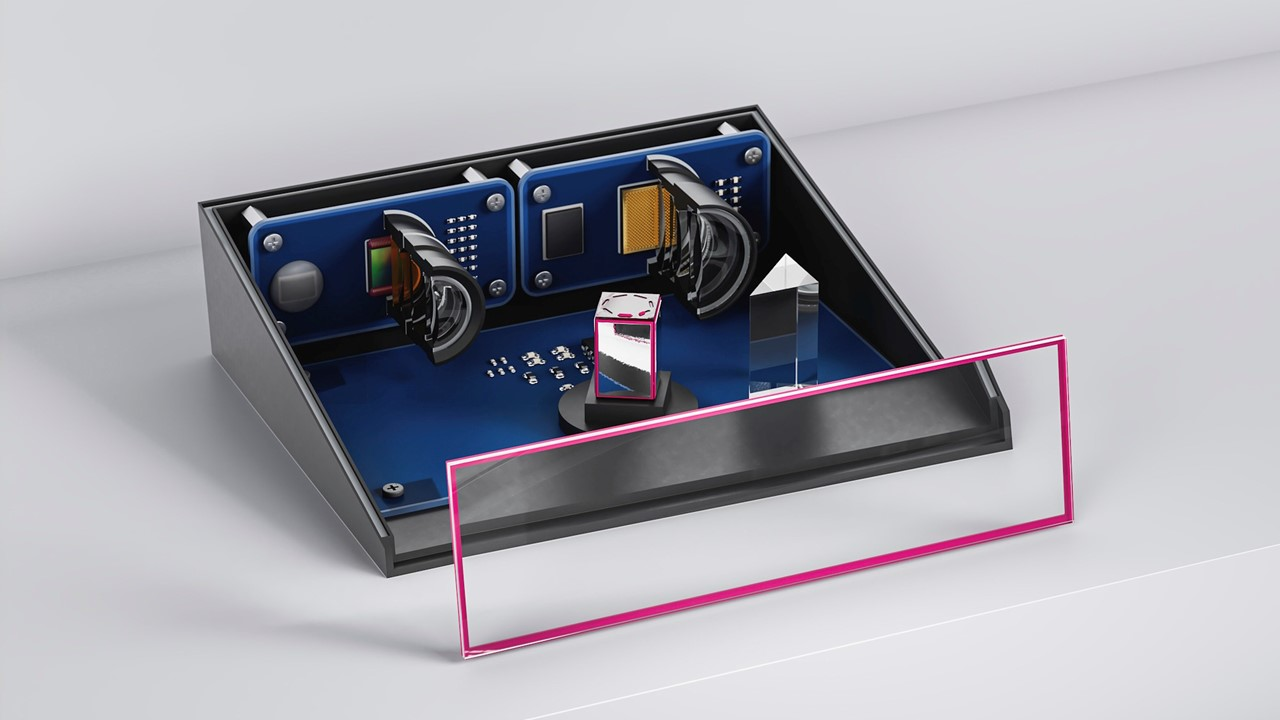
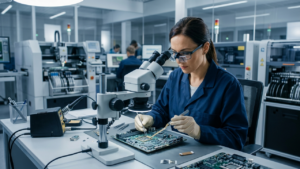
LiDAR (Light Detection and Ranging) systems are rapidly gaining traction in fields where precise 3D environmental perception is essential, such as autonomous vehicles, industrial robots, and smart city applications. The assembly of optical components like laser modules, mirrors, and cover windows, which are core to LiDAR systems, demands extremely high precision and reliable bonding technology capable of withstanding harsh environments including vibration, temperature fluctuations, and humidity. However, existing adhesive processes have faced challenges such as inability to support high-speed, high-volume production, or degradation of optical performance due to stress induced on components.
Technical Innovation of DELO’s New-Generation Light-Activatable Adhesives
To address these challenges, DELO has introduced its new generation of light-activatable adhesives, the “DELO PHOTOBOND LA” series, specifically tailored for high-volume LiDAR production. This adhesive offers the following key features and advantages:
- Up to 5x Increase in Production Speed: It can increase production speed by up to five times compared to conventional adhesive processes for mirror and cover window bonding applications. This is due to its extremely rapid curing properties, where the adhesive achieves initial cure within seconds and handling strength within minutes upon exposure to light (typically UV light). This acceleration dramatically resolves bottlenecks in the mass production of LiDAR modules.
- Low Stress on Optical Components: The adhesive is designed to maintain a low Young’s modulus (elasticity) across a broad temperature range. This prevents unnecessary stress from being exerted on optical components due to curing shrinkage or thermal expansion/contraction, ensuring high-precision optical performance over the long term, which is crucial for LiDAR sensor accuracy and reliability.
- Robust Environmental Resistance: It ensures reliability under the stringent temperature, humidity, vibration, and shock conditions required for automotive applications. It maintains stable adhesion and mechanical properties even after light activation, contributing to long-term device performance.
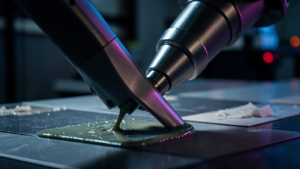
- Precise Application and High Reproducibility: When combined with advanced dispensing systems, it can be applied with high precision to fine adhesive lines and complex geometries, ensuring high reproducibility in mass production.
Market Impact and Future Outlook
DELO’s new generation of light-activatable adhesives will significantly contribute to reducing production costs and shortening time-to-market for LiDAR-equipped devices such as autonomous vehicles, industrial robots, and drones. Particularly, as the demand for LiDAR sensors is projected to explode with the proliferation of autonomous driving technology, this adhesive technology will be an indispensable factor in expanding production capacity and enhancing market competitiveness. Through this innovation, DELO is expected to establish leadership in adhesive technology for high-precision optical assemblies and accelerate the development of next-generation smart mobility and industrial automation.


Comments