Key Findings
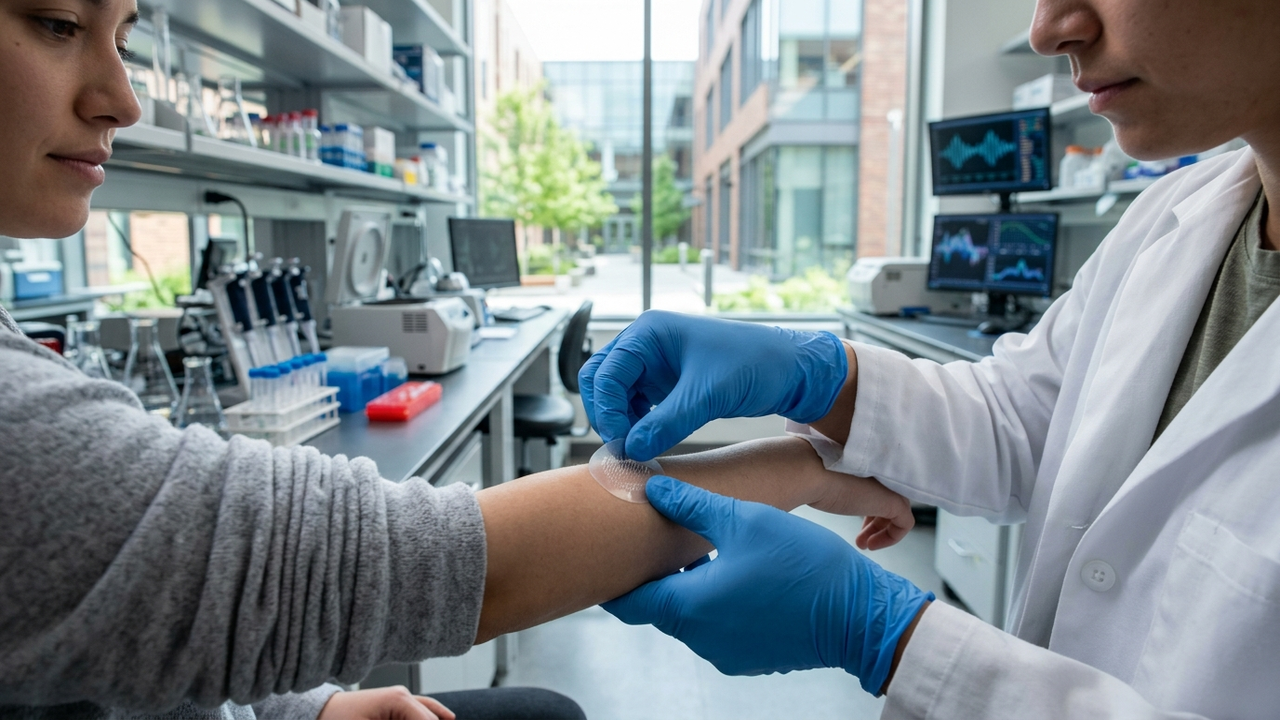
A research team at Washington University announced through Futurity the successful early detection of kidney disease using a painless microneedle patch. This innovative patch demonstrates the ability to non-invasively and efficiently detect and preserve neutrophil gelatinase-associated lipocalin (NGAL) antibodies, a critical early biomarker for acute kidney injury (AKI).
Technical & Clinical Details
The developed microneedle patch functions by direct application to the patient’s skin. The microneedles are engineered to penetrate only the outermost layers of the skin, thus causing no pain similar to traditional blood draws. The needles of this patch are coated with a specialized material called a Metal-Organic Framework (MOF) to specifically capture and preserve NGAL antibodies. MOFs are porous and highly stable, capable of efficiently trapping biomarker molecules and retaining their activity. A particularly groundbreaking aspect is the demonstration that this MOF shell can preserve NGAL antibodies for up to four weeks at a high temperature of 50°C without refrigeration. This implies that the sensor can function and provide stable results even under harsh environmental conditions. The initial success of this research indicates a significant breakthrough in the early diagnosis of AKI, holding the potential to contribute to earlier intervention and improved prognosis through rapid and accurate NGAL level quantification.
Background & Context
Acute kidney injury (AKI) is a severe complication frequently occurring in hospitalized patients, and its early diagnosis is crucial for slowing the progression of kidney disease and reducing mortality. However, current diagnostic indicators, such as elevated serum creatinine levels, only appear after kidney damage has already progressed. NGAL has been recognized as an early biomarker that rises within hours of kidney injury, but its detection traditionally required invasive blood tests. The advent of a painless microneedle patch fills this diagnostic gap and holds significant public health importance by enabling early screening and monitoring, particularly in remote areas or regions with limited medical resources.
Strategic Significance & Outlook
This painless microneedle patch has the potential to revolutionize the diagnosis and management of kidney disease. In the future, this technology will likely be applied not only for early AKI diagnosis but also for monitoring the progression of chronic kidney disease (CKD), assessing renal toxicity of specific therapeutic drugs, and detecting biomarkers for other diseases. Furthermore, research and development will focus on miniaturizing the sensor, integrating it into wearable devices, and improving long-term stability. This is expected to significantly accelerate the adoption of Point-of-Care Testing (POCT) devices globally, especially in developing countries and disaster areas with inadequate medical infrastructure. Consequently, more patients will have access to early diagnosis and appropriate treatment, contributing to a reduction in complications and mortality associated with kidney disease. This research represents a vital step in shaping the future of non-invasive diagnostic technologies.
Source: https://www.futurity.org/microneedle-patch-kidney-disease-detection-3344192/
Get our weekly technology intelligence — free
Receive an infographic that lets you judge at a glance whether each field’s analysis report is worth reading.
Subscribe Free — Weekly Tech Intelligence
By subscribing, you’ll receive Troy-Technical’s weekly technology intelligence newsletter.
- Your email and selected fields are used only to deliver the newsletter.
- We never share your information with third parties.
- You can unsubscribe anytime via the link in each email.
See our Privacy Policy for details.
Takes about a minute · Unsubscribe anytime





Comments