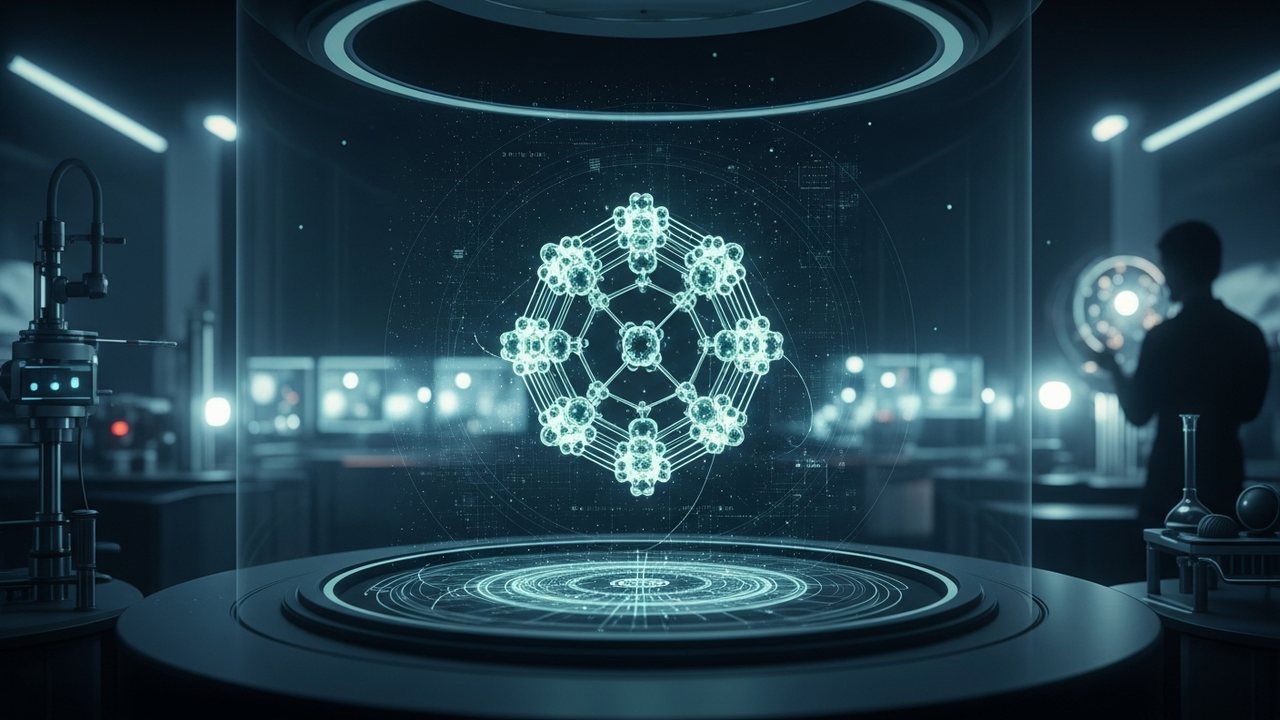
Background: The Frontier of 2D Materials and Borophene’s Potential
Since the discovery of graphene, two-dimensional (2D) materials have revolutionized materials science, opening new possibilities across electronics, energy, and sensor technologies. These materials, owing to their atomic-scale thickness, possess unique physical and chemical properties that enable functionalities unattainable with conventional bulk materials. Among them, “borophene,” a 2D material composed solely of boron atoms, is theoretically predicted to exhibit exceptionally unique properties, including higher electrical conductivity than graphene, superior mechanical strength, and excellent catalytic activity, due to its diverse atomic arrangements and electronic structures. However, its stable synthesis and characterization have presented significant challenges, requiring further research for practical application.
Key Findings: IIT Jodhpur’s Pioneering Borophene Research
Researchers at the NanoSense Lab at the Indian Institute of Technology Jodhpur (IIT Jodhpur) are making groundbreaking advancements in the atomic-scale design and synthesis of materials, aiming to redefine the future of materials science. They are particularly focused on borophene, exploring techniques to construct this “wonder material” atom by atom. The research team has successfully grown stable single-layer and few-layer borophene by employing deposition techniques under ultra-high vacuum conditions and utilizing computational science-based crystal growth simulations. This achievement has enabled them to unravel the intrinsic electronic structures and mechanical properties of borophene in detail, experimentally verifying theoretical predictions. Their research strongly suggests the diverse application possibilities of borophene, especially its potential as an ultra-fast energy storage device.
Technical Significance and Outlook
IIT Jodhpur’s research on borophene holds paramount significance for the development of next-generation functional materials. Given borophene’s high electrical conductivity, large surface area, and the rich bonding versatility of boron atoms, a wide range of applications are anticipated:
- High-Performance Batteries and Supercapacitors: Enabling ultra-fast charging/discharging capabilities and high energy densities, dramatically improving the performance of electric vehicles and portable electronic devices.
- Advanced Gas Sensors: Detecting specific gas molecules at extremely low concentrations, contributing to environmental monitoring and medical diagnostics.
- Nanoelectronics: Serving as a foundational material for ultra-compact, high-speed transistors and flexible circuits, potentially surpassing graphene.
- Self-Glowing Roads: Leveraging boron’s unique optical properties, the research hints at new materials for enhancing nighttime visibility in road surfaces.
This research deepens the understanding of borophene’s synthesis techniques and fundamental physical properties, laying a strong foundation for realizing these innovative applications. In the future, the development of prototype devices utilizing borophene is expected to accelerate, leading to breakthroughs in materials science, electronics, and energy sectors.
Source: https://www.pib.gov.in/PressReleasePage.aspx?PRID=2265027





Comments