Key Findings
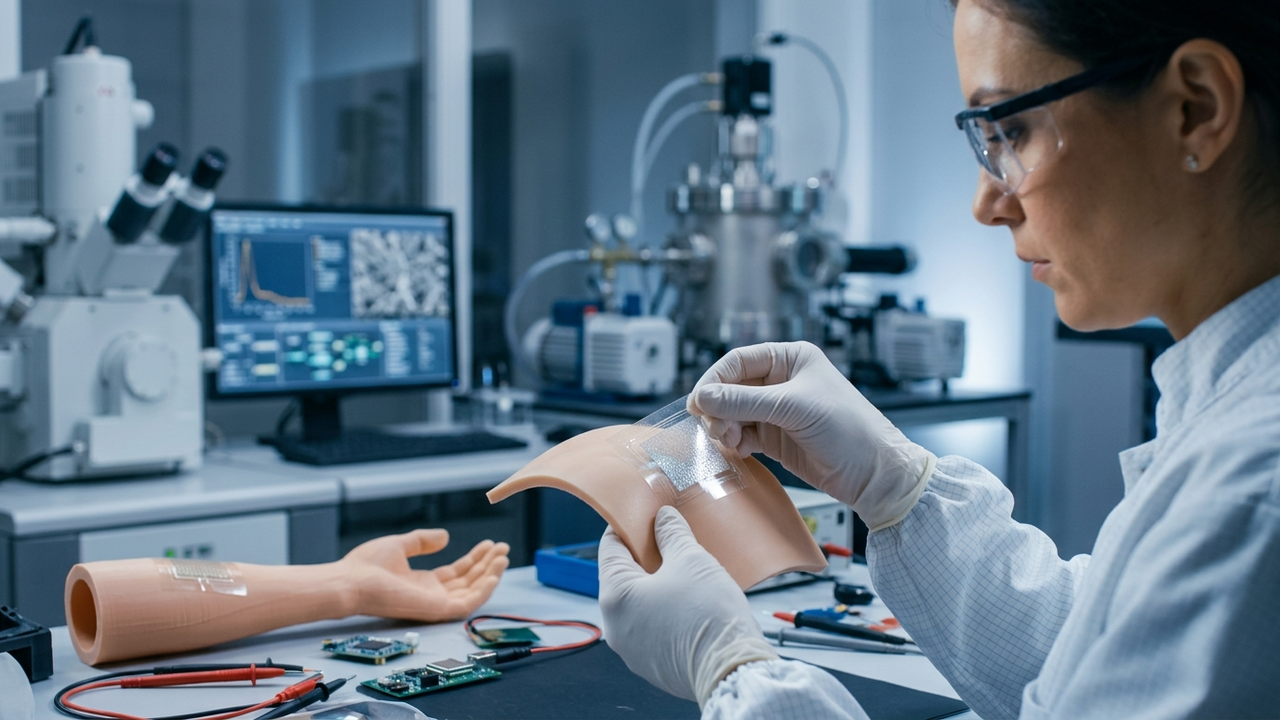
In response to increasing environmental demands, a research team has successfully developed flexible piezoelectric thin-film sensors utilizing a lead-free barium titanate (BaTiO3) base. This innovative material simultaneously achieves excellent piezoelectric response and high flexibility, making it highly promising for diverse applications, including wearable devices, IoT sensors, and high-sensitivity tactile sensors in the medical field.
Technical / Clinical Details
The developed lead-free piezoelectric thin film achieves piezoelectric performance comparable to, or even surpassing, that of conventional lead-containing piezoelectric materials (e.g., PZT) through precise control of its crystal structure and optimization of its manufacturing process. Concurrently, its extreme thinness and high bendability facilitate easy integration into curved surfaces and flexible device architectures. This opens up new applications previously unachievable with rigid materials, such as wearable sensors that conform to the body or tactile sensors that function as robotic skin. Furthermore, its demonstrated biocompatibility ensures high safety for medical applications. The combination of high durability and the potential for low-cost, mass-producible manufacturing processes marks a significant step towards practical implementation.
Background & Context
Piezoelectric materials, capable of converting mechanical stress into electrical signals and vice-versa, serve as a fundamental technology for various electronic devices, including sensors, actuators, and energy harvesters. However, many high-performance piezoelectric materials contain lead (Pb), and with tightening environmental regulations (e.g., RoHS directive), transitioning to lead-free alternatives has become an urgent priority. For medical devices and wearable electronics that come into contact with the human body, both environmental compliance and biological safety are paramount. This research addresses the challenge of achieving high performance while adhering to environmental and safety standards.
Strategic Significance & Outlook
This lead-free piezoelectric thin film holds the potential to be a core technology for next-generation, environmentally friendly, and high-performance sensors. In wearable healthcare devices, it could enable high-precision monitoring of vital signs such as heart rate, respiration, and skin pressure. For IoT devices, it could facilitate more sensitive detection of environmental changes. In the medical sector, innovative applications like high-fidelity tactile feedback in robotic surgery and the development of advanced electronic skin to restore lost sensations are anticipated. Continued optimization of material properties and evaluation of long-term reliability under various environmental conditions are expected to accelerate its widespread commercialization across numerous industrial sectors.
Source: #
Get our weekly technology intelligence — free
Receive an infographic that lets you judge at a glance whether each field’s analysis report is worth reading.
Subscribe Free — Weekly Tech Intelligence
By subscribing, you’ll receive Troy-Technical’s weekly technology intelligence newsletter.
- Your email and selected fields are used only to deliver the newsletter.
- We never share your information with third parties.
- You can unsubscribe anytime via the link in each email.
See our Privacy Policy for details.
Takes about a minute · Unsubscribe anytime







Comments