Key Findings
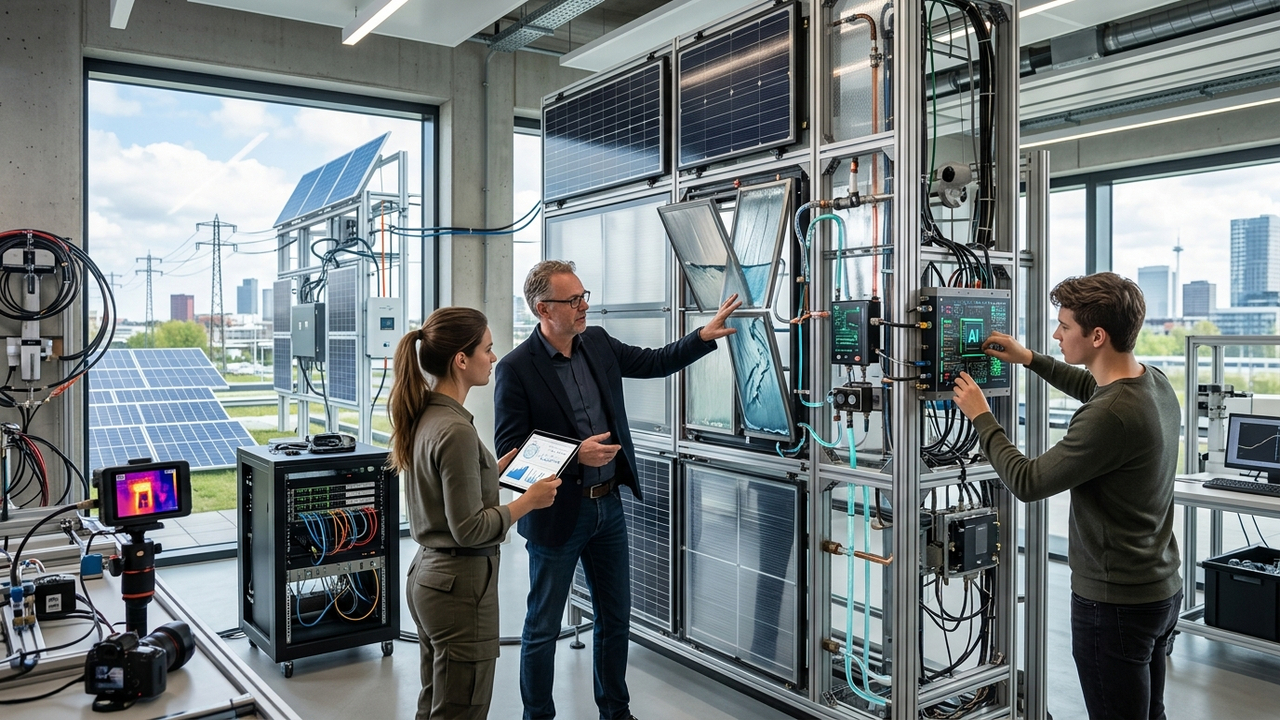
A team of Dutch engineers has developed an innovative building system that highly integrates thermal storage, smart materials, and AI-controlled management. This system allows buildings to function not merely as energy consumers but as “dynamic energy nodes” that intelligently manage and supply energy, significantly contributing to urban carbon neutrality.
Technical & Clinical Details
- The developed building system incorporates highly efficient thermal storage solutions, enabling it to accumulate solar energy or surplus heat during the day and release it as needed. This dramatically reduces energy consumption for heating and cooling.
- The integration of “smart materials” allows properties to autonomously change in response to external environmental shifts (e.g., temperature, solar radiation), achieving optimal insulation and solar shading. Examples include phase-change materials and chromogenic materials.
- An AI control system continuously analyzes building energy demand forecasts, external environmental data, and occupant behavior patterns in real-time to optimize energy absorption, storage, and release. This maximizes energy efficiency and reduces operational costs.
- Demonstration projects, such as a passive house in Innsbruck, Austria, have successfully integrated battery and hydrogen storage systems, confirming improved self-consumption rates and contributions to grid stability.
Background & Context
The European Union (EU) has set ambitious targets to achieve a carbon-neutral economy by 2050, with improved building energy efficiency being a critical component. The European Commission aims for all new buildings to be zero-emission by 2030. The Dutch initiative represents a significant technological breakthrough towards meeting these crucial environmental objectives, positioning Europe at the forefront of sustainable building innovation.
Strategic Significance & Outlook
Widespread adoption of this integrated building system could enable cities to significantly reduce energy consumption and dramatically cut emissions without constructing new power plants. By allowing buildings to function as active parts of the energy grid, this system will also contribute to expanded renewable energy integration and grid stabilization, paving a new direction for sustainable urban development. This technology is expected to gain global attention as a core component of future smart city initiatives, potentially setting new international benchmarks for energy-efficient architecture.
Get our weekly technology intelligence — free
Receive an infographic that lets you judge at a glance whether each field’s analysis report is worth reading.
Subscribe Free — Weekly Tech Intelligence
By subscribing, you’ll receive Troy-Technical’s weekly technology intelligence newsletter.
- Your email and selected fields are used only to deliver the newsletter.
- We never share your information with third parties.
- You can unsubscribe anytime via the link in each email.
See our Privacy Policy for details.
Takes about a minute · Unsubscribe anytime









Comments