Key Findings
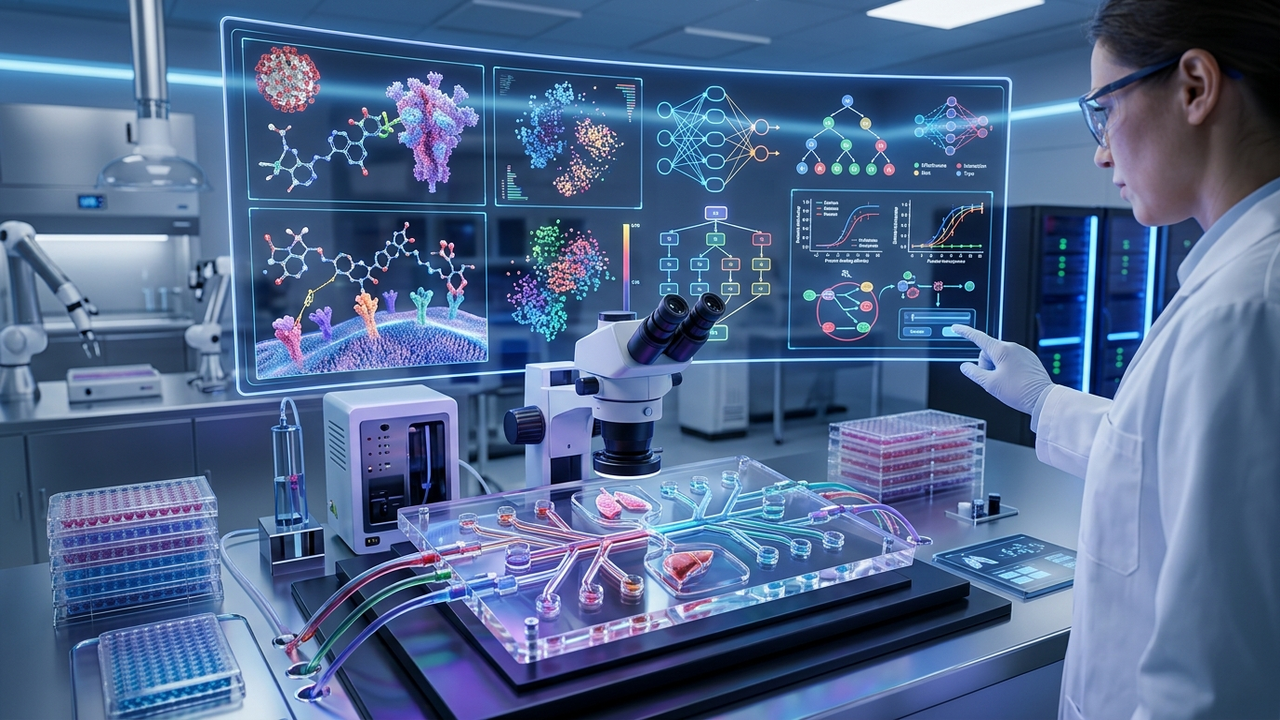
A review published in Frontiers underscores the significant potential of human organoids and organ-on-a-chip systems as innovative platforms for AI-guided therapeutic discovery against emerging and re-emerging infections. These advanced models are designed to overcome the limitations of traditional 2D cell cultures and animal models, offering a more physiologically relevant environment to evaluate the efficacy and toxicity of drug candidates. This paradigm shift is expected to accelerate the drug development process and enhance our capacity to respond to urgent infectious disease threats effectively.
Technical/Clinical Details
- Human Organoids: Organoids are self-assembling 3D cellular structures derived from pluripotent stem cells (like iPSCs) that mimic the physiological and structural characteristics of specific organs. In infectious disease research, they enable the study of viral and bacterial infection pathways, replication, and host responses in an environment that closely resembles human physiology.
- Organ-on-a-Chip Systems: These are microfluidic devices featuring micro-channels and chambers that replicate the microenvironment and functions of in vivo organs. By connecting multiple organ-on-a-chip systems, it’s possible to simulate systemic pharmacokinetics and pharmacodynamics, allowing for the assessment of infectious disease therapeutics’ multi-organ effects.
- Integration with AI: Artificial intelligence is indispensable for analyzing the vast datasets generated from high-content imaging and multi-omics (genomics, proteomics, etc.), identifying complex patterns and biomarkers. AI algorithms streamline the prioritization of drug candidates, predict toxicity, and optimize the identification of the most promising therapeutic compounds.
- Reproducibility and Scalability: One of the primary challenges for these platforms is achieving high reproducibility while ensuring the high-throughput and scalability necessary for drug discovery screening. Progress is being made through the implementation of standardized protocols and automation technologies to address these issues effectively.
Background & Context
Emerging and re-emerging infectious diseases pose devastating threats to public health and the global economy, necessitating rapid diagnostics and therapeutic development. Traditional drug discovery models have inherent limitations in fully capturing the physiological complexity of human systems. Human organoids and organ-on-a-chip systems have emerged as novel bridge technologies to fill these gaps, and their integration with AI promises to fundamentally transform the drug discovery process, making it faster and more predictive.
Strategic Significance & Outlook
The evolution of AI-guided organoid and organ-on-a-chip platforms is expected to not only accelerate the discovery of infectious disease therapeutics but also contribute significantly to the advancement of personalized medicine. Patient-specific organoids derived from iPSCs can predict individual drug responses, enabling more tailored treatment choices. In the future, these technologies are anticipated to become standard tools in pharmaceutical development, demonstrating their value in various scenarios, including rapid responses to pandemics and drug repurposing efforts. Researchers, engineers, and investors should pay close attention to the wide-ranging impact of technological innovations in this domain.
Source: https://www.frontiersin.org/articles/10.3389/fphar.2026.1927806/full
Get our weekly technology intelligence — free
Receive an infographic that lets you judge at a glance whether each field’s analysis report is worth reading.
Subscribe Free — Weekly Tech Intelligence
By subscribing, you’ll receive Troy-Technical’s weekly technology intelligence newsletter.
- Your email and selected fields are used only to deliver the newsletter.
- We never share your information with third parties.
- You can unsubscribe anytime via the link in each email.
See our Privacy Policy for details.
Takes about a minute · Unsubscribe anytime





Comments