Key Findings
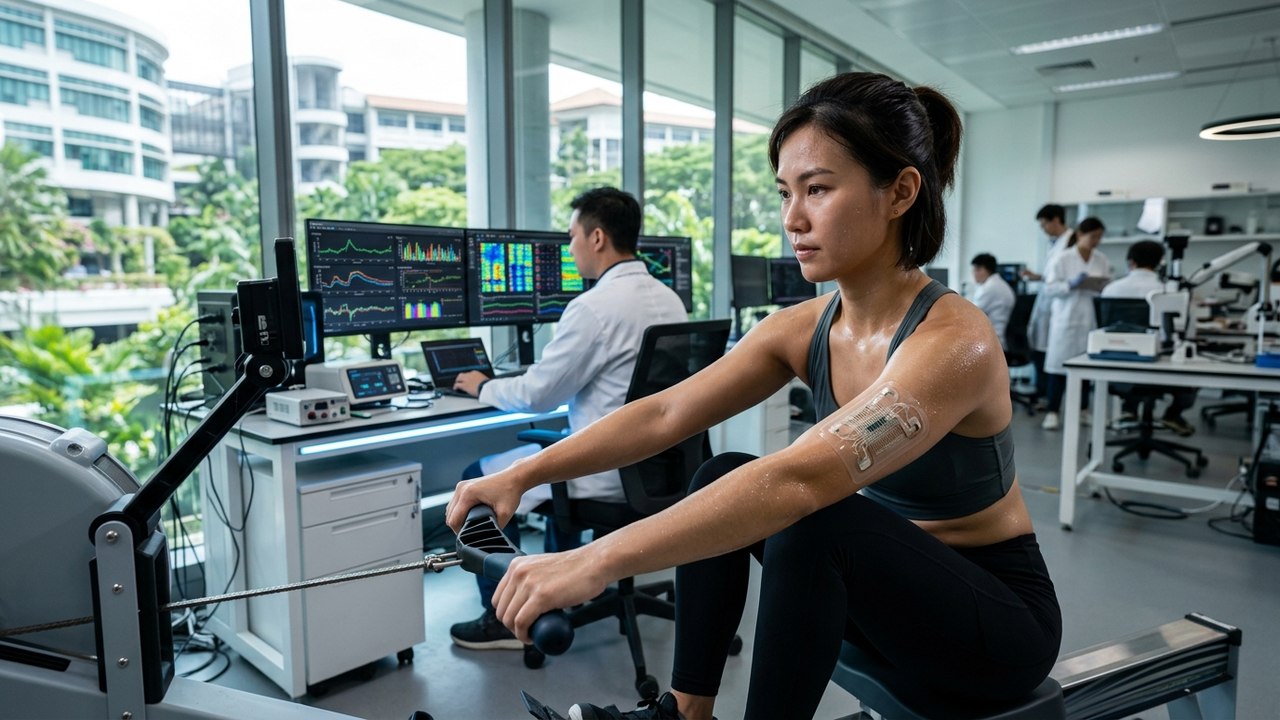
Research teams from American technology companies and Nanyang Technological University in Singapore are advancing the development of wearable patches capable of continuously monitoring dozens of health biomarkers directly from sweat. These innovative devices aim to non-invasively detect stress hormones, glucose, electrolytes, and inflammation markers from perspiration, identifying early warning signs for various medical conditions. Some prototypes already transmit real-time results to smartphones, marking a crucial step towards constant personal health awareness and advancing preventive and personalized medicine.
Technical / Clinical Details
These wearable patches function by being directly affixed to the skin, incorporating arrays of microscopic sensors and advanced electrochemical or non-electrochemical sensing technologies. The patches identify specific molecules in sweat, converting their concentrations into electrical signals. This raw data is then analyzed by integrated microprocessors and AI algorithms to detect abnormal patterns or indications of health risks. Furthermore, wireless communication modules transmit this data in real-time to the user’s smartphone app, where it is presented in an intuitive visual format. This allows users to immediately recognize physiological changes, such as dehydration, stress level fluctuations, glucose anomalies, or inflammatory responses. Clinical validation is currently underway to assess the accuracy of these patches against existing diagnostic methods.
Background & Context
There is a growing demand for continuous health monitoring without invasive blood sampling or frequent clinic visits. Sweat, being a non-invasive bodily fluid that reflects many biomarkers present in blood, has long been considered an ideal target for wearable sensors. However, challenges related to the reliability of sweat collection and the precise detection of diverse biomarkers have previously hindered practical application. The current developments demonstrate that advancements in microfabrication, material science, and artificial intelligence are converging to overcome these hurdles. The integration of AI algorithms is particularly crucial for extracting meaningful health information from complex sweat compositions and minimizing false alarms.
Strategic Significance & Outlook
These wearable sweat sensor patches are anticipated to have broad applications across various fields, including sports medicine, chronic disease management, military applications, and occupational health monitoring. In the context of telemedicine and preventive health, they will enable patients to continuously monitor their health status at home and seek early medical intervention if anomalies are detected. Future research will focus on improving sensor durability, wearability comfort, data security, and cost reduction for mass production. If these challenges are addressed, sweat sensors could become as ubiquitous as smartwatches and fitness trackers in daily health management.
Get our weekly technology intelligence — free
Receive an infographic that lets you judge at a glance whether each field’s analysis report is worth reading.
Subscribe Free — Weekly Tech Intelligence
By subscribing, you’ll receive Troy-Technical’s weekly technology intelligence newsletter.
- Your email and selected fields are used only to deliver the newsletter.
- We never share your information with third parties.
- You can unsubscribe anytime via the link in each email.
See our Privacy Policy for details.
Takes about a minute · Unsubscribe anytime









Comments