Key Findings
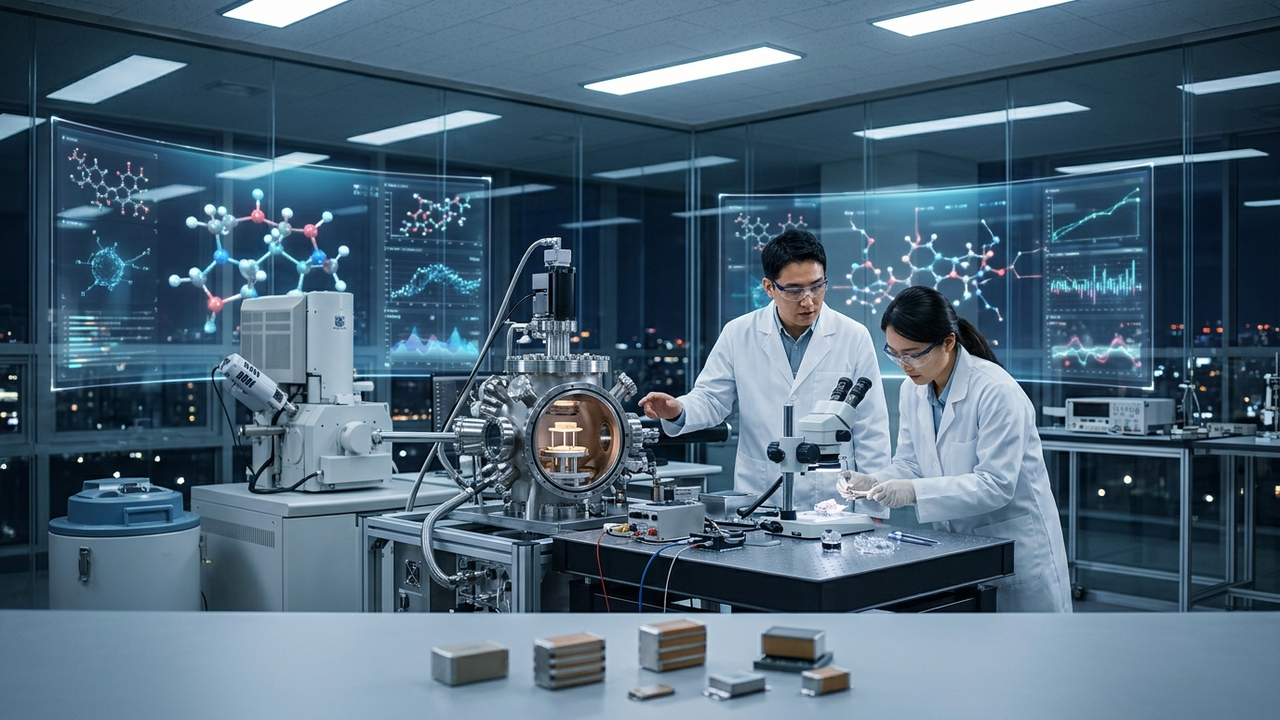
A research team at Seoul National University has utilized AI to screen approximately 150 million virtual chemical compositions, successfully identifying two promising lead-free dielectric material candidates crucial for future electronic devices. These novel materials are predicted to exhibit superior dielectric properties and thermal stability compared to existing alternatives.
Technical / Clinical Details
This groundbreaking study adopted an ‘inverse design’ strategy. First, the researchers defined desirable material properties, such as specific dielectric constants and temperature stability. Next, the AI mined multimodal data from vast existing materials science literature and constructed a physics-informed machine learning model, incorporating relevant physical laws and chemical constraints. This model efficiently searched a database of approximately 150 million virtual chemical compositions for materials that matched the defined targets. As a result, two lead-free material candidates were identified, demonstrating higher dielectric constants and enhanced temperature stability compared to conventional dielectric materials like barium titanate (BaTiO3). This approach dramatically shortens the traditional materials search process, which could otherwise take months to years.
Background & Context
The increasing performance and miniaturization of electronic devices depend on the development of superior dielectric materials. Particularly, with strengthening environmental regulations, there is a growing demand for ‘lead-free’ materials that do not contain harmful substances like lead. However, discovering new high-performance materials is extremely challenging due to the immense combinatorial space and complex physicochemical interactions. Seoul National University’s achievement demonstrates AI’s capability to overcome this challenge, efficiently discovering environmentally friendly and high-performance materials. This breakthrough could significantly impact the development of next-generation electronic components for a wide range of applications, including smartphones, IoT devices, electric vehicles, and renewable energy systems.
Strategic Significance & Outlook
The two lead-free dielectric materials identified by AI will undergo further detailed experimental validation and subsequent development towards commercialization. This AI-driven inverse design methodology is applicable not only to dielectrics but also to the discovery of other functional materials, such as thermoelectric materials, catalysts, and battery materials. AI’s role in material design is evolving from mere data analysis to creative design proposals and efficient search space reduction, expected to become a standard approach in future materials science research. This will likely resolve materials development bottlenecks, accelerating technological innovation across various sectors.
Source: https://almerja.com/en/more.php?pid=7521
Get our weekly technology intelligence — free
Receive an infographic that lets you judge at a glance whether each field’s analysis report is worth reading.
Subscribe Free — Weekly Tech Intelligence
By subscribing, you’ll receive Troy-Technical’s weekly technology intelligence newsletter.
- Your email and selected fields are used only to deliver the newsletter.
- We never share your information with third parties.
- You can unsubscribe anytime via the link in each email.
See our Privacy Policy for details.
Takes about a minute · Unsubscribe anytime








Comments