Key Findings
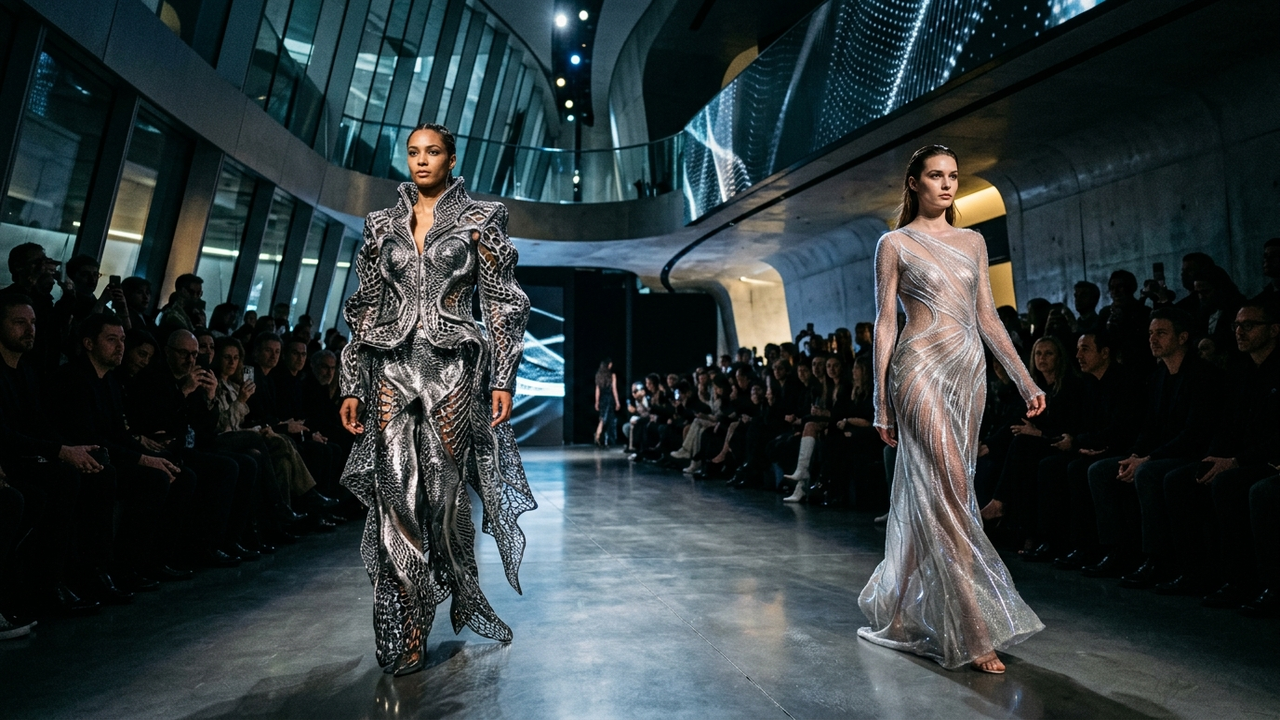
Generative AI is introducing a new wave of creativity and innovation to the high fashion industry, presenting designers with visions for materials and textures previously deemed ‘impossible’ by existing technology, such as metallic foams and transparent knits. AI dramatically accelerates the idea generation and exploration during the initial stages of the design process.
Technical / Clinical Details
Generative AI systems learn from vast amounts of existing fashion data, physical properties of materials, and design patterns, combining them to generate new design concepts and material ideas. For instance, if a designer inputs an ambiguous concept like ‘lightweight, sculptural metallic fabric,’ the AI interprets it and rapidly generates visual hypotheses that transcend traditional material science constraints, such as textures resembling ‘metallic foam’ or complexly structured ‘transparent knits.’ This process allows designers to explore diverse variations in shape, material feel, and color within a short timeframe, significantly expanding their creative options. However, the article emphasizes that the final decision-making—selecting ‘viable’ ideas that align with the brand’s core philosophy and market needs from the numerous possibilities generated by AI, and translating them into physically manufacturable products—still rests with human designers.
Background & Context
The fashion industry constantly pursues new trends and innovations, but material development and the design process typically involve significant time and cost. Furthermore, with growing awareness of sustainability, there is a demand not only for new material exploration but also for enhancing the utilization efficiency of existing materials and reducing waste. Generative AI offers a dual benefit to these challenges: efficiency at the early design stage and expansion of creativity. This makes it easier for designers to experiment with more unconventional approaches, which is expected to accelerate overall innovation in the fashion industry. The role of AI is highlighted not as a complete replacement for human creativity but rather as a tool that amplifies it.
Strategic Significance & Outlook
The fusion of generative AI and high fashion is expected to deepen further. In the future, AI could contribute to designing ‘smart materials’ that adapt to specific climate conditions or body movements, or promoting ‘personalized mass customization’ by optimizing entire manufacturing processes. AI is also likely to be utilized in developing sustainable materials and enhancing supply chain transparency. However, key challenges for the future include evaluating the originality of AI-generated designs, balancing human creativity with AI capabilities, and addressing issues of copyright and ethics. This technology will be a powerful partner for the fashion industry in solving its challenges and pursuing new aesthetics and functionalities.
Source: https://observer.com/2026/09/when-generative-ai-meets-high-fashion/
Get our weekly technology intelligence — free
Receive an infographic that lets you judge at a glance whether each field’s analysis report is worth reading.
Subscribe Free — Weekly Tech Intelligence
By subscribing, you’ll receive Troy-Technical’s weekly technology intelligence newsletter.
- Your email and selected fields are used only to deliver the newsletter.
- We never share your information with third parties.
- You can unsubscribe anytime via the link in each email.
See our Privacy Policy for details.
Takes about a minute · Unsubscribe anytime






Comments