Key Findings
La Luce Cristallina has unveiled an innovative highly insulating quantum paraelectric strontium titanate-on-insulator (STO-on-Insulator) wafer platform, specifically designed to support quantum, cryogenic, and nonlinear device applications. Concurrently, the company is developing a CMOS-compatible barium titanate (BaTiO₃)-based platform for electro-optic (EO) modulators, poised to contribute significantly to high-speed, low-power data transmission in AI infrastructure.
Technical Details
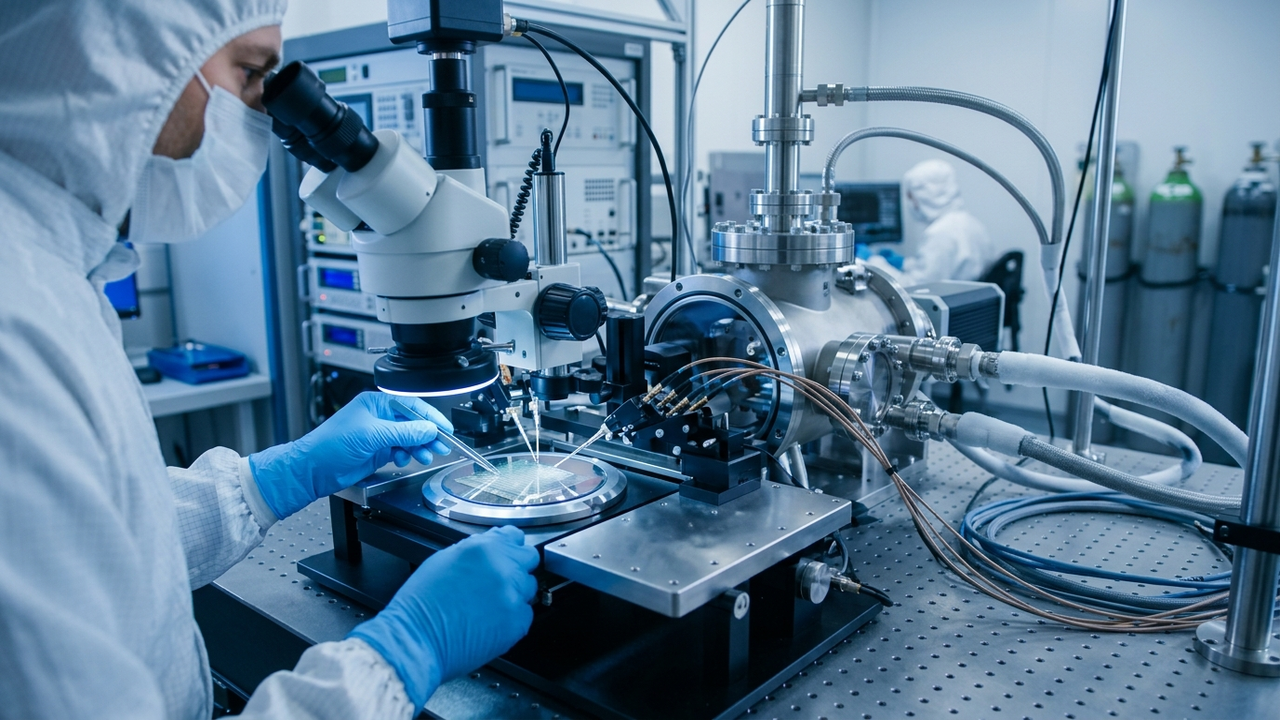
The newly announced STO-on-Insulator platform is built on highly insulating strontium titanate, enhancing the performance of devices requiring operation in quantum computing, cryogenic environments, and those utilizing nonlinear optical effects. This material provides critical properties for maintaining qubit coherence and ensuring stable device operation under extreme conditions.
Meanwhile, the BaTiO₃-based platform, which the company is advancing in parallel, leverages barium titanate’s excellent electro-optic (EO) coefficient using thin-film technology compatible with existing CMOS manufacturing processes. This approach can reduce manufacturing costs and improve scalability for high-speed electro-optic modulators. BaTiO₃ is positioned as a key material for next-generation optical interconnects in AI infrastructure, cloud data centers, and telecommunication networks, enabling massive data transmission at high speeds and low power. It holds particular promise for dramatically improving the performance of optical switches and modulators, potentially resolving data center bottlenecks.
Background and Industry Context
Modern digital infrastructure faces limits in both data transmission speed and power efficiency due to the rapid growth of AI and cloud services. The development of quantum computing and advanced sensor technologies, in particular, demands new materials and device platforms capable of operating under extreme conditions. Electro-optic modulators are at the heart of optical communication, and their performance improvement is essential for the evolution of data centers. While materials like thin-film lithium niobate (TFLN) are gaining popularity as high-performance options, emerging materials like BaTiO₃ and STO are expected to enable breakthroughs in next-generation technologies by offering even superior electro-optic and quantum properties. CMOS compatibility allows these advanced materials to be readily integrated into existing semiconductor ecosystems, paving the way for mass production.
Outlook
The platforms offered by La Luce Cristallina are expected to significantly impact the fields of quantum technology and high-speed optical communication. The STO-on-Insulator platform can enhance the performance and reliability of quantum devices, accelerating the practical implementation of quantum computing. The BaTiO₃-based EO modulators will dramatically improve the power efficiency and bandwidth of AI data centers, supporting the sustainable growth of cloud infrastructure. As these technologies mature and gain widespread adoption, they are anticipated to drive new innovations and create ripple effects across various industries, serving as foundational technologies for the next-generation digital society.
Source: https://www.fidelity.com/news/article/technology/202609090800PR_NEWS_USPR_____SF37404
Get our weekly technology intelligence — free
Receive an infographic that lets you judge at a glance whether each field’s analysis report is worth reading.
Subscribe Free — Weekly Tech Intelligence
By subscribing, you’ll receive Troy-Technical’s weekly technology intelligence newsletter.
- Your email and selected fields are used only to deliver the newsletter.
- We never share your information with third parties.
- You can unsubscribe anytime via the link in each email.
See our Privacy Policy for details.
Takes about a minute · Unsubscribe anytime







Comments