Key Findings
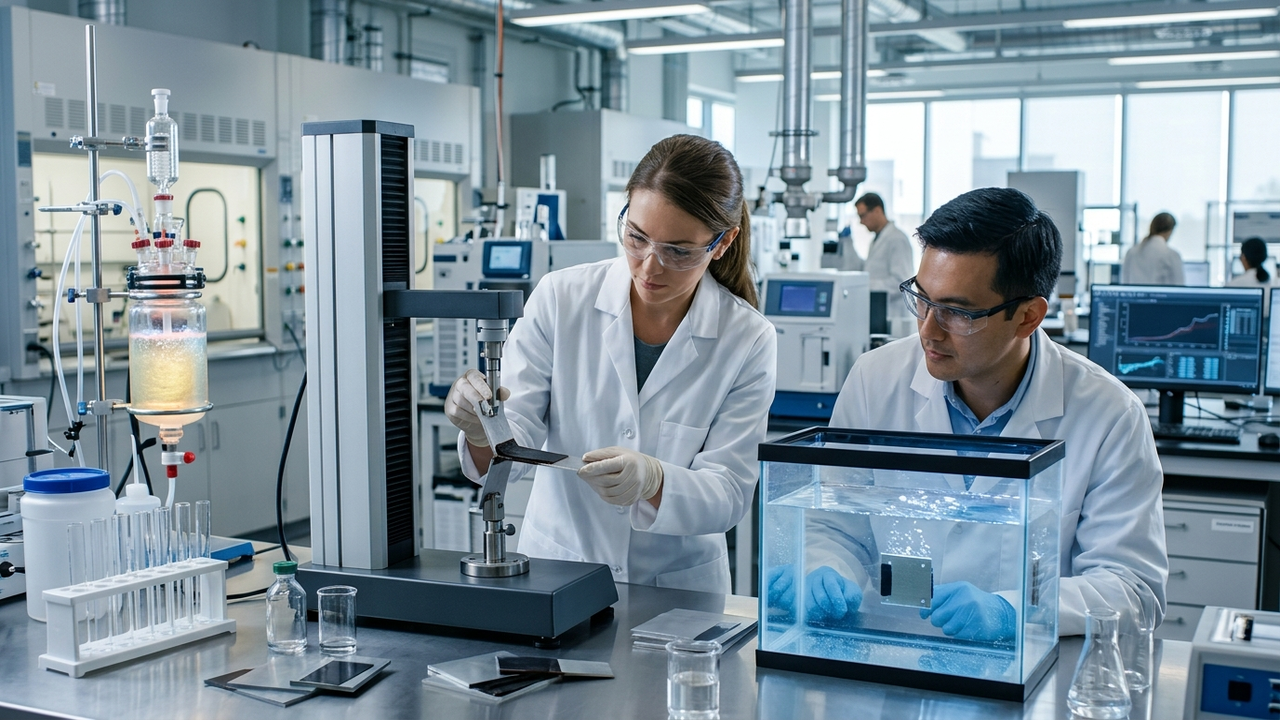
Researchers at Oak Ridge National Laboratory (ORNL) have successfully developed a novel, reusable adhesive from waste polymers that demonstrates robust bonding capabilities in both submerged and dry conditions. This innovative material significantly outperforms commercially available adhesives in strength and adheres effectively to a wide range of substrates, including wood, glass, metals, paper, and various polymers. A pivotal feature of this adhesive is its ability to reversibly release bonds upon heating, facilitating component separation and enabling multiple reuse cycles, thereby promoting a more circular economy in adhesive applications.
Technical / Clinical Details
The development draws inspiration from the tenacious underwater adhesion mechanisms of mussels. The adhesive’s molecular structure integrates reversible chemical crosslinkers within a polymer matrix, allowing for a controlled de-bonding process when exposed to specific thermal conditions. This controlled reversibility means that adhered parts can be separated without damage, and the adhesive itself can be reactivated and reused. Such a characteristic is particularly valuable for applications requiring the joining of disparate materials, as well as those demanding easy disassembly for repair, refurbishment, or recycling at end-of-life.
Background & Context
Traditional adhesives often create permanent bonds that complicate product disassembly and material recycling, posing significant challenges for waste management and resource recovery. Industries such as automotive and aerospace, in particular, are increasingly adopting lightweight materials like aluminum and composites, necessitating advanced bonding solutions that can also accommodate future recycling needs. The ORNL research directly addresses this critical gap, offering a high-performance, sustainable alternative to conventional bonding agents and expanding the possibilities for material selection and product design.
Strategic Significance & Outlook
This reusable adhesive represents a significant step towards enhancing resource efficiency and reducing environmental impact across various manufacturing sectors. It is poised to become a key enabling technology for improving the repairability, reconfigurability, and recyclability of products in automotive, aerospace, electronics, and other industries. As further optimization and scalable manufacturing processes are developed, the widespread adoption of this breakthrough adhesive is anticipated, driving innovation in sustainable design and material management.
Get our weekly technology intelligence — free
Receive an infographic that lets you judge at a glance whether each field’s analysis report is worth reading.
Subscribe Free — Weekly Tech Intelligence
By subscribing, you’ll receive Troy-Technical’s weekly technology intelligence newsletter.
- Your email and selected fields are used only to deliver the newsletter.
- We never share your information with third parties.
- You can unsubscribe anytime via the link in each email.
See our Privacy Policy for details.
Takes about a minute · Unsubscribe anytime




Comments