Key Findings
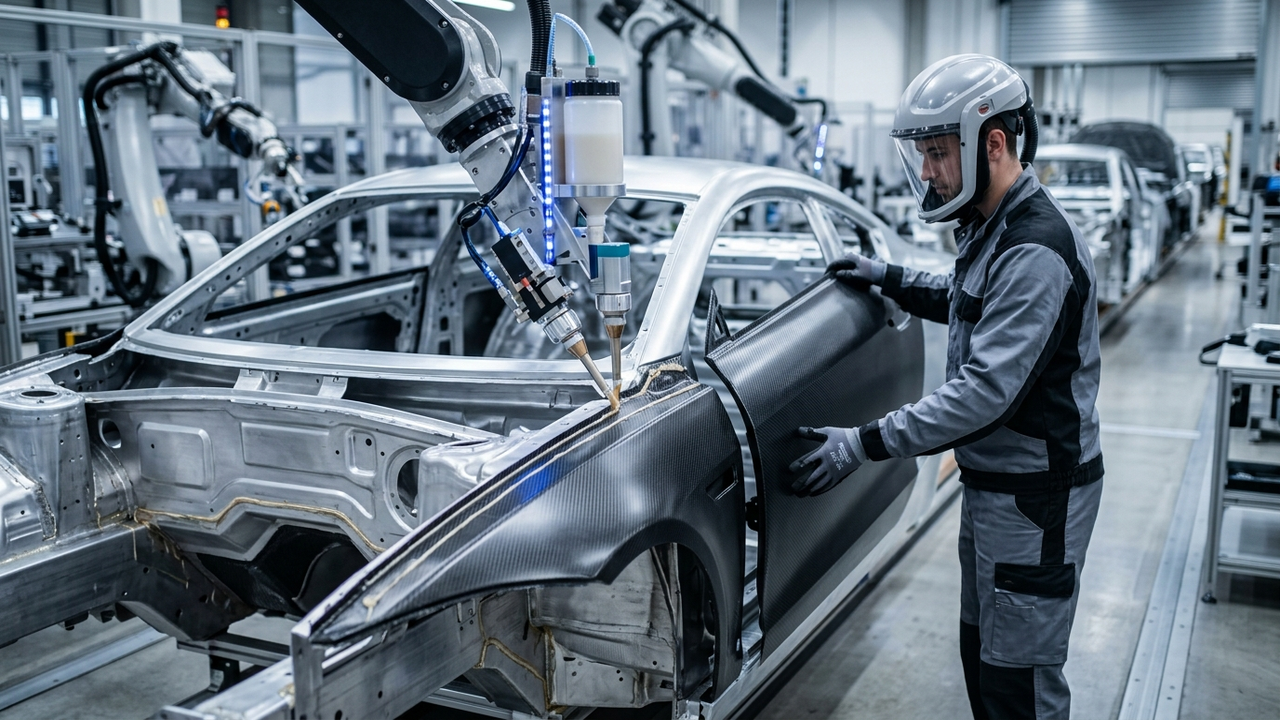
In the automotive industry of 2026, the growing adoption of lightweight materials has amplified the importance of high-performance adhesives specifically engineered for these diverse materials. Structural adhesives tailored for aluminum and composite components are revolutionizing automotive assembly processes, leading to significant improvements in overall vehicle efficiency and durability.
Technical / Clinical Details
These advanced structural adhesives simultaneously offer superior bond strength and flexibility compared to traditional welding or mechanical fasteners. This results in more uniform stress distribution and reduced material fatigue, enhancing the long-term structural integrity of vehicles. Adhesives also provide additional benefits such as mitigating galvanic corrosion risks between dissimilar metals and accelerating production line efficiency through shorter cure times. In new energy systems, such as EV battery pack encapsulation, solar panel mounting, and wind turbine blade bonding, adhesives capable of withstanding mechanical and environmental stresses play an indispensable role in boosting system reliability and efficiency.
Background & Context
The automotive industry is aggressively pursuing vehicle lightweighting to improve fuel efficiency, reduce emissions, and facilitate the transition to electric vehicles (EVs). This has accelerated the shift from high-strength steel to aluminum alloys and carbon fiber composites, materials that traditionally presented joining challenges. High-performance adhesives resolve these dissimilar material joining issues and contribute to reducing part counts and increasing design freedom. Furthermore, adhesive technologies in EV batteries and renewable energy generation devices are becoming key factors for safety and performance.
Strategic Significance & Outlook
Automotive adhesive technology has evolved from a mere fastening method into a strategic element that determines vehicle structure, safety, and performance. Moving forward, the advancement of autonomous driving technologies and the continued demand for lightweighting will necessitate even more sophisticated adhesive solutions. The trend towards multifunctionality, including the development of crash-resistant, thermally conductive, and sensing adhesives, is expected to accelerate, ensuring that adhesive technology remains indispensable in shaping the future of automotive manufacturing.
Source: https://www.b8xbond.com/news/read/1083.html
Get our weekly technology intelligence — free
Receive an infographic that lets you judge at a glance whether each field’s analysis report is worth reading.
Subscribe Free — Weekly Tech Intelligence
By subscribing, you’ll receive Troy-Technical’s weekly technology intelligence newsletter.
- Your email and selected fields are used only to deliver the newsletter.
- We never share your information with third parties.
- You can unsubscribe anytime via the link in each email.
See our Privacy Policy for details.
Takes about a minute · Unsubscribe anytime





Comments