Key Findings
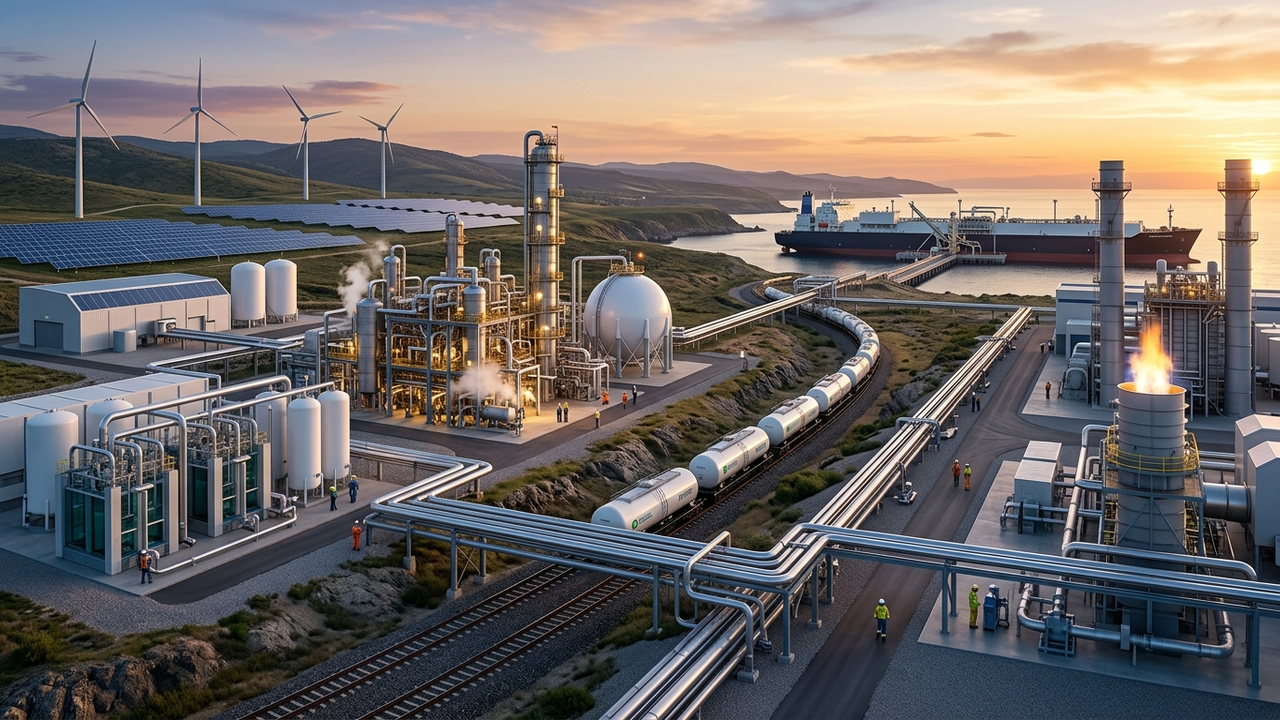
During the U.S. Department of Energy’s (DOE) “H2IQ Hour” discussion, ammonia was highlighted as a promising low-carbon energy carrier and chemical feedstock, offering substantial potential for hard-to-decarbonize sectors such as steel production, cement manufacturing, and grain drying. Green ammonia, produced using renewable electricity, stands out by providing over 80% reduction in life cycle emissions compared to conventional methods and is particularly effective in utilizing surplus renewable energy. This positions ammonia as a critical and versatile solution in the global quest for deep decarbonization.
Technical / Clinical Details
Ammonia (NH₃), a compound synthesized from hydrogen (H₂) and nitrogen (N₂), is already produced globally on a massive scale primarily for fertilizer production. Its properties—relatively easy liquefaction, storage, and transport—make it an attractive “hydrogen carrier” for long-distance transport of hydrogen itself, a role gaining significant traction. The discussion pointed out that green ammonia could be more economical and efficient than transporting hydrogen directly, especially by leveraging existing infrastructure and its higher energy density as a liquid.
The production of green ammonia using surplus renewable electricity helps integrate intermittent renewable energy sources into the grid. For instance, electricity generated from offshore wind farms could be used to produce hydrogen, which is then converted into ammonia for transportation and storage. This process allows the value of renewable energy to be retained and delivered to remote locations or stored for later use. Applications include direct injection into blast furnaces for steel production, use in heating processes for cement manufacturing, as a direct fuel in agriculture, or co-firing with coal in existing power plants, promising substantial CO₂ emission reductions across these industries.
Background & Context
Achieving global decarbonization targets necessitates significant emission reductions in industrial sectors that are challenging to electrify. These industries often require high-temperature heat sources and large quantities of hydrogen as a chemical feedstock. Ammonia, with its long history of industrial use and relatively established storage and transport technologies, is rapidly gaining prominence as a novel clean energy solution. The emphasis placed on its potential by governmental bodies like the US DOE is a crucial signal for directing policy support and research and development investments. The specific figure of over 80% reduction in life cycle emissions strongly supports its environmental advantages.
Strategic Significance & Outlook
Ammonia’s establishment as an energy carrier is expected to contribute significantly to emission reductions in hard-to-decarbonize industries. This DOE discussion will likely stimulate further research and development, support pilot projects, and influence related policy-making. Key factors for its widespread adoption will include reducing green ammonia production costs, optimizing supply chains, and establishing technologies for safe, large-scale utilization. As ammonia increasingly plays a central role not only in the fertilizer market but also in the energy market, it has the potential to profoundly impact the global energy transition and sustainable industrial development.
Source: https://www.energy.gov/cmei/fuels/h2iq-hour-ammonia-fertilizer-energy-carriers-text-version
Get our weekly technology intelligence — free
Receive an infographic that lets you judge at a glance whether each field’s analysis report is worth reading.
Subscribe Free — Weekly Tech Intelligence
By subscribing, you’ll receive Troy-Technical’s weekly technology intelligence newsletter.
- Your email and selected fields are used only to deliver the newsletter.
- We never share your information with third parties.
- You can unsubscribe anytime via the link in each email.
See our Privacy Policy for details.
Takes about a minute · Unsubscribe anytime




Comments