
Key Findings
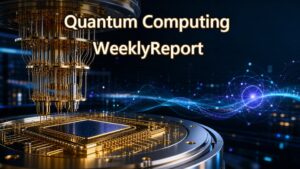
La Luce Cristallina has announced the launch of its groundbreaking 0.5-micrometer silicon-based Quantum Paraelectric Strontium Titanate on Insulator (QP-STOI) wafer platform. This innovative platform is engineered to accelerate advanced developments in quantum computing, cryogenic electronics, and non-linear electro-optic architectures, offered as a foundry-compatible solution to the industry.
Technical / Clinical Details
The QP-STOI platform leverages the unique quantum paraelectric properties of Strontium Titanate (SrTiO₃), which exhibits exceptionally high dielectric permittivity and non-linearity under specific conditions, particularly at cryogenic temperatures. The 0.5-micrometer thin-film technology enables precise control over the electrical properties of SrTiO₃, facilitating the fabrication of high-performance devices on a silicon substrate. This material is anticipated to significantly enhance the performance of superconducting qubits, classical control circuits operating at cryogenic temperatures, and quantum photonic devices by providing low-loss, high-efficiency characteristics. Its foundry compatibility means it can integrate with existing semiconductor manufacturing infrastructures, paving the way for efficient R&D and future mass production.
Background & Context
The advancement of quantum computing is not solely dependent on the performance of qubits but also on the evolution of supporting peripheral technologies. In superconducting quantum computers, which require operation in ultra-low temperature environments, the development of low-loss and highly efficient materials and devices is critical for overall system performance. The ability to realize the quantum paraelectric properties of SrTiO₃ on a silicon substrate addresses a significant material limitation and offers the potential for substantial improvements in quantum chip integration density and operational stability. This development underscores the vital role materials science plays in transitioning quantum computing from research to practical application.
Strategic Significance & Outlook
La Luce Cristallina’s QP-STOI platform is poised to open new avenues for hardware development in quantum computing. It is expected to accelerate the creation of higher-performing superconducting qubits and potentially entirely new types of quantum devices. The platform also targets applications in cryogenic electronics and quantum optics, implying a broad impact across the entire quantum technology ecosystem. The foundry compatibility is a crucial step toward the standardization and mass production of future quantum devices, further propelling the commercialization and widespread adoption of quantum computing technologies.
Source: https://quantumcomputingreport.com/news/
Get our weekly technology intelligence — free
Receive an infographic that lets you judge at a glance whether each field’s analysis report is worth reading.
Subscribe Free — Weekly Tech Intelligence
By subscribing, you’ll receive Troy-Technical’s weekly technology intelligence newsletter.
- Your email and selected fields are used only to deliver the newsletter.
- We never share your information with third parties.
- You can unsubscribe anytime via the link in each email.
See our Privacy Policy for details.
Takes about a minute · Unsubscribe anytime





Comments