Key Findings
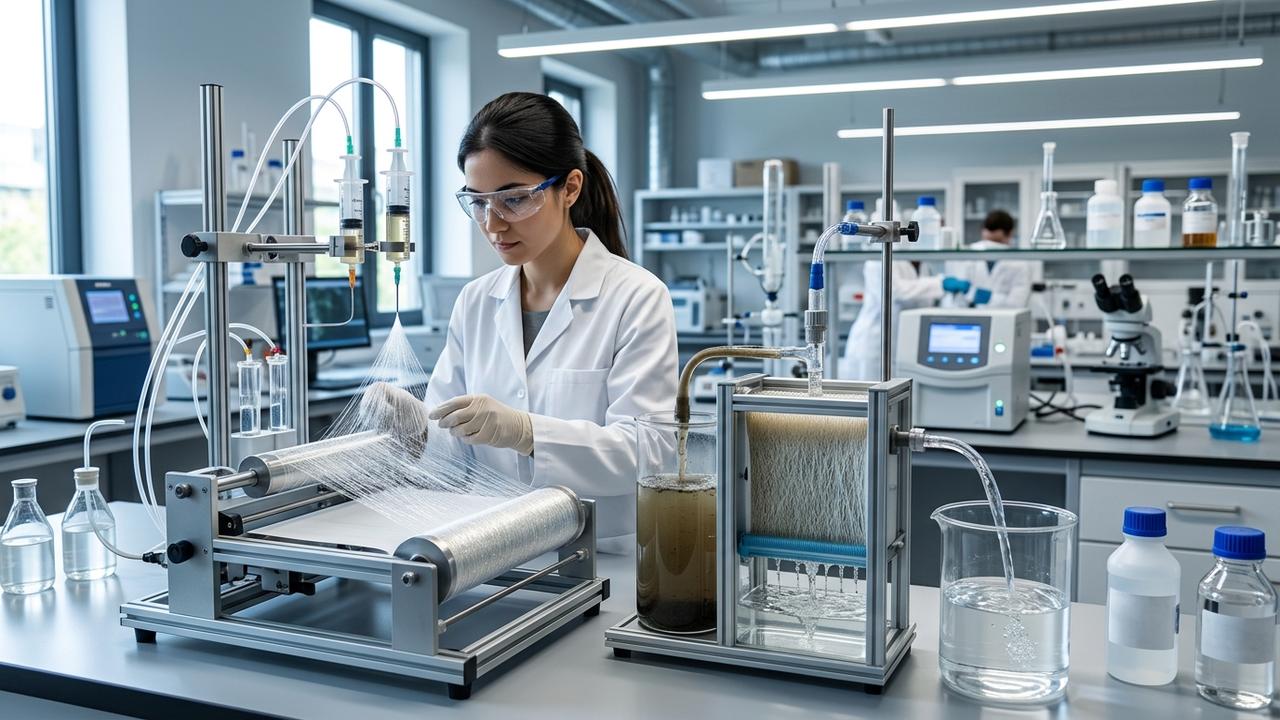
The integration of renewable cellulose nanomaterials into electrospun membranes dramatically enhances the performance of water treatment membranes, improving mechanical strength, hydrophilicity, permeability, fouling resistance, and pollutant removal capabilities. A review published in npj Materials Sustainability underscores the significant contribution of this breakthrough to the advancement of sustainable water treatment technologies.
Technical/Clinical Details
Nanocellulose, including cellulose nanocrystals (CNCs) and cellulose nanofibrils (CNFs), is an ideal material for enhancing water treatment membranes due to its unique properties. Key technical improvements highlighted in the review include:
- Enhanced Mechanical Strength: The incorporation of nanocellulose increases the physical durability of membranes, leading to extended lifespan and stable operation under harsh conditions.
- Increased Hydrophilicity: Cellulose’s inherent hydrophilicity improves the membrane surface’s affinity for water, facilitating water molecule passage. This significantly boosts water flux (permeability). For instance, adding just 0.5 wt.% of cellulose nanocrystals to polyethersulfone electrospun membranes resulted in an approximate 73% increase in water flux, from 136 to 235 L m-2 h-1, alongside improved membrane wettability.
- Improved Fouling Resistance: Enhanced hydrophilicity inhibits the adhesion of organic matter and microorganisms to the membrane surface, thereby reducing fouling, cleaning frequency, and maintenance costs.
- Strengthened Pollutant Removal Capacity: The high surface area and functional groups of nanocellulose improve the adsorption and filtration efficiency of various pollutants, such as heavy metal ions, organic dyes, and bacteria.
These characteristics, especially when combined with electrospinning technology, enable the fabrication of composite membranes with highly porous and uniform structures, leading to high-performance water treatment systems.
Background & Context
The escalating global water scarcity and pollution crisis demand the urgent development of effective and sustainable water treatment technologies. Existing membrane technologies often face issues like fouling, low permeability, and limited mechanical strength, resulting in high operational costs and environmental burdens. Utilizing nanotechnology, particularly renewable biomass-derived nanocellulose, offers a promising solution to overcome these challenges and provide more environmentally friendly options. This approach aligns well with the United Nations Sustainable Development Goals (SDGs).
Strategic Significance & Outlook
Nanocellulose-based water treatment membranes are expected to find widespread applications in industrial wastewater treatment, potable water production, and desalination. If low-cost, high-performance membrane development progresses, it will significantly contribute to the widespread adoption of water treatment technologies and cost reduction. Future prospects include the evolution of these membranes into smart membranes with sensing and self-healing capabilities, potentially integrating into more advanced water quality management systems. This technology represents a crucial step toward addressing global water challenges.
Source: https://www.azonano.com/news.aspx?newsID=41825
Get our weekly technology intelligence — free
Receive an infographic that lets you judge at a glance whether each field’s analysis report is worth reading.
Subscribe Free — Weekly Tech Intelligence
By subscribing, you’ll receive Troy-Technical’s weekly technology intelligence newsletter.
- Your email and selected fields are used only to deliver the newsletter.
- We never share your information with third parties.
- You can unsubscribe anytime via the link in each email.
See our Privacy Policy for details.
Takes about a minute · Unsubscribe anytime




Comments