Key Findings
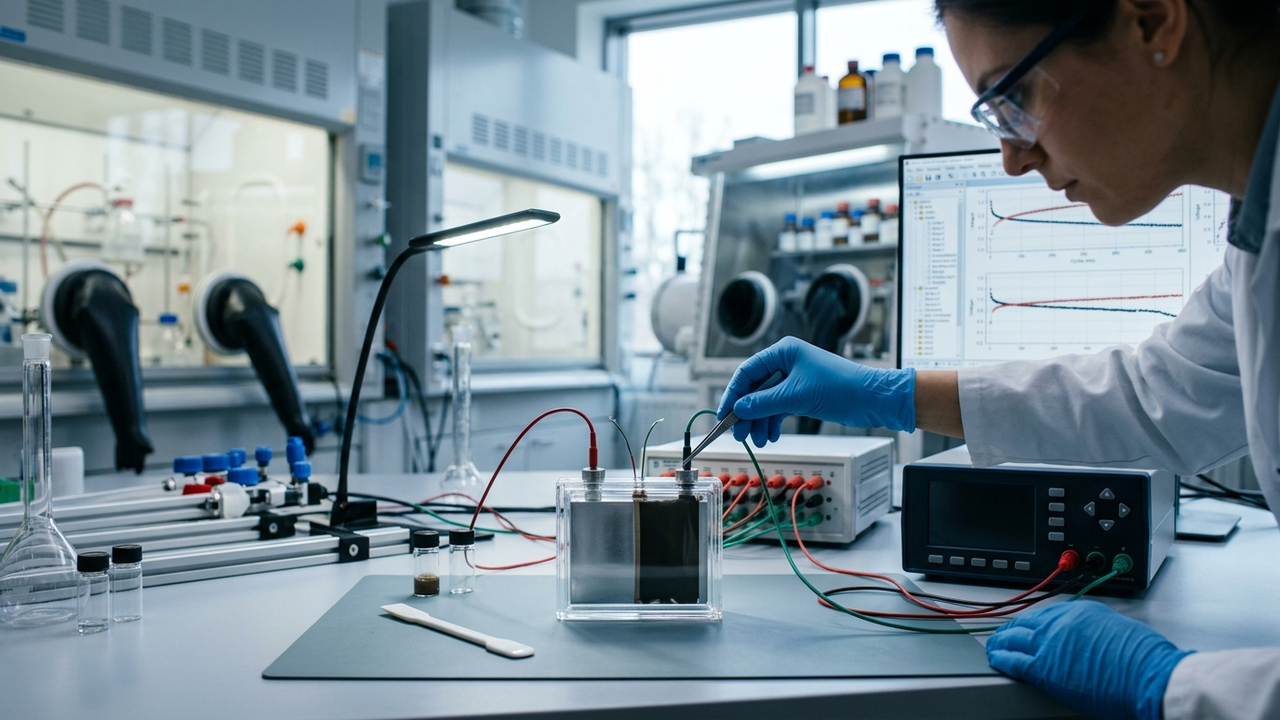
New research has successfully developed a dendrite-free all-solid-state lithium battery through an innovative solid polymer electrolyte (GO/PVP-modified PEO-LiTFSI) that combines graphene oxide (GO) and a polymer. This groundbreaking electrolyte demonstrates a high lithium-ion transference number and excellent ionic conductivity, effectively suppressing lithium dendrite formation. In full-cell tests pairing it with a lithium iron phosphate cathode and a lithium metal anode, the battery achieved an impressive initial discharge capacity of 151.1 mAh/g at 0.5C and retained 80.44% of its capacity after 200 cycles, marking a significant breakthrough towards practical, safe, and high-performance next-generation solid-state batteries.
Technical / Clinical Details
The developed solid polymer electrolyte integrates graphene oxide (GO) and polyvinylpyrrolidone (PVP) into a polyethylene oxide (PEO)-based electrolyte. This GO/PVP-modified PEO-LiTFSI composite electrolyte exhibits a higher lithium-ion transference number (greater than 0.5) and superior ionic conductivity (5.6 × 10⁻⁴ S/cm at 25°C) compared to conventional liquid electrolytes. The two-dimensional structure of GO and the intermolecular interactions of PVP create uniform diffusion pathways for lithium ions, which physically and chemically inhibit the growth of dendrites. When assembled into a full solid-state cell with a lithium iron phosphate (LFP) cathode and a lithium metal anode, the battery demonstrated excellent cycle stability and high coulombic efficiency (averaging over 99%), proving its capability for practical applications.
Background & Context
All-solid-state batteries are considered prime candidates for next-generation energy storage due to their potential for significantly improved safety (eliminating flammable liquid electrolytes), higher energy density, broader operating temperature range, and extended lifespan. The lithium metal anode, with its theoretical capacity approximately ten times higher than that of conventional graphite anodes, is key to maximizing the energy density of solid-state batteries. However, a major challenge has been the growth of lithium dendrites during repeated charge-discharge cycles, which can lead to internal short circuits and battery degradation. The dendrite-free solid polymer electrolyte presented in this study offers a promising solution to this long-standing issue, significantly advancing the commercial viability of all-solid-state batteries.
Strategic Significance & Outlook
The development of this graphene oxide-polymer composite solid polymer electrolyte represents a substantial leap forward for the commercialization of high-performance and safe all-solid-state lithium metal batteries. By overcoming limitations of conventional polymer electrolytes, such as low ionic conductivity and insufficient dendrite suppression, this technology holds immense promise for a wide range of applications, including electric vehicles, portable electronic devices, and grid-scale energy storage systems. With further optimization of materials and development of scale-up manufacturing techniques, this technology has the potential to become a leading force in the next-generation battery market, redefining energy storage capabilities.
Get our weekly technology intelligence — free
Receive an infographic that lets you judge at a glance whether each field’s analysis report is worth reading.
Subscribe Free — Weekly Tech Intelligence
By subscribing, you’ll receive Troy-Technical’s weekly technology intelligence newsletter.
- Your email and selected fields are used only to deliver the newsletter.
- We never share your information with third parties.
- You can unsubscribe anytime via the link in each email.
See our Privacy Policy for details.
Takes about a minute · Unsubscribe anytime







Comments