Key Findings
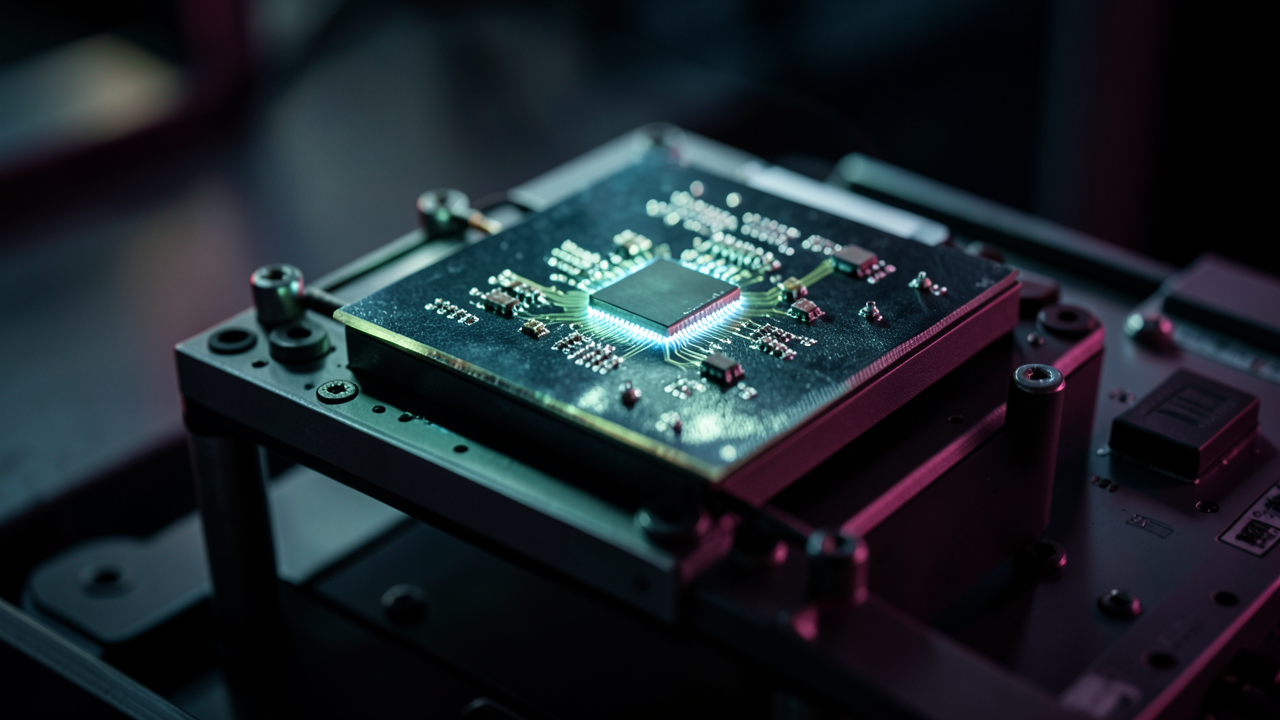
Astra Trainer has highlighted a significant shift in the primary bottleneck for semiconductor progress: it is no longer solely circuit design but increasingly the introduction of new materials and their successful integration within existing semiconductor stacks. Crucially, device failures are predominantly observed at the interfaces between different materials rather than within the bulk material itself, positioning material and interfacial behavior as central determinants of next-generation semiconductor performance and reliability.
Technical / Clinical Details
The development of new semiconductor nodes now critically depends on the ability to incorporate novel materials into the device stack and rigorously prove their functionality without detrimental interactions with other components. This is a complex undertaking, requiring not just the discovery of new materials, but a profound understanding and control of how these materials interact with existing manufacturing processes and other layers. In power electronics, particularly with wide bandgap semiconductors like SiC and GaN, the advancement is less about device design and more about the intrinsic quality of materials, the control of crystal defects, and the optimization of interfaces. Operating under high-temperature and high-power conditions, the thermal and mechanical stability of these materials, along with their adhesion and thermal conductivity between different layers, are paramount.
Background & Context
Amidst the deceleration of Moore’s Law, the semiconductor industry is confronting the limits of miniaturization, prompting a pivot towards advanced packaging techniques such as 3D stacking, chiplet integration, and the strategic introduction of novel materials to drive performance improvements. In this context, the role of materials science has become more critical than ever. The selection and integration of materials dictate every aspect of semiconductor device performance, including transistor density, power efficiency, signal integrity, and overall reliability. This has led to a surging demand for engineers and researchers with specialized expertise in materials.
Strategic Significance & Outlook
This evolving landscape indicates that materials scientists and engineers will assume an increasingly central role in shaping the semiconductor roadmap. Future semiconductor development will shift its focus from a mere race for miniaturization to the discovery, characterization, and complex integration of innovative materials into intricate multi-layered structures. A deep understanding of material interface physics and chemistry, coupled with advanced defect suppression techniques, is anticipated to be a pivotal driver for the growth of the semiconductor industry moving forward.
Source: https://astratrainer.com/blog/future-industries/materials/semiconductor-materials-jobs
Get our weekly technology intelligence — free
Receive an infographic that lets you judge at a glance whether each field’s analysis report is worth reading.
Subscribe Free — Weekly Tech Intelligence
By subscribing, you’ll receive Troy-Technical’s weekly technology intelligence newsletter.
- Your email and selected fields are used only to deliver the newsletter.
- We never share your information with third parties.
- You can unsubscribe anytime via the link in each email.
See our Privacy Policy for details.
Takes about a minute · Unsubscribe anytime







Comments