Key Findings
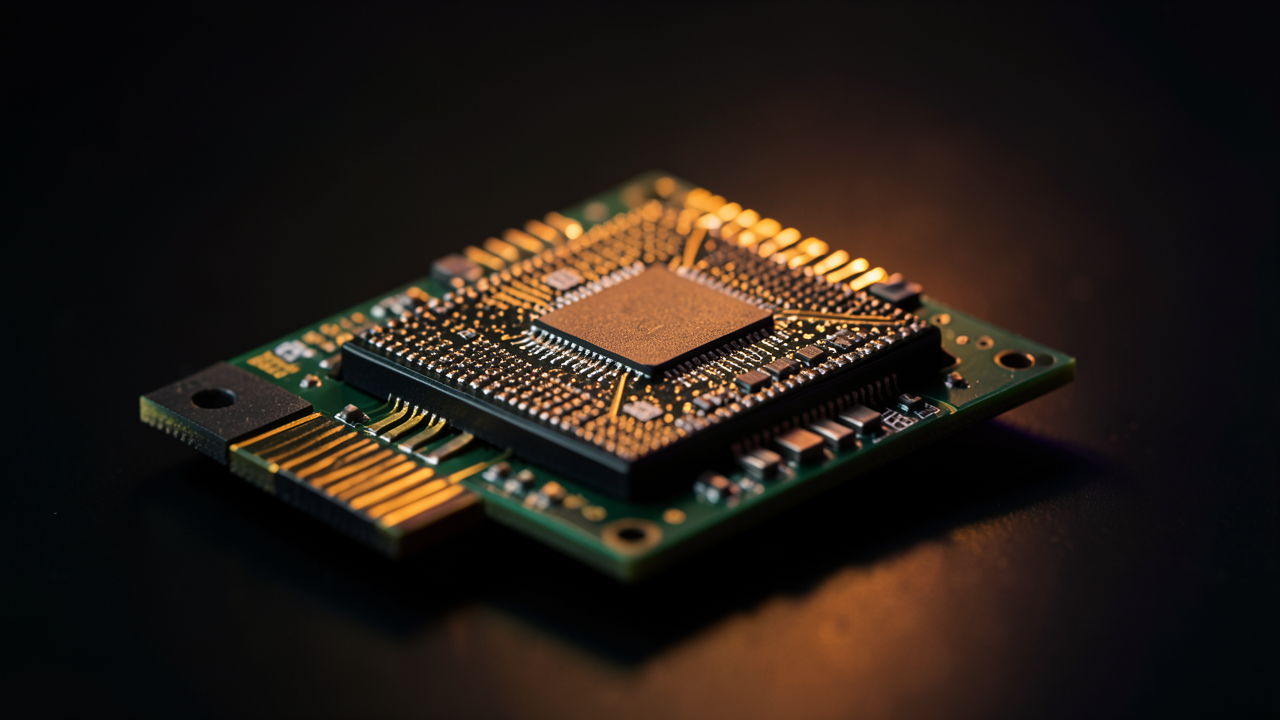
A collaborative team of researchers from the University of Southern California (USC) and quantum software company Quantum Elements has achieved a breakthrough in scaling quantum error protection using surface codes on IBM’s latest-generation Heron quantum processor. This achievement experimentally demonstrates that logical qubits can achieve sub-threshold performance even on existing hardware not specifically optimized for surface codes, marking a significant step towards the practical realization of fault-tolerant quantum computing.
Technical & Strategic Details
The surface code is one of the most promising approaches for implementing quantum error correction (QEC), protecting logical qubit information by correcting errors in physical qubits through a majority-vote mechanism. However, efficiently scaling this on real-world quantum hardware, especially in noisy environments, has been a major challenge.
The following technical advancements were critical to the success of this research:
- IBM Heron Quantum Processor: IBM’s Heron chip features a cutting-edge superconducting qubit architecture with excellent connectivity and low-noise characteristics. Crucially, it was not specifically designed for surface codes. The research team developed a novel approach to implement surface codes on this general-purpose platform.
- Noise Suppression with Qiskit Function ‘Orbit’: Quantum Elements’ developed Qiskit Function ‘Orbit’ effectively suppresses noise that occurs during the idle time of quantum processors (when qubits are not undergoing gate operations). As idle time constitutes a significant portion of overall quantum computation, this noise suppression is vital for substantially improving logical qubit coherence times and enhancing error resilience.
- Directed Sub-threshold Scaling: The team demonstrated that by scaling the surface code along specific directions, the logical qubit error rate could be reduced even when the physical qubit error rate exceeded the surface code’s threshold. This implies that performance improvement through error correction is possible even in current noisy quantum hardware environments.
This research, published in ‘Nature Communications,’ presents a new pathway for maximizing the utility of existing hardware and demonstrating error protection technologies.
Background and Context
The quantum computing field is currently in the ‘NISQ’ (Noisy Intermediate-Scale Quantum) era, where an increasing number of qubits are limited by significant noise and errors. Realizing fault-tolerant quantum computing (FTQC) requires high-fidelity quantum gates and efficient quantum error correction, but developing dedicated hardware for this is time-consuming and costly. This study offers a promising avenue to accelerate the transition to FTQC by demonstrating error correction and performance improvement on general-purpose quantum hardware. Software-based noise suppression and optimization techniques are increasingly critical, alongside hardware advancements, in driving the practical adoption of quantum computing.
Strategic Significance & Outlook
This breakthrough by USC and Quantum Elements provides a practical approach to more effectively implementing advanced error correction codes like the surface code on existing quantum computers. Future improvements and broader application of software tools like Qiskit Function ‘Orbit’ to more quantum platforms could lead to exponential enhancements in logical qubit performance. This will accelerate the development of large-scale fault-tolerant quantum computers, bringing transformative applications in fields such as drug discovery, material science, and financial modeling closer to reality. The results clearly highlight the importance of the synergistic evolution of quantum hardware and software in shaping the future of quantum computing.
Source: https://quantumzeitgeist.com/quantum-elements-surface-code-ibm-heron/
Get our weekly technology intelligence — free
Receive an infographic that lets you judge at a glance whether each field’s analysis report is worth reading.
Subscribe Free — Weekly Tech Intelligence
By subscribing, you’ll receive Troy-Technical’s weekly technology intelligence newsletter.
- Your email and selected fields are used only to deliver the newsletter.
- We never share your information with third parties.
- You can unsubscribe anytime via the link in each email.
See our Privacy Policy for details.
Takes about a minute · Unsubscribe anytime








Comments