


Key Findings
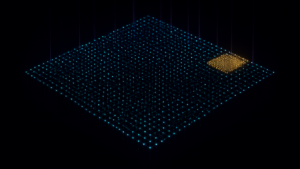
Scientists at D-Wave Quantum, including Pratik Sathe and Andrew D. King, have successfully simulated higher-order topological insulators (HOTIs) across one, two, and three dimensions. The team achieved the first experimental extraction of 3D bulk topology by measuring the quantized 3D electric octupole moment (1/2 invariant), thereby verifying the bulk-boundary correspondence within a 3D quantum simulator.
Technical Details
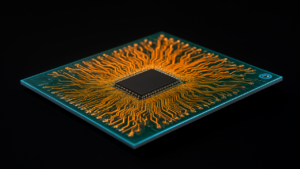
The research utilized the Advantage2 processor with up to 728 qubits, implementing a hybrid analog-digital architecture that departs from traditional static ground-state sampling. Key technical implementations include:
- Qubit Dimerization: Physical qubits were paired into strongly coupled dimers (J d = 2.5 GHz, Δ = 3.0 GHz) to act as effective two-level systems, enabling the realization of Benalcazar-Bernevig-Hughes (BBH) tight-binding models.
- Wavefunction Tomography: The system reconstructed the complex-valued propagator Ψ r (t) = σ r x (t) + i σ r y (t) by time-shifting σ r x (t) measurements by 1/(4Δ) = 125 ps, achieving a temporal resolution of δt = 62.5 ps.
- Topological Measurement: The team calculated three successive nested Wilson loops from experimentally reconstructed occupied-band projectors { P ν (k) } to extract the 3D bulk topology.
- Charge Deficits: Local density of states (LDOS) integrals revealed fractionalized charge deficits (≈ 1/2) localized at zero-dimensional corner modes.
Background and Context
The study, published on arXiv under the title “Measuring higher-order bulk topology in a programmable quantum simulator,” focuses on the use of band projector tomography to measure localized boundary modes. Unlike standard quantum annealing, this approach combines pulse-level state initialization with coherent static Hamiltonian evolution and high-frequency time-series measurements.
Significance and Outlook
The results demonstrate that the system is insensitive to local disorder; bulk topological invariants remained quantized near 1/2 even without ideal spatial symmetries, proving topological protection against mild hardware disorder. This demonstration establishes that analog-digital quantum annealing hardware can function as a programmable simulator for non-interacting topological materials and multi-dimensional condensed matter physics.
Get our weekly technology intelligence — free
Receive an infographic that lets you judge at a glance whether each field’s analysis report is worth reading.
Subscribe Free — Weekly Tech Intelligence
By subscribing, you’ll receive Troy-Technical’s weekly technology intelligence newsletter.
- Your email and selected fields are used only to deliver the newsletter.
- We never share your information with third parties.
- You can unsubscribe anytime via the link in each email.
See our Privacy Policy for details.
Takes about a minute · Unsubscribe anytime