Key Findings
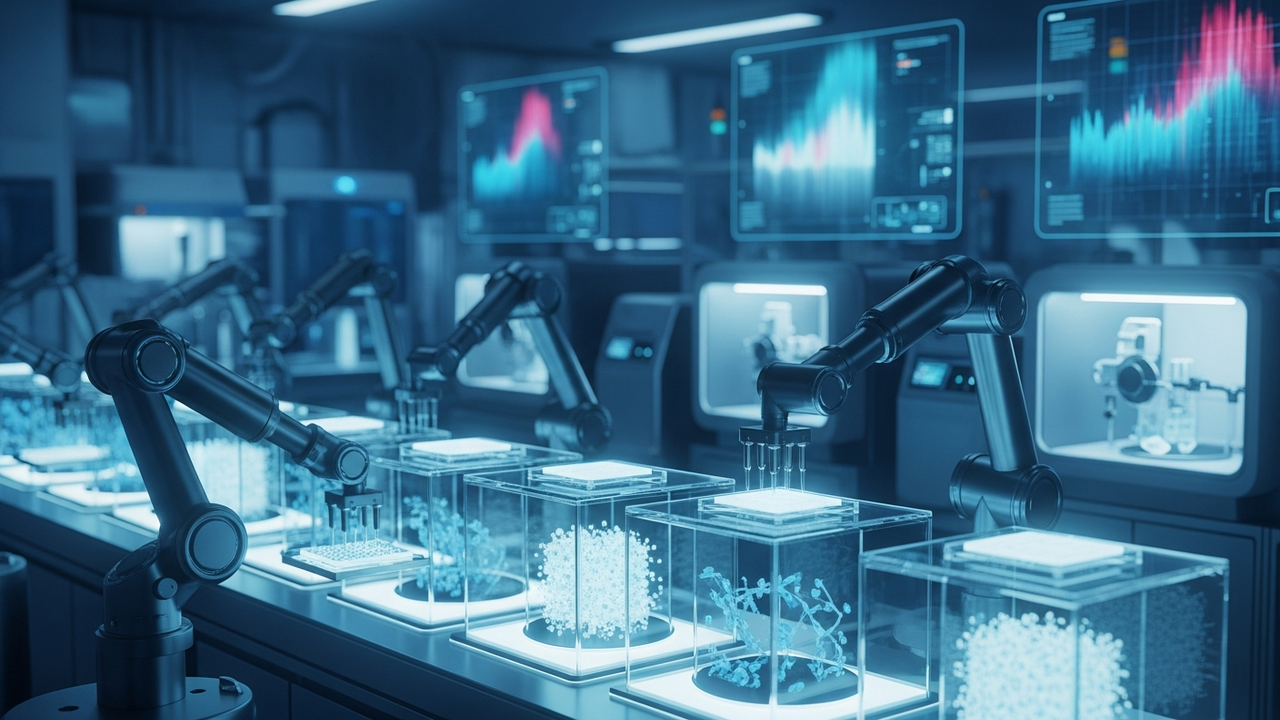
Laboratories are swiftly migrating towards automated adherent and suspension cell culture platforms, such as the CellXpress.ai system, to alleviate manual burdens and enhance the reproducibility and scalability of cell cultures. This sophisticated system accommodates a wide range of cell types, including 2D adherent cells, suspension cells, and 3D organoids, automating complex culture processes and thereby dramatically boosting research efficiency.
Technical / Clinical Details
The CellXpress.ai platform integrates the following advanced components:
- High-Throughput Imager: Automatically captures high-resolution image data of cells within culture vessels at regular intervals.
- Liquid Handler: Performs precise media changes, cell seeding, and reagent additions automatically, eliminating human error and contamination risks associated with manual operations.
- Incubator: Maintains stable temperature, CO2 concentration, and humidity, providing an optimal environment for cell growth.
- IN Carta® Image Analysis Software: Analyzes acquired image data to quantitatively assess various parameters such as cell count, viability, morphology, and aggregate size. This software supports image-based decision-making and automatically triggers subsequent culture operations based on pre-configured, time-driven schedules.
This system allows researchers to conduct complex, long-term cell culture experiments with high reproducibility and minimal manual intervention.
Background & Context
Cell culture is an indispensable tool in drug discovery, regenerative medicine, and disease model construction. However, traditional, manual methods are time-consuming, labor-intensive, and prone to high variability in results. Automation becomes crucial for high-throughput screening and the cultivation of complex iPSC-derived 3D organoids. Automated platforms like CellXpress.ai address these challenges, breaking through research bottlenecks to accelerate scientific discoveries and therapeutic developments.
Strategic Significance & Outlook
The automation of cell culture is poised to enhance the efficiency of drug discovery pipelines and contribute to the advancement of personalized medicine. Researchers will be liberated from manual tasks, enabling them to focus on more complex experimental designs and data analysis. This technology is also applicable to scaling up cell therapy product manufacturing, serving as a critical step towards realizing fully autonomous ‘Labs of the Future.’ For investors, investments in automation solutions within the biotech sector are expected to drive long-term growth and enhance market competitiveness.







Comments