
Key Findings
OCSiAl’s single-wall carbon nanotubes (SWCNTs) have been selected as a core technology for next-generation electric regional aircraft batteries within the Horizon Europe ELEVATE project, targeting a groundbreaking energy density exceeding 400 Wh/kg. These nanotubes are crucial for enabling high-performance silicon-rich anodes and solvent-free dry-coated cathodes, marking a significant step towards sustainable aviation batteries.
Technical/Clinical Details
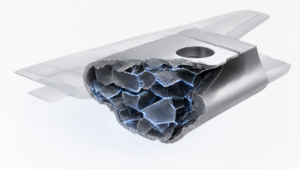
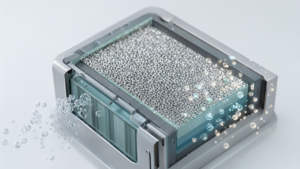
- Role of SWCNTs: OCSiAl’s SWCNTs function as critical conductive additives in both the anode and cathode of the battery. In silicon-rich anodes, they maximize the high capacity of silicon while stabilizing volume changes during charge-discharge cycles, thereby enhancing battery life and safety. For dry-coated cathodes, SWCNTs facilitate a solvent-free manufacturing process, which is significantly more environmentally friendly than traditional wet coating methods.
- Energy Density Target: The ELEVATE project aims to achieve an energy density surpassing 400 Wh/kg. This target substantially exceeds the typical energy density of current commercial lithium-ion batteries, which is essential for extending the practical flight range of electric aircraft.
- Sustainable Manufacturing: The solvent-free dry coating process not only reduces environmental impact but also contributes to lower manufacturing costs. This aligns with European initiatives to promote green technologies and circular economy principles within the battery industry.
Background & Context
The aviation sector is actively pursuing electrification to reduce greenhouse gas emissions. However, developing high-energy-density, lightweight, and safe batteries suitable for aircraft has been one of the greatest challenges. OCSiAl’s technology is poised to overcome this hurdle, potentially accelerating the commercialization of electric aircraft on a broader scale. The ELEVATE project is a strategic initiative designed to establish European leadership in this critical technological domain.
Strategic Significance & Outlook
The adoption of OCSiAl’s single-wall carbon nanotube technology represents a significant milestone in electric aircraft development. If successfully implemented in commercial electric flights, it promises longer flight ranges, shorter charging times, and substantial reductions in operational costs. This will make regional electric air travel a viable reality, contributing immensely to the overall sustainability of the aviation industry and advancing global efforts towards a greener future.
Source: https://ocsial.com/ja/news/ocsial-technology-at-the-core-of-commercial-electric-flights/
Get our weekly technology intelligence — free
Receive an infographic that lets you judge at a glance whether each field’s analysis report is worth reading.
Subscribe Free — Weekly Tech Intelligence
By subscribing, you’ll receive Troy-Technical’s weekly technology intelligence newsletter.
- Your email and selected fields are used only to deliver the newsletter.
- We never share your information with third parties.
- You can unsubscribe anytime via the link in each email.
See our Privacy Policy for details.
Takes about a minute · Unsubscribe anytime







Comments