Key Findings
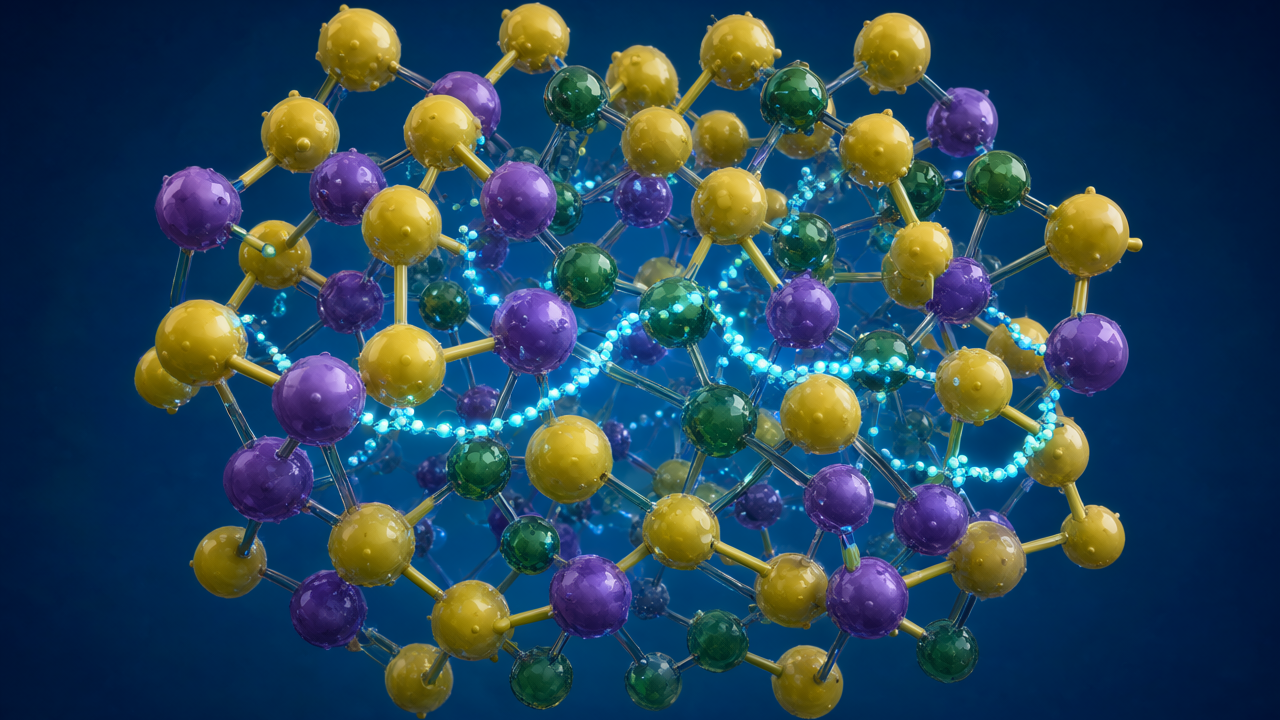
A recent study, combining neutron scattering techniques with advanced computer simulations, has elucidated the surprising behavior of lithium ions within lithium phosphorus sulfur chloride (Li₆PS₅Cl), a highly promising superionic conductor for solid-state batteries. The research reveals that lithium ions achieve remarkable liquid-like mobility through vibrating “bottlenecks” within the solid electrolyte structure, offering a new pathway to significantly enhance solid-state battery performance.
Technical / Clinical Details
The detailed analysis showed that within the crystalline framework of Li₆PS₅Cl, specific pathways exist where lithium ions perform rapid “hops and jumps” through dynamically vibrating constricted regions, or bottlenecks. This behavior, reminiscent of ion transport in liquids, explains the high ionic conductivity observed despite the material remaining in a solid state. This profound insight provides critical design principles for developing solid electrolyte materials with a higher concentration of mobile ions, concurrently improving their chemical and thermal stability. Such advancements are crucial for achieving charging speeds and safety profiles comparable to, or even exceeding, those of traditional liquid electrolytes.
Background & Context
Solid-state batteries are heralded as the next generation of battery technology, promising to resolve key safety concerns of current lithium-ion batteries (e.g., electrolyte leakage and fire hazards) while offering higher energy densities and longer lifespans. However, the typically slower ionic conductivity within solid electrolytes compared to liquid counterparts has been a major hurdle to their practical implementation. This research represents a significant breakthrough in overcoming this challenge and accelerating the development of high-performance solid-state batteries.
Strategic Significance & Outlook
This discovery has implications not only for sulfide-based solid electrolytes like Li₆PS₅Cl but also for the rational design of other types of solid electrolyte materials. By deepening the atomic-level understanding of ion dynamics, researchers will be better equipped to engineer superior superionic conductors. Ultimately, this will pave the way for the development of faster, safer, and more efficient solid-state batteries for electric vehicles, portable electronics, and large-scale energy storage systems.
Get our weekly technology intelligence — free
Receive an infographic that lets you judge at a glance whether each field’s analysis report is worth reading.
Subscribe Free — Weekly Tech Intelligence
By subscribing, you’ll receive Troy-Technical’s weekly technology intelligence newsletter.
- Your email and selected fields are used only to deliver the newsletter.
- We never share your information with third parties.
- You can unsubscribe anytime via the link in each email.
See our Privacy Policy for details.
Takes about a minute · Unsubscribe anytime








Comments