Key Findings
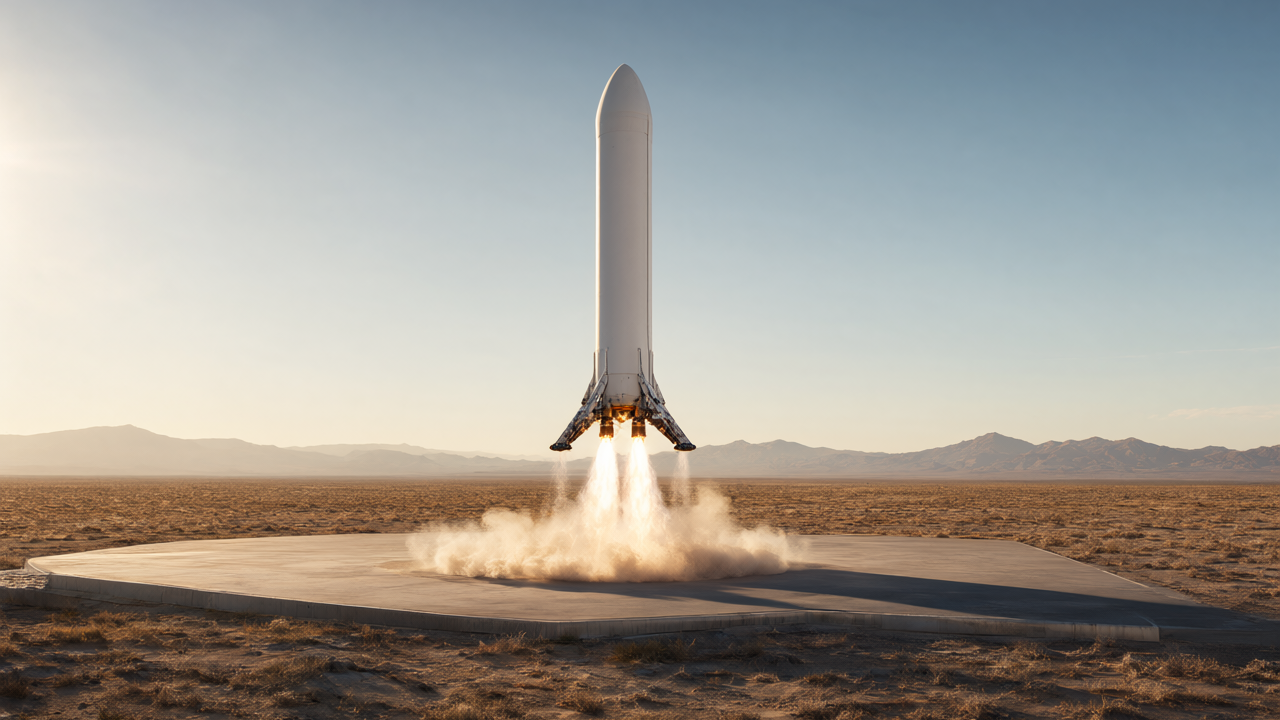
Chinese commercial space enterprises are demonstrating remarkable progress in the development of rocket reusability technology. LandSpace, in particular, has successfully executed a controlled ground recovery of the booster for its Zhuque-3 (Vermillion Bird-3) rocket. This achievement marks China’s first successful rocket booster recovery utilizing deployable landing legs, representing a significant milestone in the nation’s reusable rocket technology capabilities.
Technical / Clinical Details
The controlled ground recovery of the Zhuque-3 booster by LandSpace was made possible through the integration of precise guidance systems, sophisticated propellant management, and deployable landing legs. This technology demonstrates the capability of a rocket’s first stage to return autonomously to a designated landing zone and perform a vertical landing after launch, akin to SpaceX’s Falcon 9. In recent months, other Chinese commercial space firms have also reported breakthroughs in recovery techniques, including booster retrieval using a combination of parachutes and sea-net capture systems. These advancements hold the potential to substantially reduce rocket manufacturing costs and increase launch frequency, thereby contributing to the democratization of space access and the expansion of the commercial space industry.
Background & Context
Rocket reusability technology is recognized as a key enabler for dramatically improving the cost-efficiency of space transportation and is one of the most intensely focused areas in the global space industry. SpaceX’s success with the Falcon 9 has set the benchmark for reusability. China, in parallel with its national space programs, has been fostering a rapidly growing commercial space sector, where reusable rocket technology is positioned as a critical source of competitive advantage. However, a significant technological gap persists between recovering a rocket and achieving reliable, cost-effective ‘re-launch’ capabilities, with numerous challenges remaining to be overcome, including propellant refueling, thorough system inspection and repair, and re-certification processes.
Strategic Significance & Outlook
LandSpace’s successful Zhuque-3 booster recovery carries significant implications for China’s efforts to narrow the technological gap with advanced companies like SpaceX. Nevertheless, for true commercial viability of rocket reusability, reliable and cost-effective re-launch capabilities of recovered boosters are indispensable. Chinese commercial space companies are expected to continue aggressive investment and technological development towards this ultimate goal. Once re-launch technology is established, China’s space industry will be able to offer low-cost satellite launch services to the global market, thereby solidifying its position in the global space race.
Get our weekly technology intelligence — free
Receive an infographic that lets you judge at a glance whether each field’s analysis report is worth reading.
Subscribe Free — Weekly Tech Intelligence
By subscribing, you’ll receive Troy-Technical’s weekly technology intelligence newsletter.
- Your email and selected fields are used only to deliver the newsletter.
- We never share your information with third parties.
- You can unsubscribe anytime via the link in each email.
See our Privacy Policy for details.
Takes about a minute · Unsubscribe anytime





Comments