Key Findings
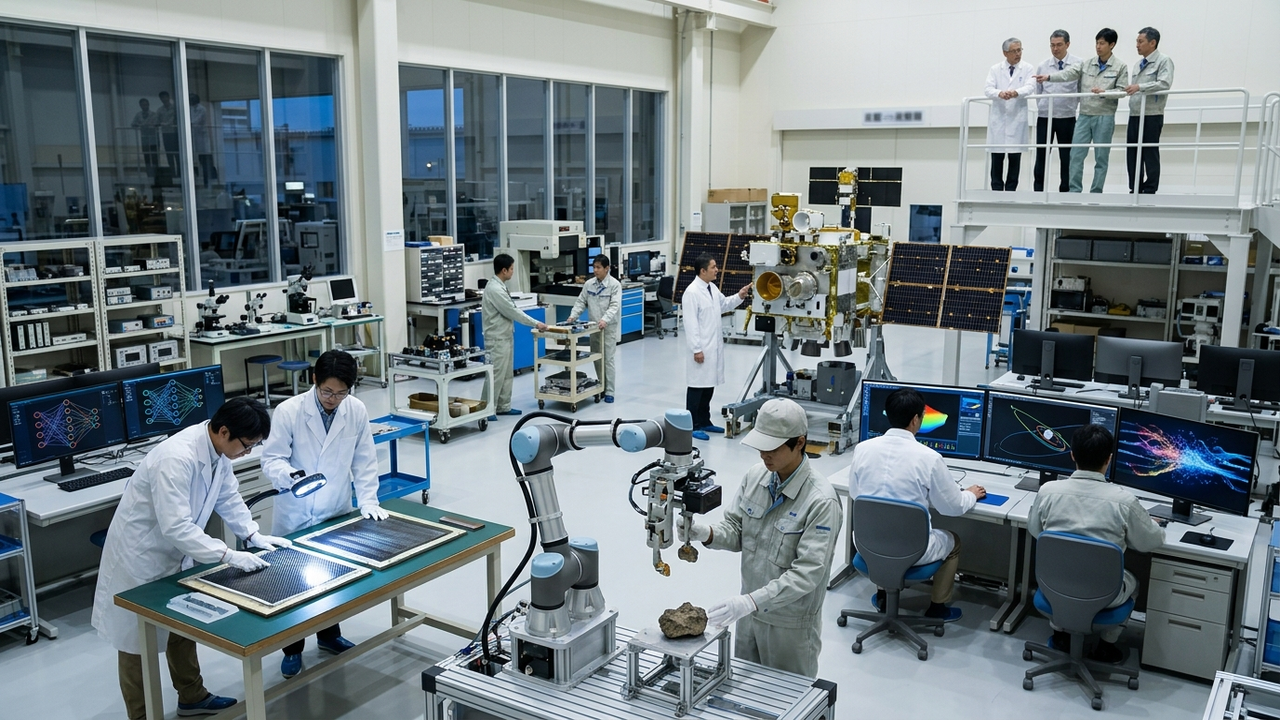
Japan’s Martian Moons eXploration (MMX) mission is projected to provide a substantial boost to the domestic space technology industry, fostering advancements across diverse fields such as robotics, novel materials development, advanced communication technologies, and artificial intelligence (AI). This ambitious mission, spearheaded by the Japan Aerospace Exploration Agency (JAXA), aims to achieve the challenging goal of returning samples from one of Mars’ moons (Phobos or Deimos). The success of MMX is expected to unequivocally demonstrate Japan’s high technological capabilities to the international community, simultaneously generating new business opportunities and incentivizing technological development for related manufacturing sectors, software developers, and specialized materials suppliers.
Mission Details and Technical Contributions
Scheduled for launch in the late 2020s, the MMX mission represents a culmination of Japan’s space exploration expertise. Its primary objectives are to investigate the origin and evolution of Mars’ moons and to unravel the mechanisms of planetary formation in the solar system. Achieving these goals requires a highly advanced robotic probe capable of landing on a Martian moon, collecting surface samples, and executing a complex return journey to Earth. This intricate sequence will drive innovation in numerous technical areas:
- Robotics: Development of exploration robots with sophisticated remote control and autonomous decision-making capabilities. Precision sample collection in microgravity is a world-leading challenge.
- New Materials Development: Creation of specialized alloys, composite materials, and electronic components for lightweighting, radiation hardening, and thermal resistance of the probe. Reliable materials capable of enduring long-term operation in deep space environments are crucial.
- Communication Technology: Development of highly efficient and reliable communication systems to bridge the vast distances between Mars and Earth. Further evolution of deep-space network technologies is anticipated.
- Artificial Intelligence: Application of AI for autonomous navigation, obstacle avoidance, real-time scientific data analysis, and emergency response across various mission phases. This enhances mission success rates and reduces operational costs.
Background and Industry Context
In recent years, space development has transitioned from an era primarily driven by national agencies to a ‘NewSpace’ era with significant private sector involvement. In this context, large-scale scientific missions like MMX are not merely academic endeavors but are crucial for establishing national technological superiority and demonstrating leadership in international collaborative ventures. Japan’s space industry has garnered global recognition for its sample return technologies, honed through missions like ‘Hayabusa,’ and its precise robotics capabilities. The MMX mission is expected to further enhance these strengths and generate positive ripple effects throughout the domestic economy through cross-sector technological advancements.
Strategic Significance and Outlook
The successful execution of the MMX mission will not only provide long-term growth opportunities for Japan’s space technology industry but also solidify Japan’s position within the international space exploration community. Technologies developed for MMX are expected to contribute to more ambitious future space development projects, including lunar base construction, asteroid exploration, and human missions to Mars. From the perspective of in-space manufacturing and resource utilization, samples returned from Mars’ moons could offer invaluable insights for new material development and sustainable space activities, presenting numerous ‘interesting’ discoveries for materials scientists and engineers alike.
Get our weekly technology intelligence — free
Receive an infographic that lets you judge at a glance whether each field’s analysis report is worth reading.
Subscribe Free — Weekly Tech Intelligence
By subscribing, you’ll receive Troy-Technical’s weekly technology intelligence newsletter.
- Your email and selected fields are used only to deliver the newsletter.
- We never share your information with third parties.
- You can unsubscribe anytime via the link in each email.
See our Privacy Policy for details.
Takes about a minute · Unsubscribe anytime









Comments